
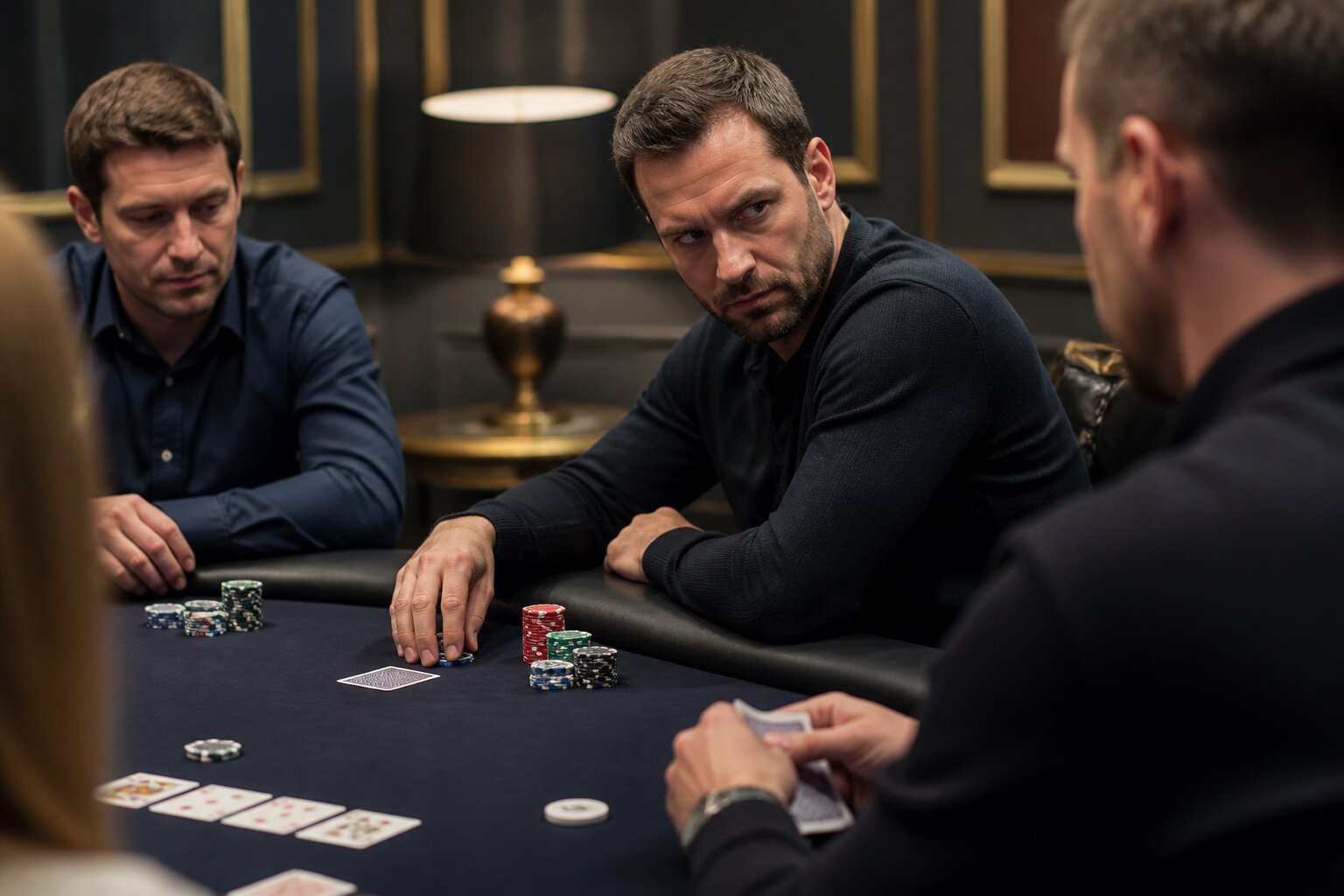
Ever felt someone at the poker table was bending the rules without quite breaking them? That uneasy feeling often points to an angle shoot.
Poker relies on shared expectations about honesty and clear action. When players exploit the grey areas of those expectations, the game becomes harder to enjoy and harder to trust. This article explains what angle shooting is, shows common examples, clarifies the language used around it, and outlines how venues and players handle it so the table stays fair and civil.
Read on and you’ll learn how to spot questionable behaviour, what it looks like in practice, and how to respond if you see it — all in plain terms so you can stay confident at any table.
What Does Angle Shooting Mean in Poker?
Angle shooting describes actions that exploit ambiguity in the rules or exploit other players’ inexperience to gain an advantage. The move is not necessarily an explicit rule violation, but it violates the spirit of fair play.
Typical angle-shooting tactics include giving misleading statements about a bet, manipulating the apparent size of a stack, or acting in ways that create uncertainty about a decision. The common thread is intent to exploit confusion rather than to play openly. That is why most players and poker staff consider it unacceptable: it corrodes trust and can make the game unpleasant.
While venues set standards for behaviour and enforce rules, the general expectation among players is simple — be clear and honest in your actions so others can make informed decisions.
Common Examples of Angle Shooting at the Table
Angle shooting appears in many subtle forms. These examples illustrate the kinds of behaviours that cause problems at tables and help players and staff recognise when something is not quite right.
False Declarations
A player may murmur that they are “all in” or pretend to push chips forward, then wait to see reactions before actually committing. The ambiguity pressures opponents without an explicit bet being made, and it can create uncertainty about whether a bet has been placed.
Often this tactic relies on timing and body language to create a false impression. In regulated play, dealers and floor staff should be alert to these actions and enforce clear verbal or physical commitment rules.
Acting Out of Turn
Deliberately speaking or moving before the proper turn can reveal information about other players’ intentions or influence subsequent actions. Even an offhand comment can change the dynamics of a hand.
It is important that players respect turn order and that any information revealed out of turn is treated appropriately. Tournaments and cash games typically have procedures to restore fairness when an out-of-turn action affects the game.
Hiding High-Value Chips
Concealing larger chips behind smaller ones or otherwise disguising the true stack size can mislead opponents about how much risk they face. This kind of deception interferes with correct decision-making by others at the table.
Casinos and clubs often have chip-stacking rules to ensure stacks are visible and readable. If a player’s stack is unclear, dealers should ask for clarification so that all players can make informed choices.
Feigning Confusion
Pretending not to understand a rule or the state of the hand can be used to reverse an action or gain a second chance, particularly against less experienced players. This behaviour exploits patience and goodwill.
Clear, calm intervention by the dealer or floor can prevent confusion being used as a tactic. New players should feel able to ask for rulings without penalty, and experienced players should not exploit that vulnerability.
Slow Rolling
Delaying the reveal of a winning hand purely to unsettle opponents or prolong suspense crosses a line of courtesy and is viewed as poor behaviour. While dramatic reveals are part of the game, intentionally wasting time to gain an emotional advantage is unacceptable.
Most venues have etiquette guidelines about timely showdowns. Refereeing such situations promptly helps keep play moving and maintains respect between players.
Each of these examples undermines straightforward play and can damage the atmosphere at the table. Spotting them helps maintain a fair environment, protects newcomers from being taken advantage of, and allows staff to apply the appropriate rules and remedies.
Why Is Angle Shooting Considered Bad Etiquette?
Angle shooting is a problem because it breaks the informal contract that makes poker work: players expect clear, honest actions so everyone can make fair decisions. When that contract is eroded, the game becomes more about who can exploit confusion than who can make the best choices at the table.
The consequences are practical as well as social. Regular use of dubious tactics drives away players who prefer a straightforward game and makes it harder for new players to learn. It can also force staff to intervene more often, slowing the game and creating tension.
In short, angle shooting damages the playing experience. Treating fellow players with respect and keeping actions clear keeps the atmosphere welcoming and the game focused on skill.
Transitioning from why it is frowned upon, the next section gives you the words people use to describe this behaviour so you can recognise it quickly.
What Are the Key Terminology and Phrases Linked to Angle Shooting?
Knowing the terms used around angle shooting makes it easier to identify and discuss incidents without confusion.
Hidden Intent
This refers to any behaviour that is deliberately designed to mislead. Examples include ambiguous chip movements or quiet verbal statements meant to be interpreted differently by different players.
Other instances of hidden intent might be more subtle, such as pretending not to notice a bet or acting as if a fold has already been made when it has not. The key feature is that the action is planned to create a misleading impression rather than being an honest mistake.
Ambiguity
Ambiguity covers actions or words lacking clarity about their effect in the game. A vague phrase or an unclear chip move can create uncertainty that an angle shooter will exploit.
Common ambiguous behaviours include:
- saying something that could be read as either an instruction or casual comment
- making a chip motion that is not clearly a bet or a call
- leaving cards or chips in a position that does not clearly signal intent
These phrases emphasise the problem: the issue is not the action itself so much as the deliberate obscuring of what is happening. Clear, unambiguous behaviour prevents disputes and keeps play smooth.
Using consistent, straightforward actions and words helps other players and dealers understand your intent, reduces the chance of misunderstanding, and supports fair play for everyone.
How Do Casinos and Poker Rooms Deal With Angle Shooters?
Venues have a practical interest in curbing angle shooting because it affects their games and other customers. Dealers and floor staff are trained to spot questionable behaviour and to restore clarity when needed.
Responses range from on-the-spot clarification by the dealer to warnings, seating changes, or calling a floor manager in more serious situations. In extreme or repeated cases a player may be asked to stop playing in that game or leave the room. Rules are applied to preserve fair play and minimise disruption.
If you feel uncomfortable about an incident, mentioning it to staff is the right move. They are responsible for adjudicating disputes and will take appropriate steps to protect the integrity of the game.
Can Angle Shooting Ever Be Accidental?
Yes. Not every ambiguous action is malicious. Inexperienced players, nervous beginners, or distractions in a busy room can produce moves that look questionable but are genuine mistakes. Simple things like misreading a rule, fumbling chips, or hesitating on a decision can be misinterpreted.
Because of this, staff and experienced players often distinguish between deliberate angle shooting and accidental missteps. Dealers and floor staff will usually give the benefit of the doubt the first time, ask for clarification, and help the player correct the action. A clear apology and promptly fixing the mistake will often resolve accidental situations without escalation.
That said, repeated ambiguous behaviour, even if claimed to be accidental, will draw closer scrutiny. Casinos and cardrooms keep an eye on patterns, and multiple incidents can lead to formal warnings or closer monitoring to protect other players and the integrity of the game.
Best practice is to act clearly and be open with the table when unsure. In particular:
- Announce your intentions aloud if a play might be unclear to others.
- Ask the dealer or floor staff for guidance before making a questionable move.
- If you realise you made an error, correct it immediately and apologise.
Being transparent and cooperative keeps the game fair and helps avoid misunderstandings.
How Can Players Maintain Proper Table Etiquette?
Good table etiquette is straightforward and starts with clear communication. Make your bets and decisions plainly, use obvious chip moves, and wait for your turn to act. These habits remove ambiguity and prevent misunderstandings.
Politeness matters too. Speaking courteously to others and the dealer keeps the atmosphere pleasant and reduces needless confrontation. If a rule is unclear, asking the dealer quietly avoids escalation and keeps the game flowing.
Being attentive to others helps as well. Noticing when someone seems unsure and offering a brief, respectful clarification can prevent accidental angle-shooting situations and supports a better experience for everyone.
Transitioning to dealing with incidents, the next section explains appropriate responses if you witness angle shooting.
How to Respond if You Witness Angle Shooting
If you see behaviour that looks like an angle shoot, the calm route protects the game and the players.
Speak to the Dealer
Quietly pointing out the issue to the dealer gives trained staff a chance to assess and correct the situation. Dealers can clarify the rules, make clear rulings, or request a floor manager if it is needed.
Avoid Direct Confrontation
Confronting the player at the table can escalate tensions and distract from the game. Letting staff handle the matter keeps the environment orderly and fair.
Trust the Staff
Casino and poker-room personnel follow established procedures when incidents occur. They will investigate and take action in line with house rules to resolve disputes and prevent further problems.
Reporting concerns calmly and through the right channels supports a respectful table and protects everyone’s interests.
By addressing issues through staff rather than personal disputes, you help keep games enjoyable and focused on skill rather than conflict. This approach also ensures that any disciplinary steps follow venue policy.
Final note: a table where players act clearly and treat each other with respect is where poker plays at its best.
**The information provided in this blog is intended for educational purposes and should not be construed as betting advice or a guarantee of success. Always gamble responsibly.