
Blackjack is a classic casino favourite, but with variations and different house rules, players can easily get mixed up—especially about what people mean by “power cards”. If you’ve ever wondered whether you can finish a hand on a power card or what that would actually change, this piece clears it up so you can feel confident at the table.
Below we explain what players mean by a power card, how finishing on one affects your result, and where a game’s own rules might alter the picture. Read on for practical clarity rather than myths.
What Is a Power Card in Blackjack?
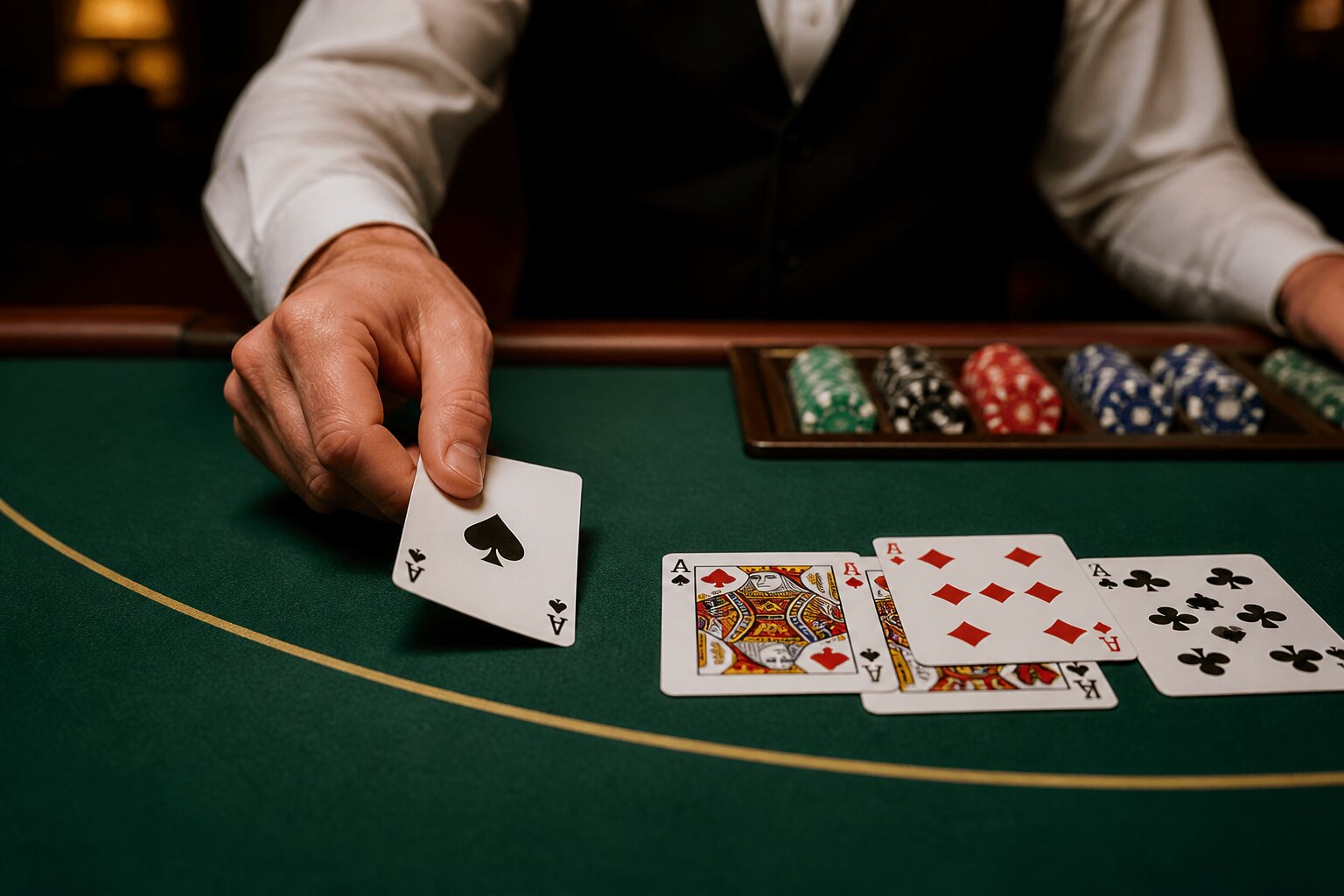
Players commonly call Aces, 10s and face cards “power cards” because they have a big impact on hand totals. An Ace can count as 1 or 11, giving flexibility, while 10-value cards and face cards immediately push totals closer to 20 or 21. That strong influence on how hands develop is why the nickname is useful in conversation.
Official rules do not use the phrase “power card.” They simply treat these cards by their values. Specifically:
- Aces are flexible and may count as 1 or 11 depending on which value benefits the hand.
- Tens are worth 10.
- Face cards (Jack, Queen, King) are each worth 10.
The practical effect of those values explains why players single them out when discussing strategy and outcomes rather than any special legal status in the rules. In play, recognising when power cards are likely to appear can affect decisions about hitting, standing or doubling down, and it is a common shorthand when analysing hands and dealer upcards.
Can You End the Game on a Power Card?
Yes. In standard blackjack the final card you receive can be any card from the deck, including an Ace or a 10-value card. What matters for the result is the hand total you finish with compared to the dealer’s total, not the particular identity of the last card.
It is worth noting that an Ace or a 10-value card can have a big effect on your total because of their values. An Ace can count as 1 or 11, and a 10-value card moves many hands closer to 21, so receiving one as your final card may change whether you win, lose or push.
Blackjack as a special outcome normally refers to a two-card total of 21, so you cannot achieve a natural blackjack by drawing a later card. Any bonuses or specific payouts tied to a particular final card are not part of standard play.
Some novelty games or side bets introduce extra features linked to specific cards. In those variants you might see rules that reward or penalise certain outcomes, but these are always described in the game rules before you play. Always check the table rules so you understand any special conditions or side bet terms.
Official Rules Covering Power Card Outcomes
Regulatory frameworks require that outcomes be transparent and based on hand totals and established payout tables. High-value cards are handled according to their face values and the rules around Aces; they are not singled out for extra rewards or punishments.
Where a casino offers a variant with a bonus or mini-game triggered by particular cards, those features are separate from standard blackjack play and are set out in the game’s information. For regular blackjack rounds, the comparison is straightforward: your total versus the dealer’s total.
If you’re wondering how this applies at your preferred site, the quickest way to be sure is to check the game’s information panel before you play—that will list any special bets or side features.
What Happens If the Last Card Is a Power Card?
When your last card is an Ace or a 10-value card, it simply changes your total in the same way it would at any earlier point in the hand. That could give you a strong finished total such as 20 or 21, lead to a push if the dealer matches your total, or cause a bust if it takes you over 21.
In short, the final card affects the numerical result but does not carry independent consequences beyond how it alters the hand’s value. Special variants may state different outcomes, but these are exceptions that are clearly identified in their rules.
A brief note on Aces: because they can count as 1 or 11, the same Ace can be the reason a hand reaches a high total without busting. That flexibility is why Aces are often singled out in strategy discussions.
Common Misconceptions About Power Cards
A lot of myths circulate at tables. One is that finishing on a power card automatically gives a win or a bigger payout—this isn’t supported by standard rules. Another is that casinos secretly reward particular cards; regulated games use published rules and payout tables, so any such feature would be visible to players.
Some players assume power cards change the underlying probabilities of a round. While high-value cards influence the numerical outcomes of hands, they do so as part of the normal card values and rules — there are no hidden advantages attached to them in standard play.
Clearing up these misconceptions helps you focus on decisions that matter: how to play against the dealer’s upcard, how Aces are counted, and how variants or side bets may alter returns.
Card Outcomes: How Power Cards Affect Your Hand
High-value cards can move a hand quickly toward totals that are strong against the dealer — for example, a 10-value card on a 10 becomes 20, which is often a winning position. An Ace paired with a 10-value card makes a natural blackjack, which typically pays out at the higher blackjack rate and ends the hand immediately.
Outside naturals, these cards still shape the logic of play. If you have a soft total (one that includes an Ace counted as 11), the presence of that Ace changes the risk of hitting again. Conversely, a 10-value card can convert a marginal total into one that calls for standing. Understanding those interactions helps you weigh options and interpret outcomes.
When a game offers side bets or bonus rounds that reference particular cards, they are separate mechanics and come with their own pay tables and odds; the core blackjack rules remain focused on final totals.
Penalties or Consequences for Finishing on a Power Card
There are no standard penalties simply for finishing your hand on a high-value card. Regulatory standards and published rules require that results follow the usual resolution mechanics, which typically include:
- comparisons of player and dealer totals to determine wins, losses or pushes
- the standard payout structure set out in the game rules or house table
If a specific variant imposes different outcomes tied to particular cards, that will be made clear in the game's rules. Always read the variant rules before play so you are aware of any special treatments or side-bet outcomes that might apply.
In normal play, treat a power card like any other card in terms of how it affects your chance of beating the dealer. It may improve, worsen, or leave unchanged your prospect of winning, but it does not by itself create an additional penalty or bonus unless the rules explicitly state otherwise.
FAQs Regarding Power Cards in Blackjack
Below are clear answers to common questions about power cards and their effect on outcomes.
Do I get a bonus for finishing with a power card?
No. Standard blackjack does not award a bonus simply for ending with an Ace or a 10-value card. Any bonus or special payout would be part of a distinct side bet or variant and would be stated in the game rules.
Can power cards guarantee me a win?
No single card guarantees a win. High-value cards can create strong totals, including naturals, but the result still depends on your finished total compared with the dealer’s.
Are there ever penalties for ending on a power card?
Not in standard play. Any unusual consequences would be specific to a variant and would be described before you play.
Should I always hit if I have a power card?
Whether to hit or stand depends on your total and the dealer’s upcard. Power cards influence those totals, but the correct decision varies by situation and by basic strategy considerations.
Where can I find the rules for my game?
Game-specific rules and any house variations are usually available in the information section of the game. Checking them will tell you if a variant includes side bets, bonus features, or other differences from standard play.
Play with an understanding of how cards affect totals and rely on published rules to know when variants alter outcomes. That approach keeps the game straightforward and lets you focus on making informed choices.
**The information provided in this blog is intended for educational purposes and should not be construed as betting advice or a guarantee of success. Always gamble responsibly.