
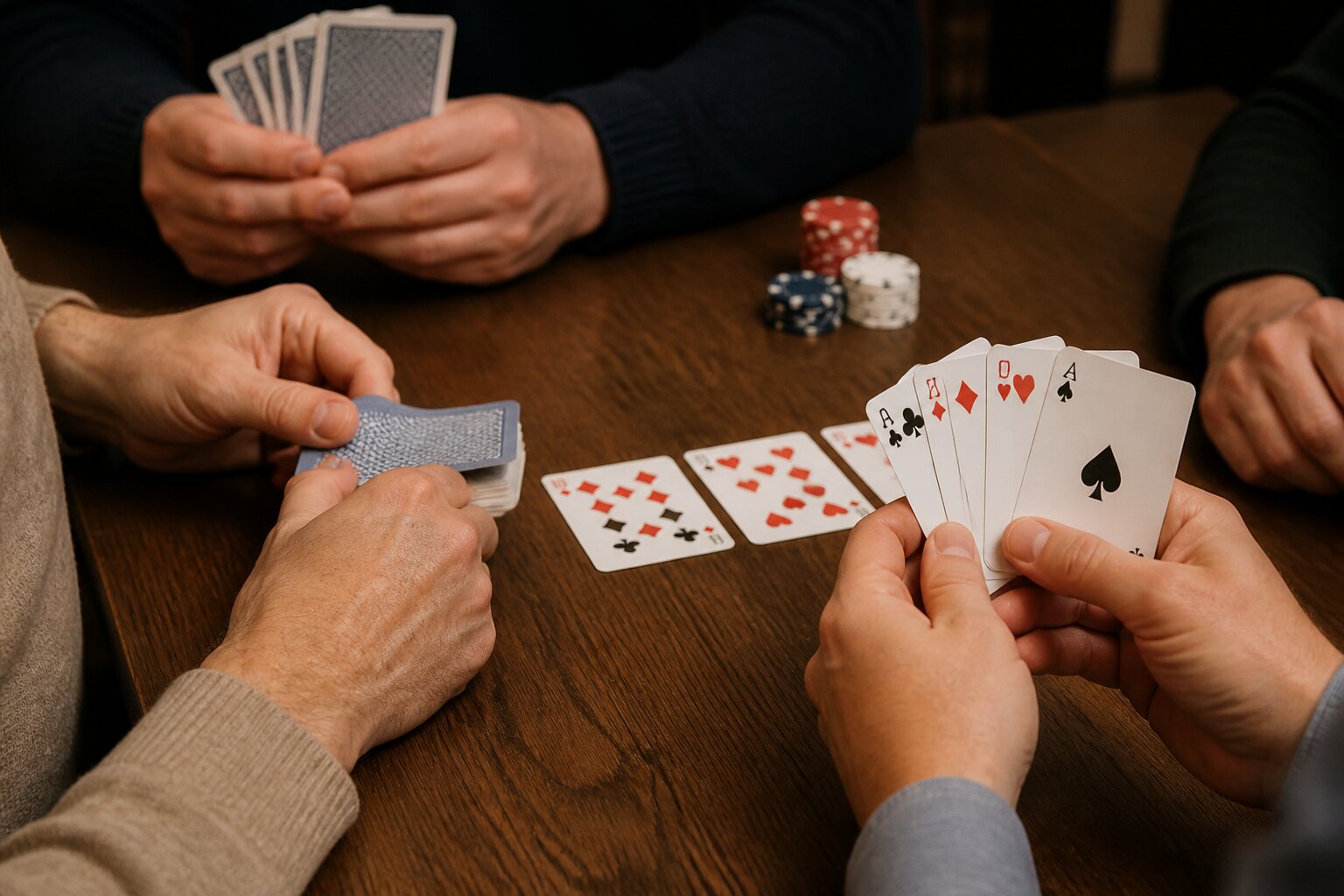
Looking for a card night that’s never the same twice? Dealer’s Choice is the answer. This lively card game lets the dealer set the rules each hand, bringing a fresh twist, plenty of laughs and a fair dose of friendly chaos to every round.
Whether you’re already a card game enthusiast or just after something new to try with friends, Dealer’s Choice is a great way to keep everyone on their toes. Read on to learn where it came from, how to play and the many ways you can run a session that stays interesting all evening.
Curious about how to set it up and what variations to try first? The sections below guide you through the essentials and offer ideas to keep your next game night memorable.
What Is Dealers Choice and How Does It Differ From Other Card Games?
Dealer’s Choice isn’t a single set of rules but a format in which the dealer names the game each round. That might be a familiar poker variant, a house rule, or a creative twist the dealer invents on the spot. The result is a constantly changing game flow where strategy and table dynamics shift as the deal moves around.
Unlike fixed-format games that use the same rules each hand, Dealer’s Choice encourages variety. Dealers might pick Texas Hold’em, Omaha or Five Card Draw, or they might call a short, quirky variant that tests bluffing and adaptability. Before play begins, groups usually agree on an allowed pool of games so everyone knows what to expect.
Agreeing upfront on which games are permitted and on any betting boundaries keeps the evening fair and fun. That clarity matters most when chips or money are involved, so take a moment to set those limits and confirm everyone’s comfortable with them.
How Do You Set Up Dealers Choice?
Putting a Dealer’s Choice session together is simple, but a little organisation helps the night run smoothly. Gather your players—four to eight tends to work best—choose the deck or decks you’ll use and decide how you’ll track bets, whether with chips, a scorepad or simply playing for points.
Before the first deal, agree on which game types will be allowed and on any house rules. Pick the opening dealer by a mutual method such as a high-card draw, and ensure everyone understands the agreed bet limits. With those basics settled, the dealer can announce the first game and explain any special rules for that hand.
Keeping conversations short and clear when rules change avoids confusion. If a dealer introduces a variant that requires jokers or an extra deck, that should be explained before play starts so everyone has the same understanding.
Rules Of Dealers Choice Card Game
Dealer’s Choice blends a set of steady practices with game-specific rules that vary each hand. The framework keeps play organised while still allowing the dealer to be creative.
General Rules
Below are the core practices that most groups follow to keep the session orderly and enjoyable.
- The dealer rotates around the table after every hand.
- At the start of each round, the dealer names the chosen game and explains any special rules.
- All players must agree to the rules before the hand begins.
- Standard card etiquette applies: play in turn, respect the agreed betting limits and be clear about bets and raises.
These basics give structure to the ever-changing elements introduced by each dealer.
Rules That May Change
Beyond the general rules, many aspects can shift depending on the dealer’s choice. Hand rankings may follow standard poker conventions, but a dealer might specify a different ranking order for a particular variant. Wild cards or special actions can be introduced, and some rounds might split pots between high and low hands. The key is that any change must be explained and accepted before cards are dealt so everyone understands how the hand will be judged.
If a player is unsure about a variation, the table should pause for clarification; clear communication keeps things fair and prevents disputes.
What Are The Most Common Game Variations In Dealers Choice?
Variety is the heart of Dealer’s Choice, and many groups build a rotation of familiar poker variants alongside creative house games. Some nights focus on classic forms, others on novelty rounds that test different skills like reading opponents or adapting to shifting rules.
When you encounter a new variation, take a moment to confirm the hand rankings and whether any cards are wild. That small check keeps the flow moving and avoids arguments mid-hand.
Popular Card Games Included In Dealers Choice
Many Dealer’s Choice sessions include well-known poker games because they’re familiar to most players and easy to explain.
- Texas Hold’em: Players use two private cards and five shared community cards to form the best five-card hand.
- Omaha: Each player receives four hole cards and must use exactly two of them combined with three community cards.
- Five Card Draw: Players receive five cards and have the chance to exchange some before the final betting.
- Seven Card Stud: Cards are dealt in stages so each player eventually has seven cards, with the best five-card hand winning.
- High/Low Split Games: Pots can be split between the highest and lowest qualifying hands, adding a strategic layer.
- Wild Card Games: The dealer may designate specific cards as wild, allowing them to substitute for others to complete hands.
These options cover a wide range of play styles and strategic demands. Groups often add their own invented rounds—just make sure rules are clear before play starts.
Where Did Dealers Choice Originate?
Dealer’s Choice grew out of casual home poker games that wanted more variety than a single repeated format could offer. As players sought fresh challenges, the simple idea of letting the dealer pick the next game took hold in private games and social clubs in the late 19th and early 20th centuries.
There’s no single inventor; the format spread organically as a social way to keep meetings lively and interactive. Its informal roots explain why it’s still most commonly played among friends at home rather than in regulated venues, and why flexibility and fairness remain central to the tradition.
Knowing that the format evolved from social play helps explain its focus on fun and interaction rather than strict, unchanging rules.
Can Dealers Choice Be Played With Any Deck?
Most Dealer’s Choice games use one or two standard 52-card decks because those work well with common poker variants and keep the learning curve low for new players. Standard decks make it easier to compare hands, follow betting patterns and judge relative hand strength, which helps the game move smoothly.
However, some hands may call for special additions or changes. Common variations include:
- Jokers added as wild cards.
- Multiple decks shuffled together for larger groups or extended play.
- Specially marked or stripped decks to create bespoke games or different probabilities.
These variations are acceptable provided everyone agrees on them beforehand. If your group chooses a non-standard deck, make sure to explain clearly how those cards alter play before dealing. Helpful points to cover include:
- Which cards are wild and how they behave.
- How many decks are in play and when reshuffles occur.
- Any changes to hand rankings or dealing procedures.
Making these details explicit keeps expectations aligned, reduces disputes and helps ensure the game remains fair and enjoyable for everyone.
Are There Any Misconceptions About Dealers Choice?
There are a few common misunderstandings that can affect how players approach a session, so it’s worth addressing them directly.
It isn’t a single, fixed game; the format is about rotating the choice of game, not about a unique rulebook. That variety is what draws many players, but it also means you should be ready to adapt as rules shift from hand to hand.
Another misconception is that certain strategies guarantee consistent success across all hands. Because the games and rules change frequently, adaptability and understanding each variant are more valuable than relying on a single approach.
Finally, while bets sometimes appear in Dealer’s Choice play, many groups prefer to play for points or with low stakes. Agreeing on how bets are handled and sticking to agreed limits keeps the focus on enjoyment and the social side of the evening.
With those points understood, Dealer’s Choice can provide a lively, varied night that suits a range of skill levels and tastes.
**The information provided in this blog is intended for educational purposes and should not be construed as betting advice or a guarantee of success. Always gamble responsibly.