
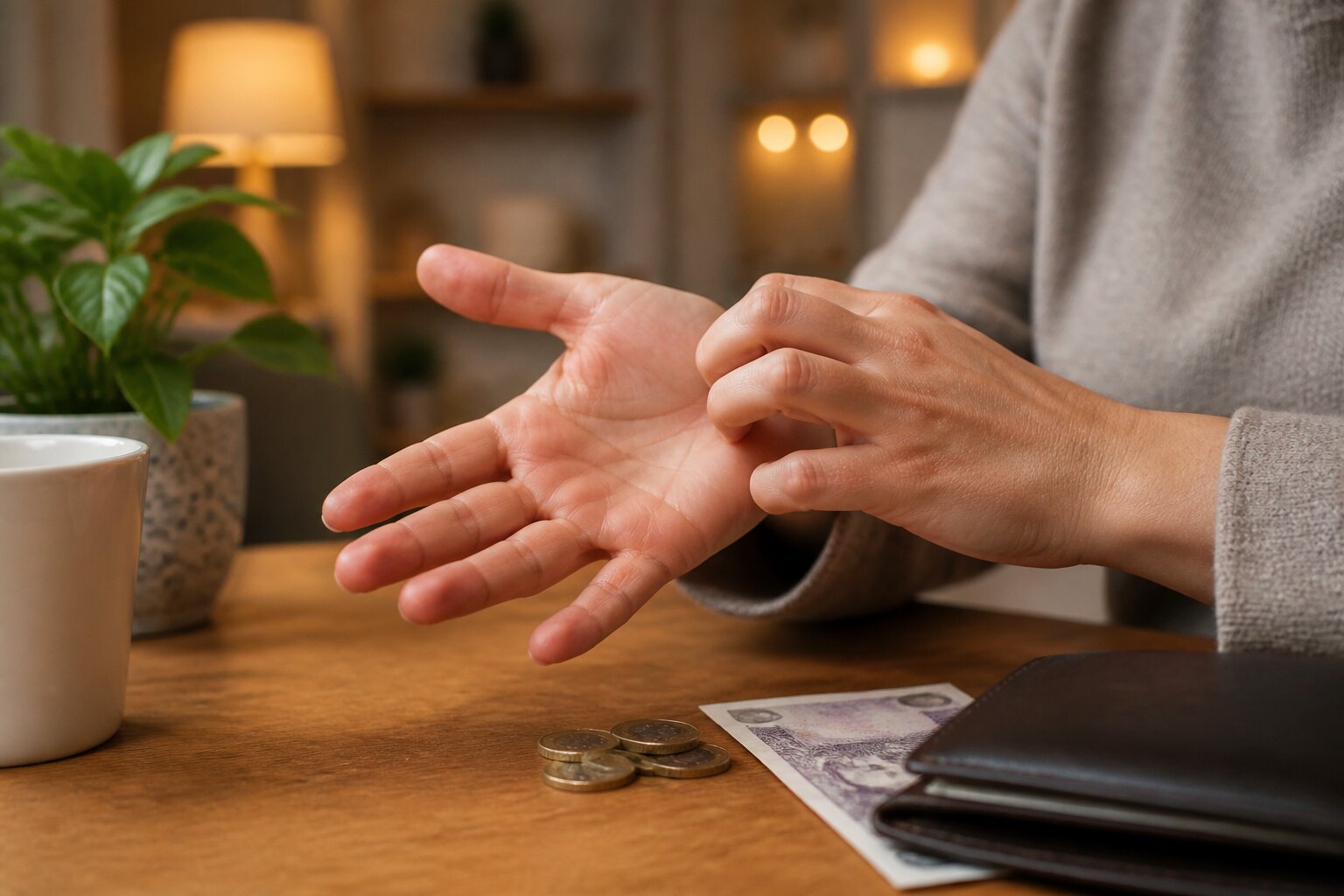
Have you ever felt an itch in your right hand and wondered if it means good fortune is coming your way? Across the UK and beyond, an old belief holds that a tickle in your right palm could signal incoming money, a lottery win, or some other financial gain.
Some people still treat the idea seriously, while others see it as a quirky piece of folklore. Before you start planning what to do with imagined “winnings”, it’s worth looking into where the belief came from and what else might explain the sensation.
Curious? Let’s explore the origins, the science and the sensible steps to take when your hand starts to itch.
What Does It Mean When Your Right Hand Itches?
In everyday conversation, an itchy right hand is often described as a sign that money will be received, whereas an itchy left hand is linked to spending or giving money away. The narrative is tidy and appealing: each hand plays a simple role in the exchange of cash.
However, this is folklore rather than fact. There’s no scientific evidence that a physical sensation like an itch can predict financial events or change the outcome of lottery or gaming results. Games of chance are governed by random processes, and physical sensations do not influence those processes.
That said, the idea persists because it is a memorable, shared story. It offers people a way to explain the unexpected and adds a little drama to ordinary life. Next, we’ll look at how this belief appears in different cultures and why it varies so much from place to place.
Cultural Beliefs Surrounding Right Hand Itching
Right hand itching crops up in many traditions around the world, but the details differ. In parts of Britain and Ireland, the right palm is often linked with receiving money; in parts of India the interpretation can vary by gender or local custom. Elsewhere, an itchy palm may simply be taken as a sign that change is coming, not necessarily financial change.
These variations show how a single sensation can be given different meanings depending on local stories and history. The belief has been transmitted through families and communities for generations, shaping how ordinary sensations are talked about. Exploring these cultural angles helps explain why the superstition endures, even when there’s no factual basis for it.
Moving from folklore to fact, the next section looks at whether there’s any real connection between hand itching and wealth.
Right Hand Itching and Wealth: Is There a Real Connection?
Despite how widespread the idea is, there’s no reliable evidence to link an itchy right hand with receiving money or winning on a lottery. Physical sensations arise from biological or environmental causes, while outcomes in games of chance are determined by random mechanisms and regulated procedures.
Beliefs about omens can be entertaining and they can influence how people feel, but they do not change how randomised systems operate. Thinking about chance as a matter of statistical likelihood rather than omen helps keep expectations realistic. With that in mind, the following section addresses common versions of the myth and explains why they don’t hold up.
Common Myths About Right Hand Itching Debunked
Superstitions around itchy hands are easy to repeat because they’re simple and memorable. But when tested against how lotteries and modern gaming systems function, they don’t stand up.
Does an itchy right hand predict lottery wins?
There is no evidence that any physical sensation can affect lottery draws or gambling outcomes. Draws use random number generation or mechanical procedures that do not respond to human sensations. Any correlation people report is a coincidence, not a causal effect.
Other rituals and charms
Many people follow rituals—carrying tokens, wearing specific colours or performing small pre-game routines. These practices can provide personal meaning or confidence, but they don’t alter the underlying randomness of draws or games. What matters for fairness is that the rules and systems are impartial for everyone.
If you’re interested in the human side of these traditions, the next section explains the common medical reasons behind an itchy hand, which are far more likely causes of the sensation.
Medical Reasons for Right Hand Itching
There are straightforward medical explanations for an itchy right hand. Dry skin is one of the most common causes, especially in colder weather or after frequent hand-washing. Irritation from soaps, detergents or cleaning products can also trigger itching, as can insect bites or contact allergies.
Skin conditions such as eczema or dermatitis produce recurring itching and sometimes visible redness or flaking. In less common cases, systemic health issues—like circulation problems or certain metabolic conditions—can cause ongoing itchiness.
If the cause isn’t obvious, a pharmacist or GP can help identify triggers and recommend treatments, such as moisturisers, topical creams or allergy management. Understanding these practical, health-based causes keeps the issue in the realm of healthcare rather than superstition. That practical focus leads on to when it’s time to seek professional advice.
Should You Be Concerned About Persistent Itching?
Occasional itching is usually harmless, but persistent or severe symptoms deserve attention. If the sensation interferes with sleep or daily tasks, or continues despite simple remedies, it is sensible to consult a healthcare professional. Early assessment can help identify the cause and guide appropriate treatment.
Persistent itching may indicate a chronic skin condition, an allergic reaction, or an underlying medical issue that benefits from targeted treatment. Left unchecked, ongoing scratching can lead to skin damage, thickening of the skin or secondary infection. Seeking advice is a pragmatic response that protects wellbeing more effectively than assigning extra meaning to the sensation.
Be particularly alert if the itching is accompanied by other signs such as sudden swelling, difficulty breathing, unexplained weight loss, fever, widespread rash, or if it is limited to one area but steadily spreading. Consider seeking prompt medical attention if the itch follows a new medication, recent travel, or exposure to potential allergens. Older adults, young children and people with chronic illnesses may also need earlier assessment because of higher risks of complications.
The next section outlines specific signs that suggest professional assessment is needed.
When to Seek Medical Advice
Most itchy hands settle with moisturising, avoiding irritants and simple home care. However, there are clear signs that professional input is needed.
If the itching persists over several days, intensifies, or fails to respond to over-the-counter remedies, a pharmacist or GP can assess possible causes. Redness, swelling, blistering, spreading rash, pain or any symptoms that disrupt sleep or daily life are reasons to book an appointment. A clinician can examine the skin, consider allergies or infections, and recommend appropriate treatments or tests.
Putting health first ensures symptoms are managed correctly, leaving little reason to treat an itch as anything more than a physiological signal. With that settled, you can return to everyday life with confidence and peace of mind.
**The information provided in this blog is intended for educational purposes and should not be construed as betting advice or a guarantee of success. Always gamble responsibly.