Have you ever watched a player call a huge bet on the final card and wondered what made them do it? Those moments, known as hero calls, are dramatic because they force a player to make a high-stakes choice with a marginal hand and limited information.
This guide explains what a hero call is, when it can make sense, and how experienced players weigh the decision. Read on and you will find practical examples and the thinking behind these tense spots so you can recognise when one might be justified in your own play.
Remember that poker is a game of decisions. You should be at least 18 to play and keep your wagering within your means.
What Is a Hero Call in Poker?
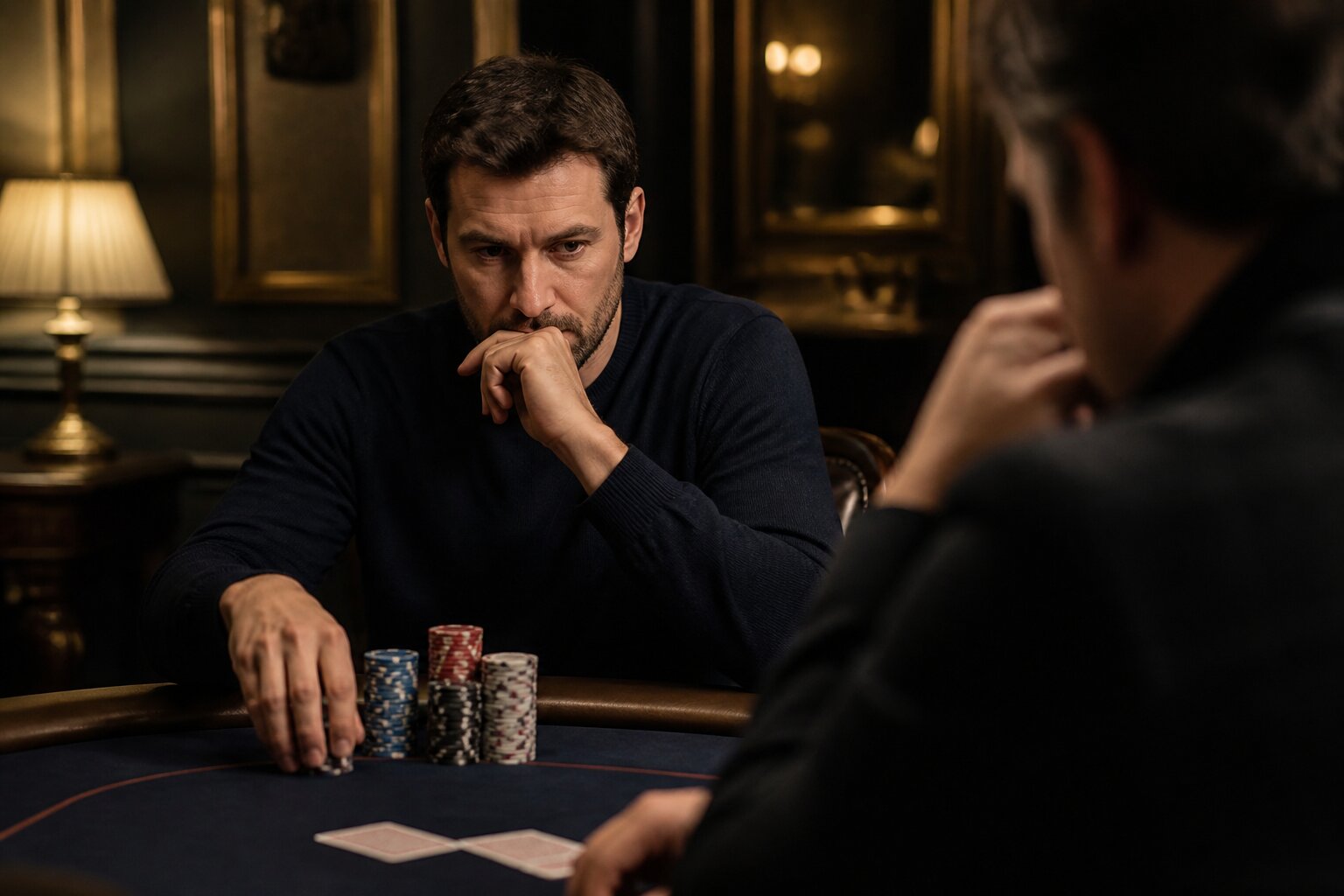
A hero call occurs on the final round of betting when a player calls a large wager despite holding a weak or borderline hand because they suspect the opponent is bluffing. It is a high-risk, high-reward action that tests your read on the other player more than the strength of your cards.
For example, imagine a river completes the board with an unlikely pairing and an opponent suddenly makes a large bet. If you hold second pair and remember seeing that opponent bluff in similar spots, you might decide the bet represents weakness and call. That decision, when it pays off, is a classic hero call.
These plays are not routine. Most hands are settled by careful value bets, folds and routine calls. Hero calls require confidence, a clear read on the opponent and an awareness of pot odds and stack sizes. They work best when you can point to specific evidence that your opponent is capable of bluffing in that situation.
When Should You Consider Making a Hero Call?
Deciding to make a hero call involves several threads of reasoning coming together. First, reflect on the board texture and how likely it is that your opponent's range includes a missed draw or frequent bluffs. Second, consider how that opponent has behaved earlier in the hand and over the session; their pattern will often be the key factor.
Pot odds matter too. If the call represents a small fraction of your stack relative to the pot, making a call becomes easier to justify. Conversely, if the call requires risking most of your chips, you need stronger evidence that your opponent is bluffing.
Also think about table dynamics. Against an opponent who rarely bluffs, hero calls are much less attractive than against a player who bets aggressively with mixed hands. Finally, ask whether you are in the right mental state to make a level-headed decision. If you are frustrated or distracted, it is usually wiser to fold and pick a clearer opportunity later.
When these elements align—suitable board, convincing opponent tendencies, reasonable pot odds and clear thinking—the case for a hero call becomes stronger.
Identifying Tells and Patterns in Opponents
Reading opponents begins with consistent observation. Take note of timing patterns, bet sizing and how their actions change after wins or losses. For instance, a player who suddenly speeds up on a big river bet may be acting out of confidence rather than strength, whereas long pauses followed by a big wager could indicate deliberation over a bluff.
Betting patterns across multiple hands are particularly revealing. Does a player always bet large on the river after checking the turn? Do they only fire a river bet with certain board textures? Building a mental profile of these habits helps you judge whether a large river bet represents value or a bluff.
Remember that players can and do change tactics, sometimes deliberately to confuse observers. Treat patterns as probabilistic clues rather than certainties. Combine these behavioural reads with the logical assessment of ranges to reach a balanced conclusion.
If patterns are unclear, it is usually better to avoid risky calls; if they are consistent and point to frequent bluffs, a hero call may be justified.
Why Are Hero Calls So Memorable in Poker?
Hero calls stand out because they compress tension, psychology and strategy into a single moment. They reveal a player’s willingness to act on a read and the courage to stake a significant portion of chips on that judgement. When a hero call succeeds, it highlights the opponent-reading and narrative aspects of poker more than any single card.
These hands also make for instructive examples. Analysing a memorable hero call teaches you about range construction, timing, and how the flow of a hand can shape a final decision. But it is important to keep perspective. While dramatic, they are exceptions rather than the norm; most profitable play comes from consistent, sound choices rather than sporadic heroics.
Thinking about why a hero call worked or failed gives practical lessons that can be applied to everyday decisions at the table.
Common Mistakes Made With Hero Calls
One frequent error is letting emotion override evidence. Players sometimes call big bets out of frustration or a desire for excitement, not because the read and pot odds support the decision. Another mistake is misreading the opponent by relying on a single tell or an isolated previous bluff rather than a broader pattern.
Bankroll management errors are also common. Risking an outsized portion of your stack on a marginal read can leave you unable to recover if the call fails. Players sometimes overestimate their ability to read hands and become convinced they are right when the facts do not support it.
To avoid these pitfalls, treat hero calls as deliberate, evidence-driven choices. Check the opponent’s tendencies, consider the math of the situation and be honest about your emotional state before committing chips.
Myths About Hero Calls in Poker
There are several persistent myths that can mislead players. One is that hero calls are a hallmark of great play. In truth, great players use hero calls sparingly and as one element of a broader strategy. Another myth is that hero calls are often profitable if attempted frequently; overuse typically converts a powerful tool into a losing habit.
Some believe that hero calls rely on an innate knack that cannot be taught. While intuition can play a role, successful hero calls are normally the result of study, experience and pattern recognition rather than an inexplicable instinct.
Understanding what hero calls are not helps you use them more effectively when the situation truly calls for it.
How to Mentally Prepare for Big Poker Calls
Mental preparation matters. Entering a hand with a clear head improves your capacity to weigh patterns and pot odds objectively. Players who intentionally slow down their decision process can avoid impulsive calls and reassess the situation from different angles.
Developing pre-session routines—brief warm-up review of opponents, a pause before key decisions, or a short break after a big hand—helps keep judgement steady. When under pressure, stepping back for a moment to breathe and review the available evidence often produces better outcomes than acting immediately.
Knowing and respecting your financial limits also supports sound decisions. When the stakes threaten to exceed what you can comfortably risk, the pressure can distort judgement and make hero calls more dangerous.
Is a Hero Call Ever the Wrong Move?
Yes. A hero call is the wrong move when the available evidence does not support a bluff or when pot odds are unfavourable. If the opponent has shown a line consistent with a value hand and you lack corroborating reads, folding is the prudent option.
Conservative play is not timid play; it is a sustainable way to protect your stack and capitalise on genuine edges. Folding in spots where the call would be speculative preserves your ability to exploit clearer opportunities later in the session.
Good players know the value of restraint and pick their moments rather than trying to manufacture them.
Mistakes to Avoid After Making a Hero Call
The aftermath of a hero call requires care. Winning can lead to overconfidence, prompting overly aggressive decisions in subsequent hands. Players who ride that wave often expand their range, stake too many chips on marginal spots, or ignore changing table dynamics. These shifts usually reduce long-term returns and increase variance, so stay aware of how a single win feels compared with your usual strategy.
Losing can provoke tilt, where attempts to quickly recover losses produce more mistakes. Tilt can show up as chasing bluffs, calling down with weak holdings, or abandoning a disciplined approach. Recognise these patterns early and step away for a short break if emotion is affecting your choices.
The healthiest response is measured reflection. Consider what information led to the call and whether that evidence would support the same action in future similar spots. Ask yourself if position, stack sizes, bet sizes and your opponent tendencies were properly weighed, and whether any invisible biases influenced the decision. Use the experience to refine your reads and adapt your approach without letting a single result dictate your play.
Maintaining emotional balance after a big hand preserves long-term decision quality. Practise routines that help you reset, such as taking notes on the hand, reviewing key hands later, or setting session limits. Remember that responsible play and consistent thinking are the best ways to improve over time.
Should You Use Hero Calls in Online Poker?
Online poker changes how you gather information. Without physical tells, timing, bet size and action patterns become the primary sources of data. Players tend to act faster online and use consistent bet sizing, so it takes patience to detect deviations that might indicate a bluff.
Rely more on statistical tendencies and the history of an opponent’s actions. For example, multiple-small-sample observations of frequent river aggression are stronger evidence online than one isolated hand. Also be mindful of multi-tabling and player style differences, which can make some opponents predictable and others quite variable.
Above all, keep emotional control when playing online. Quick rhythm and constant access make it easy to act impulsively, so set limits and take breaks when needed. With careful observation and disciplined play, hero calls can still be part of an effective online toolkit, but they must be used selectively.
In the end, hero calls are dramatic moments that test your reading skills and discipline. Use them sparingly, support them with clear evidence and protect your bankroll so you can keep making thoughtful decisions at the table.
**The information provided in this blog is intended for educational purposes and should not be construed as betting advice or a guarantee of success. Always gamble responsibly.