
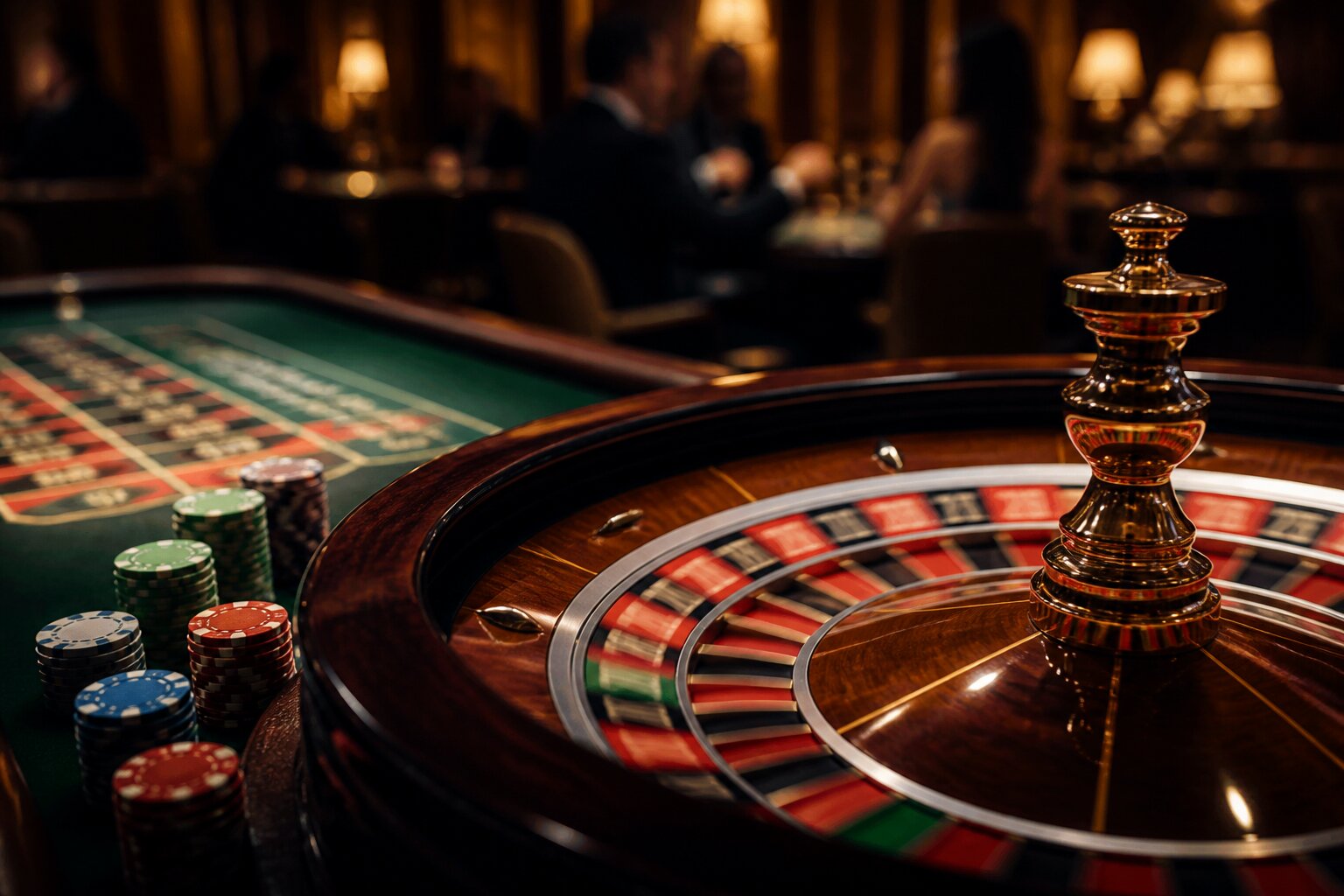
If you’ve ever watched a roulette wheel spin round and round, you might have wondered how many spins happen in an hour or over a full day. Whether you play in a casino or online, the pace of play shapes the experience and how you manage your time and budget.
This article breaks down typical spin rates across different settings, explains what affects the speed, and looks at how to interpret those numbers so you know what to expect.
How Many Roulette Spins Happen Per Hour?
There is no single answer because spin rates vary by setting and format. In a land-based casino with a live dealer, the norm is roughly 30 to 40 spins per hour. That reflects the time taken for players to place chips, for the dealer to close betting and pay winners, and for brief social interaction around the table.
Automated online roulette games are much faster. Digital rounds often complete every 30 to 60 seconds, which means 60 to 100 spins an hour are possible when the software runs continuously and a player clicks to start each round.
Live dealer roulette streamed online typically falls between the two, at about 40 to 60 spins per hour. You get the human element but fewer of the physical delays found in a busy casino.
If you prefer a concrete comparison: think of a land-based table as a relaxed conversation, live dealer streaming as a focused meeting, and automated online play as a quick series of messages. Each offers a very different tempo.
What Factors Affect the Number of Spins in a Day?
Several practical elements determine how many spins take place over a day.
The game format matters first. Automated games remove most human pauses so rounds happen back to back. Traditional tables require time for dealers and players to handle bets and payouts. Live-streamed tables use digital tools to speed some steps but still rely on a person to spin.
Player behaviour also counts. Busy tables with lots of discussion or complex bets slow things down. A solitary online player can move through rounds much faster. Dealer pace influences timing too; some dealers are brisk and keep a steady rhythm, while others allow more time between spins for socialising or counting chips.
Operational factors in land-based venues affect totals over a day. Opening hours restrict play, and scheduled breaks for maintenance, shift changes, or security checks pause the table. Online platforms can run 24 hours, but they too may stop briefly for software updates or audits.
None of these factors change the fairness of the game. They only change how many opportunities there are to play within a given timeframe.
How Do Land-Based and Online Roulette Spin Frequencies Compare?
Land-based casinos, online automated games, and live dealer streams each create a distinct pace.
Land-based tables prioritise social play and careful handling of cash and chips, which reduces the number of spins but can make sessions more leisurely. Online automated roulette is built for speed: bets are placed with clicks, outcomes are resolved instantly, and the next round starts almost immediately. Live dealer online games blend the two, preserving the feel of a real table while trimming some real-world delays through digital features.
This contrast means players can choose a format that suits their preferred tempo—whether that is more social and unhurried or faster and more action-orientated.
Is There a Limit to the Number of Roulette Spins in a Casino?
There is no fixed limit on spins in a day, but practical constraints apply. A table can only operate while the venue is open, so opening hours set the upper bound in land-based casinos. Regular maintenance, dealer breaks and shifts, and chip handling also reduce the total number of spins across a day.
Online games are not bound by venue hours, so they can run continuously. Even so, platforms schedule brief maintenance windows or software updates that interrupt play. Regulatory oversight requires periodic checks and audits to ensure fairness, which can also produce short pauses.
In short, the limit is defined by how long a table or server is active and how operations are managed during that period.
How Are Spin Times Calculated?
Spin time is typically measured from the moment betting is closed to when the winning number is declared and bets are settled. For a live table that includes the dealer’s announcements, the wheel and ball motion, and the payment of winning bets. For automated games, timing covers the software’s random number generation, animation, and presentation of the result.
Casinos and operators monitor these timings to maintain a steady cadence and to spot any unusual delays or anomalies. Busy tables tend to show greater variation in spin times because of human factors; automated systems are more consistent.
What Is the Average Duration of a Single Roulette Spin?
A typical live casino spin lasts about 1.5 to 2 minutes, from betting closure to payout. Online automated spins are often 30 to 60 seconds, thanks to instantised processes. Live dealer streams usually take roughly 60 to 90 seconds per spin, combining human action with digital efficiency.
Actual durations vary with player interaction, dealer speed, and how the operator configures the game clock. Those averages give a realistic sense of what to expect across formats.
Common Myths About Roulette Spin Frequency
A few misconceptions about spin frequency recur among players, and it helps to separate fact from fiction.
One myth is that a faster game somehow biases outcomes. In reality, the mechanics that determine results are independent of timing, and regulatory checks ensure randomness and fairness regardless of pace. Another mistaken belief is that a wheel becomes more likely to land on certain numbers after many spins; each round is an independent event and prior results do not influence future ones.
A final myth is that increased spin frequency undermines the integrity of the game. That is not the case: whether spins are frequent or slow, standards of testing and oversight remain in place to preserve fairness.
These clarifications help when you’re deciding which format fits your priorities: speed, atmosphere, or a balance of both.
Why Does Spin Frequency Matter for Players?
Spin frequency affects session rhythm and how quickly a player progresses through stakes and decisions. Faster games lead to more rounds in a given time, which can mean more opportunities to play but also a faster drain on time and budget if limits are not observed. Slower games give more time to consider bets, enjoy social interaction or step away between rounds.
Awareness of spin frequency helps you choose the right environment and pace to match your goals. It also informs sensible session planning: set time and spending bounds before you start and take breaks when needed. Keeping an eye on pace is a practical way to manage how much and how often you play.
Summary: Key Takeaways on Daily and Hourly Roulette Spins
Understanding how often a roulette wheel spins helps you pick the format that suits you and plan your session sensibly. In-person tables tend to be slower and more social, automated online play is faster, and live dealer streams sit in between. Factors such as table type, player interaction and operational practices shape spin totals, while regulatory checks maintain fairness regardless of pace.
Remember to set limits and pace your play to match the tempo you prefer, and follow the UK Gambling Commission’s guidance to keep your experience safe and compliant.
At the end of the day, choosing the right format means finding a balance between how quickly you want to play and how much time and money you want to spend.
**The information provided in this blog is intended for educational purposes and should not be construed as betting advice or a guarantee of success. Always gamble responsibly.