
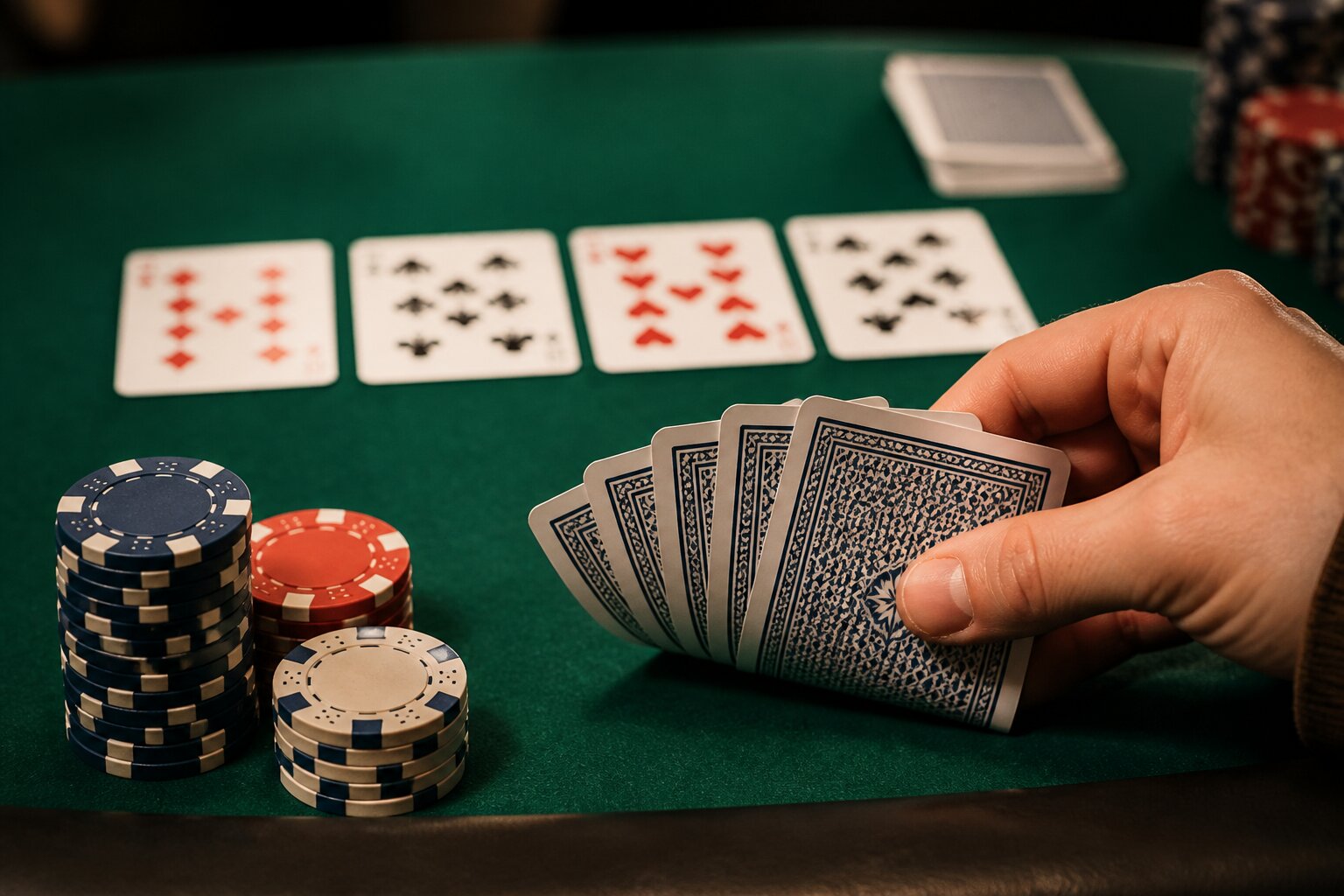
Fancy learning a classic card game that’s easy to pick up and packed with excitement? You’re in the right place. 5 Card Poker, particularly 5 Card Draw, is one of the most straightforward poker variants — ideal for a casual table with friends or an online session.
Before you start shuffling, it helps to know the rules and how hands rank. This guide takes you through the play, the common variations, and the hands you’ll want to recognise, all in plain English.
Ready to deal in? Read on and you’ll be comfortable at the table quickly.
What Is 5 Card Draw Poker?
5 Card Draw Poker is a traditional poker format in which each player is dealt five cards and tries to make the best five‑card poker hand. The dealer gives a complete hand up front, so there is no community card play. Betting rounds occur before and after the draw, keeping the structure simple and easy to follow.
The game’s simplicity comes from receiving a complete hand up front and then having one opportunity to exchange cards for better ones. That single draw creates the main strategic choices:
- which cards to keep,
- which cards to replace,
- and how your choices interact with betting and position.
Because there is only one draw, decisions tend to be more straightforward than in multi‑round games, but they still reward careful thought about odds, position and opponents’ behaviour.
5 Card Draw is a good starting point for learning poker fundamentals such as hand rankings, betting behaviour and reading opponents, while keeping the mechanics straightforward and suitable for casual play.
How Do You Play 5 Card Poker?
Play begins with everyone receiving five cards face down. After a first round of betting, players who remain can discard up to three cards and receive replacements from the deck. This draw is the moment to balance what you already hold against what you hope to achieve; for example, keeping a pair and discarding three unrelated cards in search of three of a kind or two pair.
Once the draw is complete there is a final round of betting, and any players still in the hand reveal their cards at the showdown. The best-ranked hand according to standard poker rankings wins the pot. Betting formats vary — you might encounter fixed-limit, pot-limit or no-limit — so confirm the structure before playing.
If you’re new to the game, watch how experienced players size their bets and react to changes after the draw: those observations are often as informative as the cards themselves.
Dealing & The Betting Rounds Explained
The dealer position rotates around the table, and each player is dealt five cards face down to keep hands private until the reveal. The initial deal is followed by a betting phase where players decide whether to stay, fold, call or raise based on their dealt hand.
After that first round of betting, the draw phase begins. Players who choose to draw exchange up to three cards from the deck; in some informal home games, all five may be exchanged if that’s been agreed beforehand. The draw changes the information at the table — what players choose to keep or discard can reveal hints about hand strength.
A second and final betting round then takes place. When it ends, remaining players show their hands and the best one takes the pot. Clear communication about house rules before the deal — especially about how many cards can be drawn — keeps the game running smoothly.
What Are the Rules for 5 Card Draw?
The core rules are simple and consistent across most games:
- Each player receives five face-down cards.
- Play moves clockwise from the dealer.
- Betting occurs in two rounds: after the initial deal and after the draw.
- During the draw, players may exchange up to three cards; some agreed house rules allow five.
- Players may “stand pat” and keep their original five cards.
- After the final betting round, hands are revealed and the best hand wins the pot.
- If hands tie in rank, high cards decide the tiebreak; if still even, the pot is split.
Fair play is essential: don’t hide cards or break agreed rules. Before you begin, confirm any local variations so everyone knows what to expect.
What Is the Hand Ranking in 5 Card Poker?
Understanding hand rankings is vital because they determine the winner at showdown. These are the standard headings, listed from strongest to weakest, with brief explanations and examples. Knowing them also helps you judge the strength of your hand compared with what opponents might hold.
Royal Flush
Ace, King, Queen, Jack and Ten all of the same suit. This is the highest possible hand and cannot be beaten, only matched. If two players have a royal flush, the pot is split between them.
Straight Flush
Five sequential cards all in the same suit (for example, 7–8–9–10–J of diamonds). A straight flush ranks below a royal flush and above four of a kind. Higher sequences beat lower ones.
Four of a Kind
Four cards of the same rank (such as four Queens). The fifth card, the kicker, is used to break ties between identical four of a kind hands.
Full House
Three cards of one rank plus two of another (for example, three 8s and two Kings). Full houses are compared first by the rank of the three of a kind, then by the pair.
Flush
Any five cards of the same suit, not in sequence. If two players have a flush, the highest card in each flush determines the winner, then the next highest if needed.
Straight
Five cards in sequence of mixed suits (for example, 4–5–6–7–8). Aces can be high or low depending on the rules, but they cannot wrap around in most games.
Three of a Kind
Three cards of the same rank. When tied, the highest side cards, or kickers, decide the winner.
Two Pair
Two cards of one rank and two of another. If two players have two pair, the higher pair is compared first, then the lower pair, and finally the kicker if needed.
One Pair
Two cards of the same rank. Ties are settled by the highest remaining cards in the hand.
High Card
If no player has any of the hands above, the single highest card determines the winner. If those are equal, compare the next highest cards until a difference is found.
Knowing these rankings helps you decide whether to defend a current hand or risk drawing for something better. Always play within your limits and be aware of responsible gaming practices.
How Many Players Can Take Part in 5 Card Draw?
5 Card Draw is flexible. It commonly plays well with 2 to 6 players; this range keeps play brisk and makes card distribution reliable. With two players the game is fast and heads-up strategy dominates. With three to six players there is more competition for pots and more strategic depth.
Larger groups are possible if you use multiple decks, but most home and online games work best in the smaller range. When more than six players join with a single deck, card removal becomes significant and the odds of certain hands change. Using extra decks can reduce that effect, but also alters hand probabilities and requires clear agreement on dealing and shuffling procedures.
Table dynamics also change with the number of players. More players usually means:
- Slower rounds, as each player takes time to act and to draw cards.
- Bigger pots, since more bets and calls can accumulate.
- Different strategy, because hand values and bluffing opportunities shift with player count.
Whether you play face to face or online, make sure everyone at the table is of legal age and aware of the rules before play begins. Play responsibly and follow any local gambling laws and platform terms.
Are There Any Common Rule Variations?
House rules can change how a game feels. Common variations include:
- allowing four or five-card draws in informal settings
- including jokers as wild cards
- using different betting limits such as fixed, pot or no-limit play
- adding a "bring-in" bet or using different ante structures to start action
If you are joining a new table, listen for how that game handles draws and betting and ask questions if anything is unclear. Clarify whether wild cards are in play, what the betting limits are, how antes or bring-ins work, and whether the game uses any local scoring or showdown rules.
Agreeing these points ahead of time avoids disputes and keeps the game fair and enjoyable. Good etiquette is to confirm stakes and time limits before you sit, and to play responsibly.
Common Mistakes Beginners Make
New players often make similar errors as they learn the game. One frequent error is preserving too many low, unrelated cards instead of drawing for combinations that matter. Another is committing too many chips to marginal hands; recognising when to fold keeps a bankroll intact and the game enjoyable.
Beginners sometimes overlook how opponents’ actions after the draw change the dynamic of a hand. Paying attention to betting patterns and what players choose to discard helps build a mental picture of the likely hands in play.
Setting a personal limit for each session helps maintain control and keeps the experience social rather than stressful.
Can You Play 5 Card Poker Online?
Yes, 5 Card Draw is available through a variety of online platforms, including software-based games and live-dealer formats that replicate a table setting. You can usually find versions optimised for both desktop and mobile browsers or as dedicated apps, giving flexibility on how and where you play. Online play provides convenience and a range of stakes to suit different players, from low-limit casual tables to higher-stakes rooms for more experienced players.
Many online providers offer both real-money play and free-play or demo modes, which let you try the rules and practise strategies without risking funds. Software versions typically use a random number generator to shuffle and deal, while live-dealer games use real cards streamed from a studio to your screen, offering a more authentic atmosphere.
Reputable sites display clear rules for each game and offer features to help manage play responsibly, such as:
- deposit limits to control how much you add over time
- session reminders so you can keep track of how long you have been playing
- self-exclusion and time-out options for taking extended breaks
Before you play for real money, confirm a site’s credentials and available player protections to help ensure your experience is fair and transparent. Useful checks include:
- verification of a recognised gambling licence and regulator details
- visible terms and conditions, including payout policies and game rules
- accessible customer support and clear information on responsible gambling tools
Always remember that poker involves an element of skill but also chance, and you should only play with money you can afford to lose. If gambling is causing you concern, seek help through official support services.
Frequently Asked Questions About 5 Card Draw
Here are concise answers to questions new players commonly ask.
Is 5 Card Draw the same as other types of poker?
No. Unlike Texas Hold’em or Omaha where cards are shared and community cards are used, 5 Card Draw gives each player all their cards at once and relies on a single draw to change a hand.
Can you bluff in 5 Card Draw?
Bluffing is part of the strategy, with the draw and betting lines offering opportunities to mislead opponents. Use it thoughtfully and in moderation.
How do I know if a site offering 5 Card Poker is safe?
Look for clear regulatory information, transparent game rules, and visible player protection tools. These indicators provide confidence that the game operates under fair standards.
What happens if there’s a tie?
Ties are broken using the highest cards; if the hands are identical, the pot is shared among the tying players.
Is there a minimum or maximum number of players?
Two players is the minimum for a head-to-head game; four to six players is a common, practical size for most tables.
If anything about a game’s rules or setup is unclear, ask for clarification before you play so everyone starts on the same page.
Final note: enjoy learning and playing, keep the game fair, and look out for one another at the table.
**The information provided in this blog is intended for educational purposes and should not be construed as betting advice or a guarantee of success. Always gamble responsibly.