
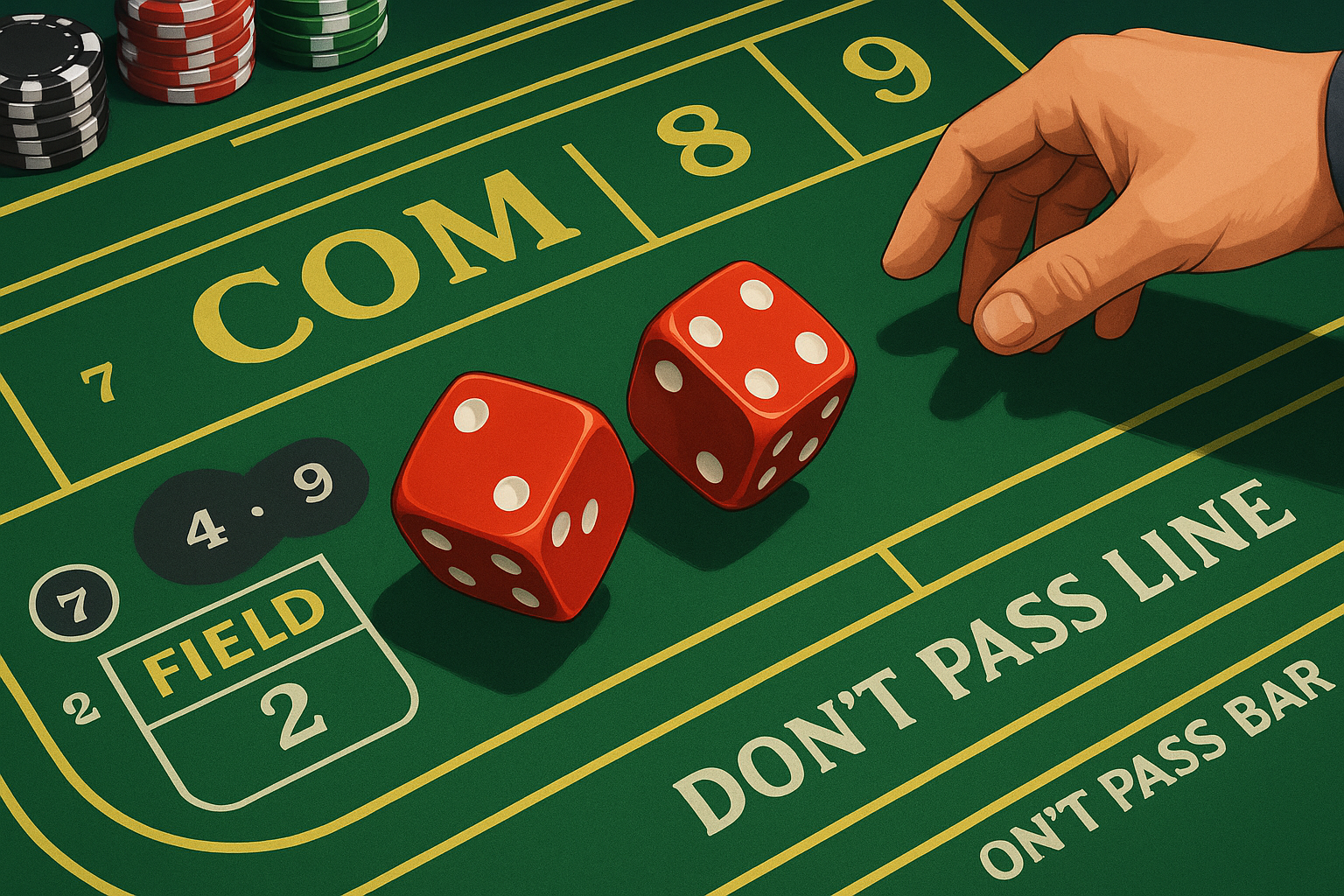
Fancy trying your hand at online craps but not sure where to start? You’re in the right place. This guide explains the game simply, highlights the most important bets, and gives practical advice so you can play with confidence.
We cover the basics, key terms and the specifics of the Yo Bet, using clear examples so nothing feels technical or confusing. With a little knowledge, the choices at the table become a lot easier to understand.
We also show how to keep play sensible and within your own limits so the experience stays enjoyable.
What Is Yo Bet in Online Craps?
A Yo Bet, often labelled “Yo” or “11” on the table, is a one-roll wager predicting that the next throw of the two dice will total 11. Only two dice combinations produce 11: 5+6 or 6+5, so the probability on any single roll is 2 out of 36, or about 5.6%.
Most online tables return 15 to 1 on a winning Yo Bet. In plain terms, a successful £1 stake would pay £15 in winnings plus your original £1 stake. Because it applies only to the immediate roll and has a relatively low chance of success, the Yo Bet carries a higher house edge than many other wagers on the table.
If you want to weigh the appeal of a Yo Bet, consider the payout against that 5.6% chance and compare it with other bets explained later. That perspective helps when deciding whether to place this kind of single-roll stake.
Understanding Basic Craps Rules
Craps is played with two standard six-sided dice and revolves around predicting roll outcomes. A round begins with the come out roll. If that roll is 7 or 11, certain bets win immediately; if it is 2, 3 or 12, those bets lose. Any other result — 4, 5, 6, 8, 9 or 10 — becomes the point.
When a point is established, the goal for some bets is to see that number again before a 7 appears. If a 7 arrives first, those bets lose. Other wagers exist alongside Pass Line and Don’t Pass bets, offering a variety of risk-and-reward profiles across single-roll and multi-roll options.
Age and identity checks are a standard part of playing online, and licensed operators must verify players are of legal age. Keeping a clear sense of the basic sequence of come out roll, point, and subsequent rolls makes it simpler to follow the table as bets resolve.
To bridge into specific wagers: once you understand the round flow, it becomes easier to see where single-roll propositions like the Yo Bet fit in.
How Do Yo Bets Work in Craps?
As introduced earlier, a Yo Bet is a single-roll wager that the next throw will total 11. Here we go a little deeper into how that operates in practice and what it means for your money.
You place the bet before the dice are thrown on that roll only. If the dice total 11 you collect the payout; any other outcome loses immediately and the bet does not carry forward. The typical payout is 15 to 1, so a winning £1 stake returns £16 in total.
To see how the math fits, remember there are 36 possible combinations when two dice are rolled and only two of those add to 11. That gives the 2/36 probability already mentioned. Casinos price single-roll proposition bets with a larger margin, which is why the house edge on Yo Bets is relatively high compared with line or come bets. In practical terms, Yo Bets can offer an exciting potential return but are riskier in the long run.
If you plan to use this bet occasionally, treat it as a high-variance option rather than a core part of a steady betting approach.
Types of Craps Bets Explained
Craps provides a spectrum of wagers, from low-edge options you can play repeatedly to single-roll propositions that offer big payouts for smaller chances. Below are the main bet types and what they mean for risk and reward.
Pass Line Bet
This is the most familiar wager. Placed before the come out roll, it wins on 7 or 11 and loses on 2, 3 or 12. If a point is set, the Pass Line wins if that number appears again before a 7. It is one of the lower house-edge bets and is often recommended for players who want a straightforward, lower-variance option.
The bet also allows players to take odds behind it in many casinos, which reduces the overall house edge on the combined wager. Rules and maximum odds can vary between venues, so check the specific table rules before placing larger amounts.
Don’t Pass Bet
This bet is the reverse of the Pass Line. It wins on 2 or 3, ties on 12 in some rules, and loses on 7 or 11 on the come out roll. If a point is set, a 7 before the point results in a win for Don’t Pass. It is also low in house edge and suits players who prefer to bet against the shooter rather than with them.
As with the Pass Line, many casinos permit laying odds behind Don’t Pass, which can improve the mathematical expectation of the combined bet. Be aware that table etiquette and local rules can affect how and when you place this wager.
Come and Don’t Come Bets
These function like Pass and Don’t Pass bets but are placed after the come out roll. They establish their own mini-points and follow similar win and lose dynamics as the corresponding line bets.
Come and Don’t Come bets give more flexibility during a game in progress, allowing you to create additional bets on new points. They carry similar house-edge characteristics to Pass and Don’t Pass, and odds can often be taken or laid behind them as well.
Proposition Bets
These include single-roll wagers such as the Yo Bet and bets on specific totals like 2, 3 or 12. They often pay well when they hit but carry a higher house edge and greater variance.
Common proposition bets can be split into categories:
- single-roll bets that resolve on the next roll, such as Yo (11) or Any Craps (2, 3, 12)
- multi-roll proposition bets on specific totals, such as Hardways or individual totals like 4, 5, 6, 8, 9 or 10
- special bets that vary by casino, for example Buy or Lay bets with commission
These bets are useful for short-term swings and dramatic wins, but they are generally less favourable for preserving a bankroll over longer sessions.
Evaluating these options means balancing the size of the payout against the chance of success. For steady, longer sessions, lower-edge bets tend to preserve bankroll longer, while proposition bets are occasional gambles that can change a session quickly. Always check table rules and limits, and make decisions that fit your risk tolerance and budget.
Common Myths About Craps and the Yo Bet
There are several persistent misconceptions around craps. Clearing them up helps you make decisions based on how the game actually behaves.
Some players expect streaks or patterns in rolls to influence future outcomes, but each throw is independent; outcomes follow probability rather than past sequences. Similarly, no betting system alters the underlying odds. Legal operators use certified randomisation to ensure outcomes conform to statistical expectations.
Another common belief is that single-roll bets like the Yo Bet come up more often than they do. In reality, the chance of an 11 is consistent on every roll, at roughly 5.6%. Superstitions and rituals do not affect results, so it is better to view them as part of table culture rather than as tools for improving performance.
Recognising these facts stops myths from driving betting choices and helps you treat each wager with the proper awareness of its true odds.
Where Can You Play Craps Online in the UK?
Craps is widely available on licenced UK online casino sites. Choosing a regulated operator matters because regulation requires fairness testing, age verification and measures to protect players. Look for clear licensing information on a site and, if you want extra assurance, confirm details on the regulator’s public register.
A regulated environment also means operators must provide tools that support safe play, such as deposit limits and self-exclusion options. Playing at a licenced site gives you a baseline of consumer protection and transparency about game rules and payouts.
If you are unsure about a site’s credentials, pause and verify before depositing funds; that step helps protect both your money and personal details.
Top Tips for Enjoying Online Craps Games
A few practical habits help keep play constructive and comfortable. Start by deciding how much you are willing to risk for the session and keep that amount separate from everyday funds. Knowing the rules and the house edge for the bets you favour helps prevent surprises.
Pacing matters: regular short breaks keep decisions clearer rather than extending play until emotions rise. Take advantage of features on licensed sites such as session reminders or deposit limits to maintain control. Finally, monitor your own behaviour honestly; if the game stops feeling enjoyable, step back and reassess.
These measures keep the game in its place as entertainment and reduce the chance of harm.
Glossary of Key Craps Terms
This glossary defines the terms you will see most often at the table and online interface. It is written to help you follow play and understand common betting options, without encouraging risky behaviour. Remember to gamble responsibly and only stake what you can afford to lose.
Shooter
The player who rolls the dice. In a game with multiple players, the shooter rotates around the table when control of the dice changes.
Come Out Roll
The opening roll of a new round that can win or lose certain opening bets or establish the point. If the come out roll is 7 or 11 some bets win immediately, while 2, 3 or 12 typically cause immediate losses or ties for other bets, depending on the rules in play.
Pass Line Bet
A bet placed before the come out roll predicting a 7 or 11 on that roll or that a later roll will repeat the point before a 7. Once a point is established, the pass line wins if the shooter rolls the point again before rolling a 7.
Don’t Pass Bet
A wager opposing the shooter on the come out roll, resolving differently on certain totals and when a point is set. This bet often wins on 2 or 3 on the come out roll, pushes on 12 in many variants, and thereafter wins if a 7 appears before the point is made.
Point
A number set by the come out roll (4, 5, 6, 8, 9 or 10) that becomes the target for some bets. Once a point is established, the focus of the round shifts to whether the shooter can roll that number again before rolling a 7.
Yo Bet (Yo Eleven)
A single-roll wager that the next throw will total 11. It pays out immediately if the roll is 11 and loses on any other result, making it a short-term, high-variance option.
Proposition Bets
One-roll wagers on specific results, typically paying higher amounts for lower probabilities. These bets cover outcomes such as particular totals or combinations and are usually found in the centre of the table layout.
House Edge
The statistical advantage the casino has over players, expressed as a percentage. Higher house edge means a lower expected return to players over time. Understanding house edge helps you compare bets and manage expectations about likely results over many plays.
Stickperson
The staff member in land-based games who manages the dice and oversees the table. They call the bets, push and collect chips, and ensure the game proceeds according to house rules.
Bankroll
The funds you set aside specifically for gambling. Effective bankroll management helps you control stakes and session length and reduces the risk of spending more than intended.
Frequently Asked Questions About Yo Bet and Online Craps
Here are clear answers to the questions new players ask most often.
What is a Yo Bet in craps?
A Yo Bet is a single-roll wager that the next dice throw will total 11. If it does, the bet pays out; if not, the stake is lost.
How much does a Yo Bet pay out?
Typical online payouts are 15 to 1. A £1 stake that wins would return £15 in winnings plus the original £1.
Is there a way to increase your chances of winning a Yo Bet?
No method changes the underlying probability; the chance of an 11 on a single roll remains fixed. The best approach is to treat this as a high-variance bet and size stakes accordingly.
Can I play craps online safely in the UK?
Yes, by choosing a regulated site that clearly displays its licence information. Regulation requires fairness testing and player protection measures.
Where can I find support if gambling stops being fun?
Free, confidential support is available from organisations such as GamCare and BeGambleAware, and licensed operators offer tools like deposit limits and self-exclusion.
Thanks for reading — if you want to try a few practice rounds or see how different bets compare in a risk-free setting, take a moment to explore our demo tables and decide what suits your style.