
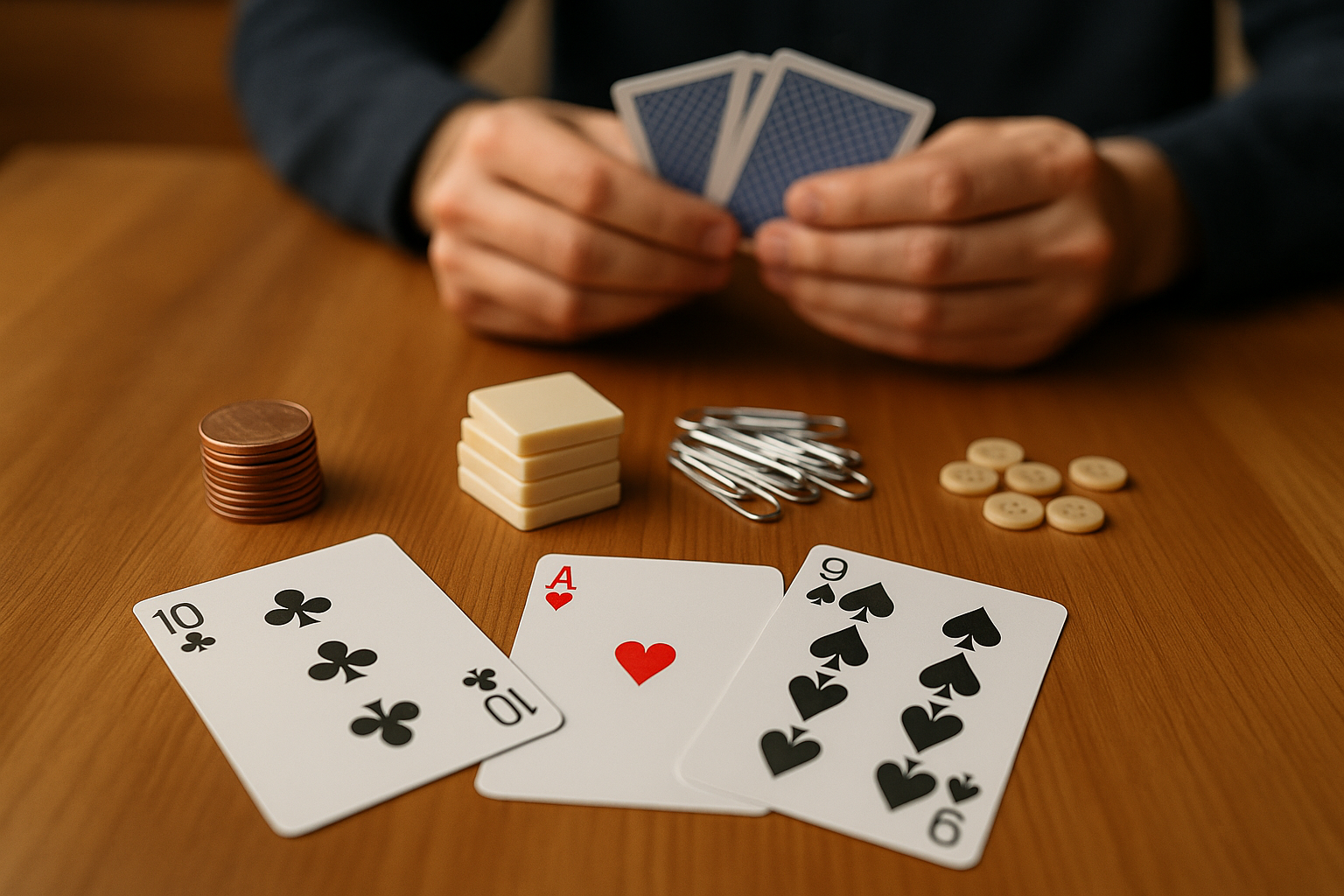
Poker nights don’t have to be all about stacks of chips or fancy tables. If you’re getting friends together but don’t have a set, a little creativity will keep the game lively and inclusive.
Whether you’re at home, on holiday, or just fancy a change, there are plenty of ways to enjoy poker using everyday items or altered formats. Read on for practical ideas and tips to keep things fair and fun.
Curious about how to get started without the usual kit? The suggestions below are easy to set up and work with groups of different sizes.
Why Play Poker Without Chips?
Skipping chips can be a practical choice. Maybe you’re travelling, don’t want the bother of carrying a set, or simply want to lower barriers so everyone can join. Using household items or points removes the need for specialised gear and speeds up set-up.
It also changes the tone of the evening. Without a tangible pot in front of players, the game tends to emphasise conversation and strategy rather than purely material stakes. That can make the night more social while still keeping the familiar poker structure.
Finally, chip-free play is flexible. You can adapt values, swap formats mid-session, or introduce team elements to suit the mood and the number of players.
Essential Items Needed Instead of Poker Chips
You only need a few simple items to get going. Common household objects work perfectly as placeholders for betting value. Consider using:
- Coins
- Buttons
- Bottle caps
- Small pieces of coloured card
If you prefer something less fiddly, use a score sheet to record bets and totals. That suits groups where there are not enough physical tokens to go round, or where clarity is preferred over juggling objects. A written record also makes it easier to resolve disputes and keeps the pace steady.
Choose items that are easy to distinguish from one another and agree their values before play begins. Use different colours, sizes or markings so each value is obvious to everyone. That small step avoids confusion, helps the game flow, and reduces the chance of mistakes.
Play sensibly: set limits on time and stakes, confirm that everyone is of legal age, and keep the session social and for fun.
What Everyday Objects Can Replace Poker Chips?
There are loads of practical substitutes that most people will have to hand. Coins are an obvious choice: pennies or other spare coins are durable and easy to stack. Small metal items are hard-wearing and familiar to everyone.
Compact items are useful when space is limited. Consider:
- Paperclips and buttons, which are compact and easy to sort.
- Counters from board games, which are already designed for play.
- Lego bricks, which give a clear visual cue for different values and can be stacked or grouped.
If you want something a little quirkier, everyday household items can add character to the game. For example:
- Dried pasta shapes, which come in different forms and sizes.
- Pebbles or small stones, which are tactile and easy to distinguish.
Whatever you choose, make sure everyone knows what each type represents. The key is consistency so players can see at a glance who has what and the game runs smoothly.
These alternatives help keep the focus on the cards and decision-making rather than on specialised equipment, making casual play more accessible and relaxed.
Creative Ways to Track Bets and Wagers
Assigning a value to each object is the simplest approach: for example, a one unit equals one unit and a button equals five. When physical items are limited, a score sheet becomes useful. Note each player's bets and chip counts on paper or a whiteboard so totals remain clear.
Using coloured sticky notes or cards can separate players’ pots visually. Another option is to keep a running tally on a single sheet, updating it at the end of each hand to reflect wins and losses.
Whichever method you use, spell it out at the start so everyone follows the same system. Clear tracking prevents disputes and keeps momentum going.
How to Keep the Game Fair Without Chips?
Fairness starts with agreement. Before play, set the values, agree buy-in equivalents if you’re using points, and confirm what constitutes a bet, call or raise in your adapted system. A nominated scorekeeper helps maintain an accurate record of wins and losses.
Make sure players can query totals and that any adjustments are made openly so everyone accepts the outcome. Keeping the atmosphere friendly and transparent reduces friction and keeps attention on the strategy and social side.
If a problem arises, pause briefly to resolve it rather than letting confusion spoil the round.
Common Concerns With Alternative Poker Set-Ups
Mix-ups over which item represents which value are the most common worry. Distinct colours and shapes reduce that risk. Running a short practice hand at the start can iron out any misunderstandings about the system.
Keeping track of winners is easier when one person updates the score after each hand, or when players confirm totals together. If the group prefers, rotate the scorekeeping role so it doesn’t fall on the same person all night.
Above all, set limits that suit the group and stick to them; this keeps the evening enjoyable for everyone.
A quick note: if you’re ready to try a different format, the next section offers a few popular alternatives you can adopt straight away.
Best Alternative Poker Game Formats to Try
Points-based poker converts wins and losses into numerical scores instead of chips. Players earn or lose points each hand, and the winner is the person or team with the most points after a set number of rounds. This keeps competition clear without physical stakes.
Round-robin play ensures everyone takes turns dealing and keeps engagement high. You can combine this with short, fixed-length sessions so newcomers don’t feel outmatched by longer games.
Team poker turns individual hands into collective challenges. Teams pool their points or award points for the best hands, which encourages discussion, shared strategy and a more relaxed competitive atmosphere.
Each format shifts the emphasis slightly—pick the one that suits the group size and tone you want for the evening.
Can You Make Poker More Fun Without Chips?
Yes — and often in ways that make the event feel more personal. Small themed touches can set the scene without dominating the game:
- a playlist to suit the mood,
- light snacks that are easy to graze on,
- a simple dress prompt to add a bit of theatre.
These details are unobtrusive but add character and help people relax and connect.
Introducing brief, harmless challenges or trivia between hands adds variety and keeps conversation lively. You might try short icebreakers, quick hands with alternative scoring, or gentle dares that all players agree to in advance. Keep these optional and light so everyone can join in at their comfort level.
Altering tempo helps too. Short, faster rounds raise the energy and prevent the evening from stalling. Longer hands let players explore deeper strategy and conversation. Switching between the two during a session can maintain interest and suit different attention spans.
Team formats or occasional “fun” hands where the usual rules are tweaked briefly can energise a familiar game. Examples include partners rotating each round, low-stakes side games with non-monetary prizes, or theme rounds where costume pieces or props influence play. Make sure any variations are explained clearly before they start so the game stays fair and inclusive.
These changes keep the focus on shared enjoyment rather than the size of the pot. For casual home games, consider using non-monetary rewards and agree ground rules beforehand to ensure everyone feels comfortable and play remains responsible.
Myths About Playing Poker Without Chips
There are a couple of myths worth dispelling so you feel confident trying chipless play.
“It’s Not Real Poker Without Chips”
The idea that chips are what make poker authentic overlooks the core elements: card play, betting patterns and decision-making. Using household items or points preserves those elements and can even encourage clearer focus on strategy and social interaction.
“It’s Too Difficult to Keep Track of Bets”
With a short setup and an agreed system, tracking bets is straightforward. Simple measures—distinct tokens, a score sheet, or a dedicated scorekeeper—eliminate confusion and let the game run smoothly.
Approach the evening with clear rules and a collaborative spirit, and chip-free poker will feel as satisfying as the traditional version. Keep the limits and structure you agree on, and everyone should leave having had a good time.