Ever wondered what the real difference is between tombola and bingo? You’re not alone—these two games are often confused, but each offers a distinct style of play and social experience.
Whether you’re used to pulling tickets at a village fete or joining a bingo session online, understanding how each game works makes them more enjoyable and easier to join. This post breaks down the differences, explains the main rules, and guides you through playing both games so you can take part with confidence.
Read on to find which game fits you best, with clear explanations and practical context to keep you moving smoothly from one section to the next.
What Is Tombola?
Tombola is a raffle-style game commonly found at British fairs, fetes and charity events. It began in Italy but has been adapted across the UK into a simple format that organisers and players recognise instantly.
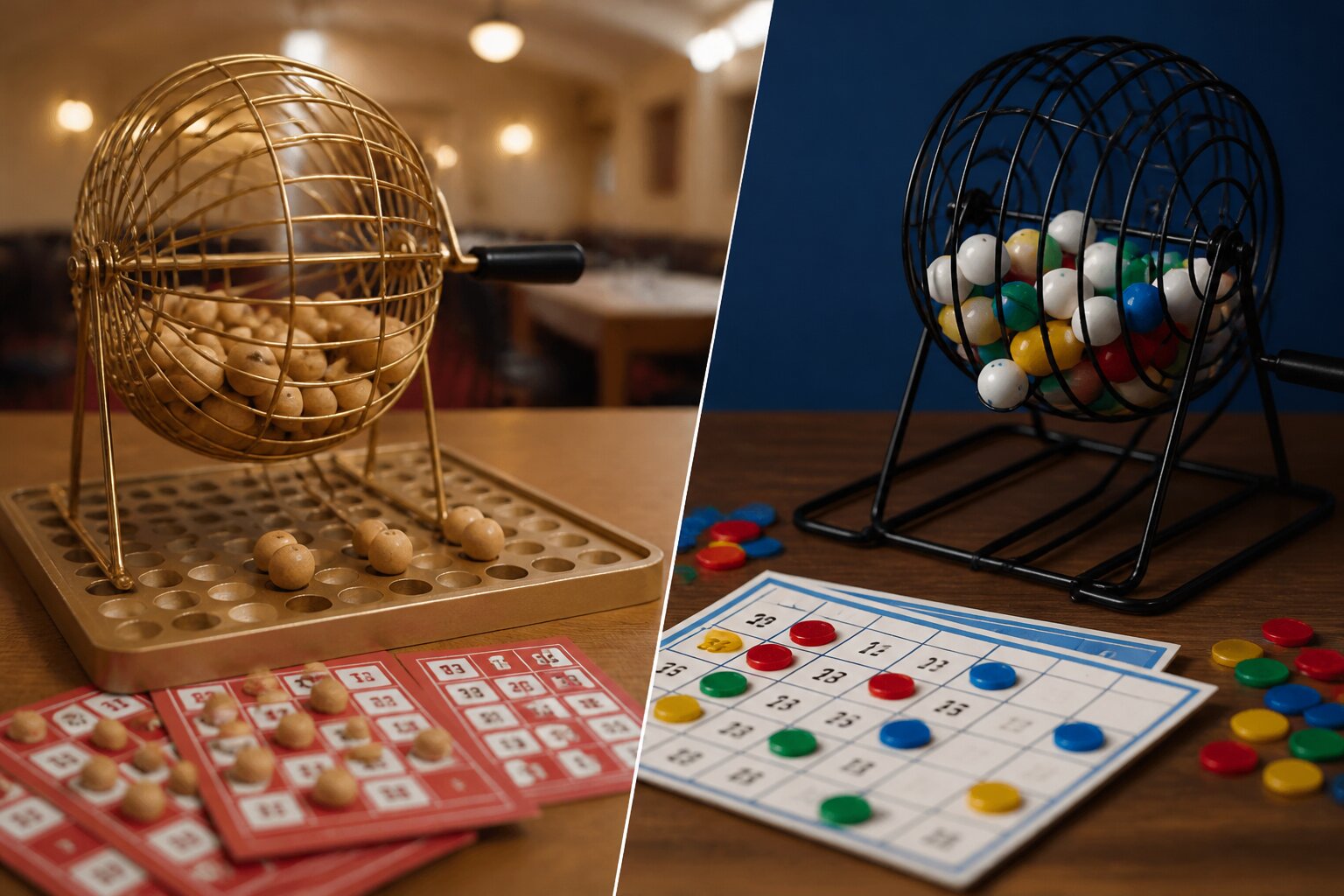
Tickets are numbered and placed into a drum or container. Players buy one or more tickets and draw them at random. If a drawn number matches an entry on the prize list, the holder of that ticket receives the corresponding prize. Prizes tend to be modest items such as sweets, toiletries or donated goods, although organisers sometimes include larger prizes for special events.
The appeal of tombola is its speed and accessibility. A round is short and straightforward, making it easy for people of all ages to take part and for organisers to run several rounds during an event. It also works well as a fundraising mechanism since proceeds from ticket sales typically support a local cause.
What Is Bingo?
Bingo is a numbers game played in social settings such as halls, clubs and online rooms. Each player has one or more cards with a grid of random numbers, and a caller draws and announces numbers in sequence.
Players mark off numbers that appear on their cards. The objective is to complete a pre-determined pattern, which could be a single line, two lines or a full house covering the entire card. When a player completes the required pattern they notify the caller so the card can be verified and any prize awarded.
Bingo sessions can vary in pace and format, ranging from short-ticket games to longer sessions with multiple prize tiers. The game encourages interaction between players and callers, which is part of its enduring popularity among adults. Play is regulated and restricted to those aged 18 and over, with systems in place to support safe play and age verification.
How Do Tombola and Bingo Differ?
Although both games involve numbers and prizes, their structure and atmosphere are distinct.
Tombola is direct and immediate: players draw a ticket and find out right away whether they have won an item from the prize list. A typical tombola round ends quickly and focuses on individual outcomes.
Bingo unfolds over a longer period and is more interactive. Players follow the sequence of numbers called and experience a shared build-up to each winning pattern. Games may include several prize categories, and the communal aspect—cheering, chatting and reacting to calls—shapes the experience as much as the prizes themselves.
Culturally, tombola tends to appear at community or fundraising events where small physical prizes suit the setting. Bingo occupies a broader role as a regular pastime with organised sessions in public venues and online, sometimes offering larger cash prizes. Both are forms of adult entertainment in the UK and are run under rules and safeguards intended to protect players.
Rules of Tombola Explained
Tombola’s simplicity is central to how it’s governed and enjoyed.
All tickets are placed into a drum, bag or other container so each draw is random. Tickets are sold in advance or at the event; each ticket has a number that corresponds to an entry on the prize list. Players draw tickets one at a time and compare the numbers with the published list of prizes.
Prizes are claimed immediately when a winning ticket is drawn, and the corresponding entry is removed or marked to avoid duplication. Once the main prizes have been distributed, the organiser may run additional rounds using new ticket sets. Transparency in how tickets are mixed and drawn is important to ensure fairness and maintain trust among participants.
Rules of Bingo Explained
Bingo relies on a clear sequence and verification to ensure each winner is correctly identified.
Each player has a card or set of cards printed with a grid of numbers. A caller or automated system draws numbers at random and announces them, and players mark matching numbers on their cards. The winning criteria are set before the game starts and could include various patterns such as lines or full houses.
When a player completes the announced pattern they call for verification. An attendant or the system checks the card against the numbers that have been drawn. Prizes are then awarded in the order set for that particular session. Games continue until the allocated prizes for the round have been distributed. Records of draws and claims help maintain accountability and allow organisers to handle any disputes.
How Do You Play Tombola?
Playing tombola is straightforward and designed to be intuitive for participants of all ages. Start by buying one or more tickets from the stall, keeping in mind your personal spending limit. Tickets are mixed in the drum or bag, and players take turns drawing at random. After drawing, compare your ticket number with the displayed prize list to see if you match any prizes. Claim any prize you have won by presenting the ticket to the organiser. At the end of a round, the organiser records which prizes have been claimed, and a new round can begin if there are fresh tickets or prizes available.
This simple rhythm breaks down into a few clear steps:
- Buy your tickets.
- Draw your tickets.
- Check your numbers.
- Claim any prize.
- Play again if you wish.
This pattern — buy, draw, check, claim — keeps the game moving and makes it well suited to busy events where rounds are frequent and prizes change from one session to the next. Treat tombola as entertainment and not a way to make money, and stick to any spending limit you set for yourself.
1. Buy your tickets
Begin at the stand and choose how many tickets you want, mindful of how much you plan to spend. It helps to decide on a personal limit before you arrive and to stick to it, so the game stays fun and within your means.
2. Draw your tickets
Shuffle or mix the container well and draw without looking so each entry is random. If there are multiple players, take turns drawing to keep the process fair and transparent.
3. Check your numbers
Match your ticket numbers against the prize list displayed at the stall. Organisers will usually show which tickets correspond to which prizes, so double check before you claim.
4. Claim your prize
Give the winning ticket to the organiser and collect what you have won. The organiser will usually mark the prize as claimed so it is removed from the available pool for that round.
5. Play again if you wish
If you want another go, you may purchase more tickets, but it is good practice to stick to a pre-set limit and play responsibly. Remember tombola is intended as light entertainment rather than a way to make money.
How Do You Play Bingo?
Bingo sessions involve a few more moving parts than casual pick-up games, but they remain straightforward to follow. Start by registering with the venue or site and confirming you meet the minimum age requirement of 18. Buy the number of tickets you want for the specific game and set a personal spend limit before play starts.
As numbers are drawn, the venue keeps players updated through a combination of automatic marking on digital cards and spoken announcements. When a card matches the declared pattern, a claim is submitted and staff or software checks the card against the record of numbers drawn. Winnings are then credited or paid out according to the venue’s published procedures.
Players can choose to join another game after a win or take a break. Clear procedures for ticket purchasing, draw records and verification help ensure each session runs transparently and fairly.
1. Register and log in
Create an account if required and confirm you are 18 or over. Provide any ID or documentation the venue requests for age verification and follow their sign-up steps so your account is ready before the session starts.
2. Buy your bingo tickets
Choose the room or game you want to join and purchase tickets for that session. Consider your spend limit first and only buy as many tickets as you can comfortably afford to play with.
3. Join the game
Numbers are drawn and called by the caller or automated system. Depending on the venue, marking may happen automatically on a digital card or manually on a paper ticket, so follow the format used in your session.
4. Watch for a win
If your card meets the announced pattern, notify the caller or use the on-screen claim button so the win can be checked. Claims are verified against the official list of drawn numbers before any prizes are awarded.
5. Collect your winnings or continue playing
Winnings are added to your account or paid out in accordance with the venue’s rules. After a game finishes, you can join another session or leave, and you should always play responsibly and within your limits.
Which Game Is More Popular in the UK?
Bingo is generally the more widely played game across the UK, with regular sessions in halls and many online options that attract large numbers. It has an established infrastructure of venues and scheduled games that make it a common choice for adults seeking a regular social activity.
Tombola remains a fixture at community events, often used to raise funds for schools, charities and local causes. Its place is usually more intermittent, linked to specific gatherings rather than ongoing schedules.
Popularity depends on context: for a brief event-side activity, tombola suits the setting; for regular sessions and a social rhythm, bingo tends to be the preferred option.
Common Myths About Tombola and Bingo
A few misconceptions circulate about these games, and it helps to set the record straight.
One myth suggests that there are ways to predict or influence outcomes; in both games, draw and verification procedures are designed to prevent manipulation. Another misconception claims that certain seats, times or venues improve your chance of winning; game rules and randomised draws mean every player’s position is treated the same. Some people believe that playing more often guarantees a big win; purchasing more entries increases the number of tickets you hold but does not change the way draws are conducted or outcomes are determined.
Keeping these points in mind helps players approach the games with realistic expectations and an understanding of how fairness is preserved.
Which Game Should You Choose?
The right choice comes down to the experience you want. If you prefer something quick and simple with immediate results, tombola fits well. If you enjoy a more social, drawn-out session with multiple prize opportunities and a sense of shared anticipation, bingo is likely to suit you better.
Above all, treat play as entertainment. Set a budget before you start and stick to it. Look for venues or platforms that make their rules and prize procedures clear, and take breaks if a session no longer feels enjoyable. With sensible limits and an eye on how each game runs, you can join in whichever format appeals and be confident about what to expect.
Whether you pick tombola or bingo, choose the experience that matches your mood and stick to sensible play habits so the focus stays on enjoyment.
**The information provided in this blog is intended for educational purposes and should not be construed as betting advice or a guarantee of success. Always gamble responsibly.