
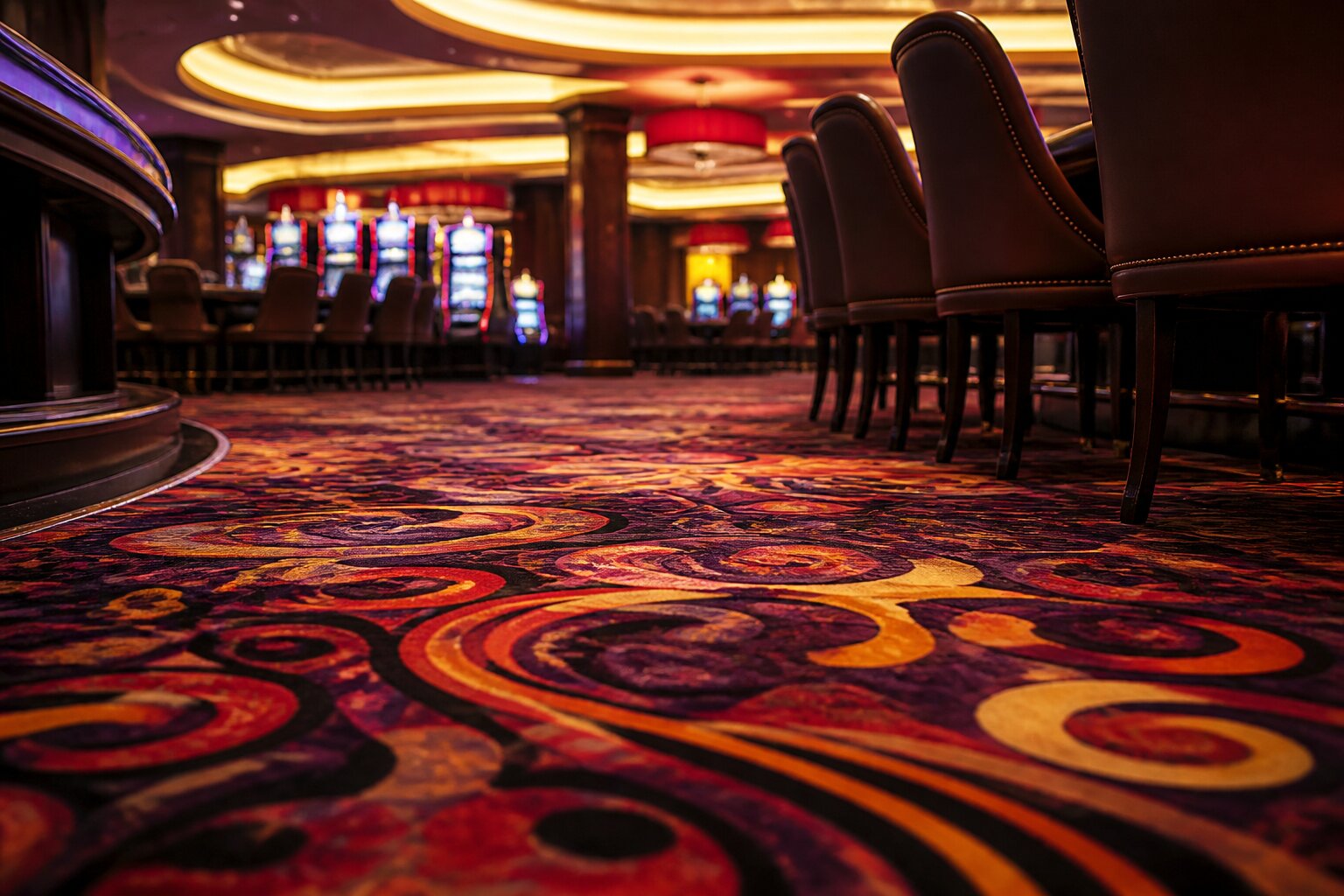
Why do casino carpets often feature bold colours, intricate patterns and distinctive designs? While these choices can be striking, they are influenced by more than appearance alone.
From durability and maintenance to interior design and the atmosphere of the venue, casino carpeting can serve several practical and aesthetic purposes. The patterns may also reflect wider trends in commercial and hospitality design.
In this article, we explore the practical considerations and design principles behind casino carpets, and why these distinctive patterns have become such a recognisable feature of casino interiors.
The History Behind Casino Carpet Choices
Carpet trends on casino floors began to develop in Las Vegas in the mid-20th century as operators sought materials that could stand up to heavy use. Early floors were often plain and dark to hide wear, but as competition grew, owners and designers started experimenting with bolder patterns.
By the 1970s and 1980s, manufacturers were producing custom designs for major venues. These carpets had to meet practical needs: they needed to be hard-wearing, stain-resistant, and able to mask years of foot traffic. The loud patterns served that purpose well, and the visual novelty also helped venues establish a distinctive identity.
Over time, designers recognised that flooring could shape the atmosphere on the gaming floor. Practical considerations stayed central, but the look of a carpet also became part of a venue’s character: a durable surface that contributed to the mood without demanding attention.
What Is the Psychology of Casino Carpet Design?
Carpet design is about more than aesthetics; it’s about how colour, pattern and texture influence perception. Research in environmental psychology and interior design shows that visual elements in a space affect mood and behaviour in subtle ways.
Busy, colourful patterns tend to keep the eye moving rather than allowing it to rest, which can increase alertness. Designers often avoid pale, soothing shades that might create a sleepy environment; instead they favour colours and contrasts that keep people engaged with the surroundings. At the same time, the carpets are chosen to be comfortable underfoot and to work with the overall lighting and layout.
These decisions don’t determine anyone’s choices at a table or a machine. Rather, they help craft an environment that feels active and maintained, supporting a pleasant visit without influencing outcomes.
How Does Carpet Affect Player Behaviour?
Carpets contribute to the atmosphere on the gaming floor in a few connected ways. They fulfil practical needs, such as hiding stains and wear and guiding movement through the space. They also help set the tone, which can subtly influence how people experience and feel within the venue.
These effects are not direct levers that force behaviour, but they create a backdrop that can make guests more comfortable and encourage natural movement around the floor. Good carpet design supports a coherent aesthetic that complements lighting, furniture and signage.
Patterns
Complex or geometric patterns are excellent at concealing spills and heavy use. They draw the eye across the floor plane, making the carpet itself less of a focal point and encouraging guests to take in the broader surroundings.
In this sense, patterning supports a lively environment without dominating it. Well-chosen patterns can also help mask the passage of time, so areas remain visually engaging even after prolonged use.
Colours
Colour choices usually favour richer, contrasting tones rather than soft pastels. Designers pick colours to achieve both practical and emotional effects. They typically serve to:
- mask wear and stains with darker base shades
- add energy and focal interest through brighter accent tones
- maintain a sense of upkeep and visual variety over long periods
The combination of deep tones and brighter accents is chosen to maintain visual interest and a sense of care across long periods of use. Overall, these choices make a space feel vibrant and well maintained rather than dull or run down, while avoiding any pressure on visitors to act in a specific way.
If you are wondering how these design choices fit with other aspects of a venue, the next section looks at whether carpet really affects how long people stay.
Do Ugly Carpets Really Increase Time Spent Gambling?
People often assume that bold carpets are part of a deliberate strategy to increase the time visitors spend playing. The evidence does not support a direct causal link between carpet design alone and how long someone stays.
Time on the gaming floor is shaped by many factors: layout, lighting, signage, seating comfort, food and drink availability, and personal limits. Carpets contribute to that mix by supporting a durable, well-kept environment, but they are only one piece of the broader setting.
A sensible approach for visitors is to be aware of the surroundings and to manage their own limits. Design can enhance comfort and accessibility, but decisions about play remain personal.
Common Myths About Casino Carpeting
Several persistent myths surround casino carpets, and most don’t hold up under scrutiny. One is that carpets are deliberately unattractive to make players stay put. In reality, the priority is durability and ease of maintenance; loud designs hide stains and wear far better than plain carpets.
Another myth is that certain patterns or colours influence gaming results. Carpets have no effect on game mechanics or outcomes. A related belief is that confusing patterns are meant to disorient visitors; while patterns contribute to ambience, there’s no robust evidence they are used to confuse or control behaviour.
Understanding these myths helps separate practical design choices from fanciful explanations.
Whether or not the carpet style appeals to you, the next part explains why practicality often outweighs aesthetic preference.
Why Don’t Casinos Use Attractive Carpeting?
The main reason venues don’t opt for more subtle or delicate designs is practical. Casino floors handle intense, regular foot traffic and need materials that last. Busy patterns and strong colour palettes are better at concealing dirt, spills and the fading that comes with heavy use.
Lighter or plainer carpets would show wear much sooner, increasing maintenance costs and creating a shabby appearance. Choosing robust, low-maintenance materials is a cost-effective way to keep a large public space presentable over many years.
So, while the visual style may not suit everyone, the choice is often about longevity and upkeep rather than an attempt to make a statement about taste.
Influence of Lighting and Ambience on Perception
Lighting and ambience shape how carpets—and the whole interior—are perceived. Lighting can intensify colours, soften contrasts, or create pockets of focus across a floor plan. Designers use this interplay to create different moods in different zones: busier lighting near gaming areas, softer tones in lounges and dining spaces.
When carpet and lighting are coordinated, the space feels coherent and intentional. This helps visitors navigate the environment and choose where to spend time, while also ensuring areas withstand practical demands. In short, lighting and carpet work together to support a comfortable, navigable space rather than to steer individual decisions.
What Can Casino Carpeting Teach Us About Behavioural Design?
Casino carpeting offers a clear example of behavioural design in practice: choices about materials and visual elements influence how spaces are used and experienced. Good design considers function first—durability, maintenance and accessibility—and then uses colour and pattern to support the intended atmosphere.
Ethical design recognises its influence and seeks to promote wellbeing. In regulated markets, venues operate under standards that require attention to customer safety and clear information about play. Design should therefore enhance comfort and clarity without encouraging excessive behaviour.
Ultimately, the carpet reminds us that design decisions carry practical consequences and that responsible operators balance aesthetics with the needs and safety of their customers.
Conclusion: The Subtle Power Of Casino Carpets
Casino carpets may catch your eye, but their purpose is largely practical and atmospheric rather than manipulative. Patterns and colours conceal wear, reduce maintenance, and help create an active, well-maintained space that works across a busy environment.
Seen this way, the carpet is a piece of considered design: it supports a venue’s functioning and contributes to the overall experience without determining anyone’s choices. Venues must use design thoughtfully and in line with regulatory standards, prioritising customer welfare.
If you visit a casino, enjoy the surroundings, but keep your own limits in mind and make choices that suit you. The floor underfoot is part of the setting—careful, deliberate design rather than a secret influence on outcomes.
**The information provided in this blog is intended for educational purposes and should not be construed as betting advice or a guarantee of success. Always gamble responsibly.