
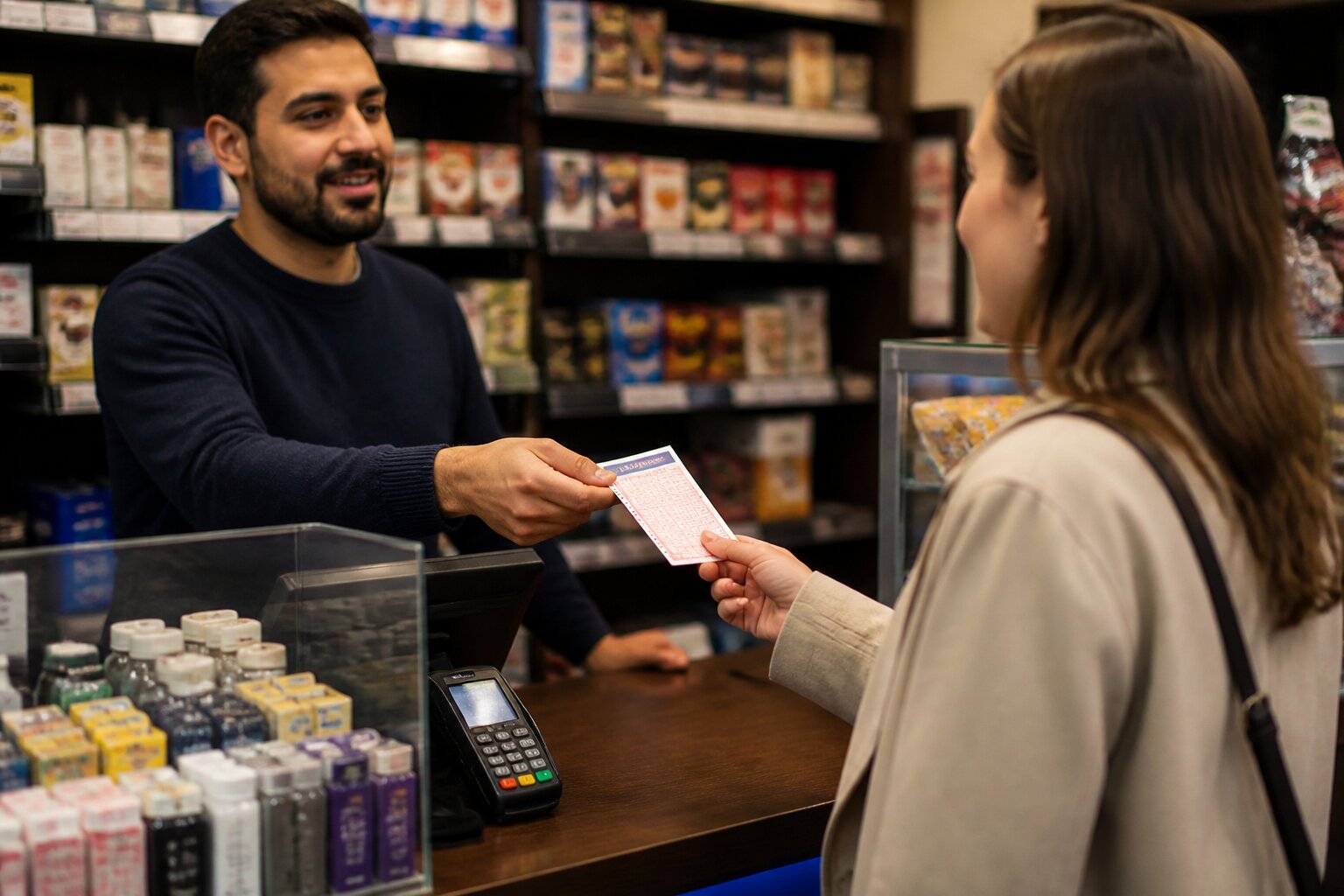
Wondering if you can still pop down to your local shop and pick up a lottery ticket? You’re not alone—changes in how tickets are sold can make the options feel unclear.
Between in-person sales and online services, it helps to know what the rules are now and what to expect when you go to buy a ticket.
Read on for a clear guide to buying tickets in shops across the UK, how the process works and what you should bring.
Where Can You Buy Lottery Tickets in the UK?
You can still buy lottery tickets in person at many high-street and local retailers. Common places include newsagents, supermarkets and convenience stores, provided they hold the correct licence to sell National Lottery products.
Licensed retailers must display their authorisation at the premises. Look for the retailer’s lottery signage near the till or on the shop window to confirm they sell tickets. Petrol stations and corner shops often offer this service as well when they are authorised to do so.
If you want to know how a purchase is completed once you’re at the counter, the next section explains the step‑by‑step process you’ll encounter.
How the Shop Purchase Process Works
Buying a ticket in a shop is a straightforward, face‑to‑face transaction. You pick up a playslip at the counter and mark the game and numbers you want, or ask for a random selection instead. The shop staff enter your selection into the terminal and issue a printed ticket showing your numbers and the draw date.
Keep that ticket safe: it’s the only proof you have if you need to claim a prize. Staff may ask for ID if there is any doubt about your age, and you must be at least 18 to buy a ticket.
With the basics covered, it helps to be aware of the variety of games available so you can choose one that suits you.
Which Types of Lottery Games Are Available in Shops?
Shops sell several National Lottery products. The main numbered draws, such as Lotto and EuroMillions, let players select numbers on a playslip or opt for a random selection. These draws take place on set days and share the same rules regardless of whether a ticket is bought in a shop or online.
Instant win products, like scratchcards, are also widely available. These give immediate results when you reveal the card’s panels and come in different price points. Other draw-based games such as Thunderball and Set For Life are offered too, each with its own prize structure and entry requirements.
All these products are regulated to ensure fair play; the following section explains who is legally allowed to buy them in person.
Who Can Buy Lottery Tickets in Person?
Only people aged 18 or over may buy lottery tickets in person. Retailers commonly follow a Challenge 25 approach, which means staff will ask for photographic ID from anyone who appears under 25. Acceptable ID includes a passport or driving licence showing date of birth.
Staff receive training to spot potential underage purchasers and to handle refusals professionally if proof of age cannot be provided. Retailers are entitled to refuse a sale where there is any doubt about a buyer's age, and customers should expect this to be applied consistently.
Selling or buying tickets for someone underage is an offence, so retailers are alert to proxy purchases and other attempts to circumvent the rules. Penalties for breaches can include fines and other enforcement action, so vigilance is part of protecting both the public and the retailer.
These safeguards form part of the wider regulatory framework that keeps sales legal and secure, helping to prevent underage gambling and maintain public confidence in the system.
Next, you may be wondering how shop sales compare with buying online—there are a few key differences to bear in mind.
Changing Rules: Shop vs Online Lottery Purchases
Recent developments in regulation and technology mean the experience of buying in a shop differs from buying online, though both remain valid ways to play. Retail purchases continue to be familiar to many people who prefer handling a physical ticket and interacting with a retailer. Online purchases, by contrast, offer convenience and digital record keeping, which some players find easier for tracking their entries and results.
Differences in Buying Process
In a shop, you complete a playslip or request a random selection and receive a physical ticket at the till. The retailer will usually print the ticket immediately and may staple or hand it to you, and you are responsible for keeping that ticket safe as proof of your entry. Retail transactions are typically completed in person and paid for with cash or card at the point of sale.
Online purchases require an account with the provider; selections and tickets are stored digitally and notifications about results are usually sent by email or app. The provider will retain a record of your entries under your account, which can make it simpler to check past purchases or manage subscriptions. Online systems often include additional features such as automatic number selection, multi-draw entries, and email or push notifications about results, though the exact services vary between operators.
Age Restrictions and Verification
Both channels enforce an 18+ minimum. Shops rely on visual checks and Challenge 25, while online providers use identity verification systems before allowing account creation or purchases. These checks may include asking for identification in person or verifying name, address and date of birth online against public records or electronic databases. The aim of these procedures is to protect minors and vulnerable people and to ensure compliance with gambling regulation.
Verification processes can add a short delay before an online account is fully active, especially if additional documents are requested. In retail settings, a refusal to sell may occur if the retailer is not satisfied with identification, and you may be asked to return later with acceptable ID. Both approaches are part of wider measures to ensure responsible play and to meet statutory requirements.
Having covered how and where to buy, it’s useful to know what to bring with you when you visit a retailer.
What to Bring When Purchasing Tickets in a Shop?
Bring photographic ID if you might be asked to prove your age. A passport or driving licence will usually suffice and should clearly show your date of birth and photograph. Other forms of recognised photo ID, such as a PASS card, may also be acceptable but this can vary between retailers.
Shops will request ID if there is any reasonable doubt about age, which is part of normal retail practice for age restricted products. Staff are required to check ID to comply with legal obligations and to prevent sales to underage customers, so it is best to be ready to present it.
Make sure any ID you bring is valid and not expired, and that the name on the document matches the name used for the purchase where relevant. Being prepared avoids delays and helps the transaction run smoothly, particularly at busy times or for higher value purchases.
Are There Any Payment Restrictions in Shops?
Shops usually accept cash, debit cards and contactless payments for lottery products. Credit cards are not permitted for purchasing lottery tickets or scratchcards; this restriction is in place to help prevent problematic spending and to comply with regulatory requirements.
Some retailers may also refuse particular payment methods for operational reasons, or they may set a minimum spend for card payments. These additional shop policies can vary from one outlet to another, but they must still comply with the statutory ban on using credit cards for gambling purchases.
If you are using a card, it is sensible to check with the retailer beforehand if you are unsure whether a particular card type will be accepted. Shop staff can confirm which payment methods they take and whether any limits apply.
With payments sorted, the next concern for many players is how to claim any winnings from a shop purchase.
Collecting Winnings: How Does It Work for Shop Purchases?
How you claim depends on the prize amount. Small prizes are often paid out at the retailer where the ticket was bought; the shop will scan the ticket and issue payment up to its payout limit. Larger prizes exceed most shops’ limits and require a claim through a designated post office or directly with the lottery operator.
Instructions for claiming larger prizes are usually printed on the back of the ticket or available from the retailer. Always keep the ticket safe and check the time limits for claiming, as those deadlines must be met to receive any prize.
Next are some common misconceptions that can cause unnecessary confusion.
Common Myths About Buying Lottery Tickets in Shops
A number of misconceptions persist about in‑shop lottery purchases. For example, some people think particular shops give better outcomes; the draw process is impartial and regulated, so no retailer alters the result.
Another myth is that ID is required every time you buy a ticket. In practice, ID is requested only when there is doubt about age. A further misunderstanding is that credit cards are acceptable for in‑shop purchases; they are not permitted for any gambling product.
Finally, the odds and rules for a game do not change depending on where you buy your ticket—shop or online—so choosing a channel is a matter of personal convenience.
Summary: Key Takeaways for UK Lottery Players
Buying lottery tickets in shops remains a simple, regulated option for adults. Licensed retailers sell a range of products, from numbered draws to instant win cards. You must be at least 18 to purchase, and some retailers will ask for ID as part of normal age verification.
Payments in shops are accepted by cash and debit methods, not credit cards. Small winnings can often be paid at the shop; larger prizes require a formal claim. The same rules and odds apply whether a ticket is bought in person or online, and all activity is overseen to maintain a safe, lawful system.
**The information provided in this blog is intended for educational purposes and should not be construed as betting advice or a guarantee of success. Always gamble responsibly.