
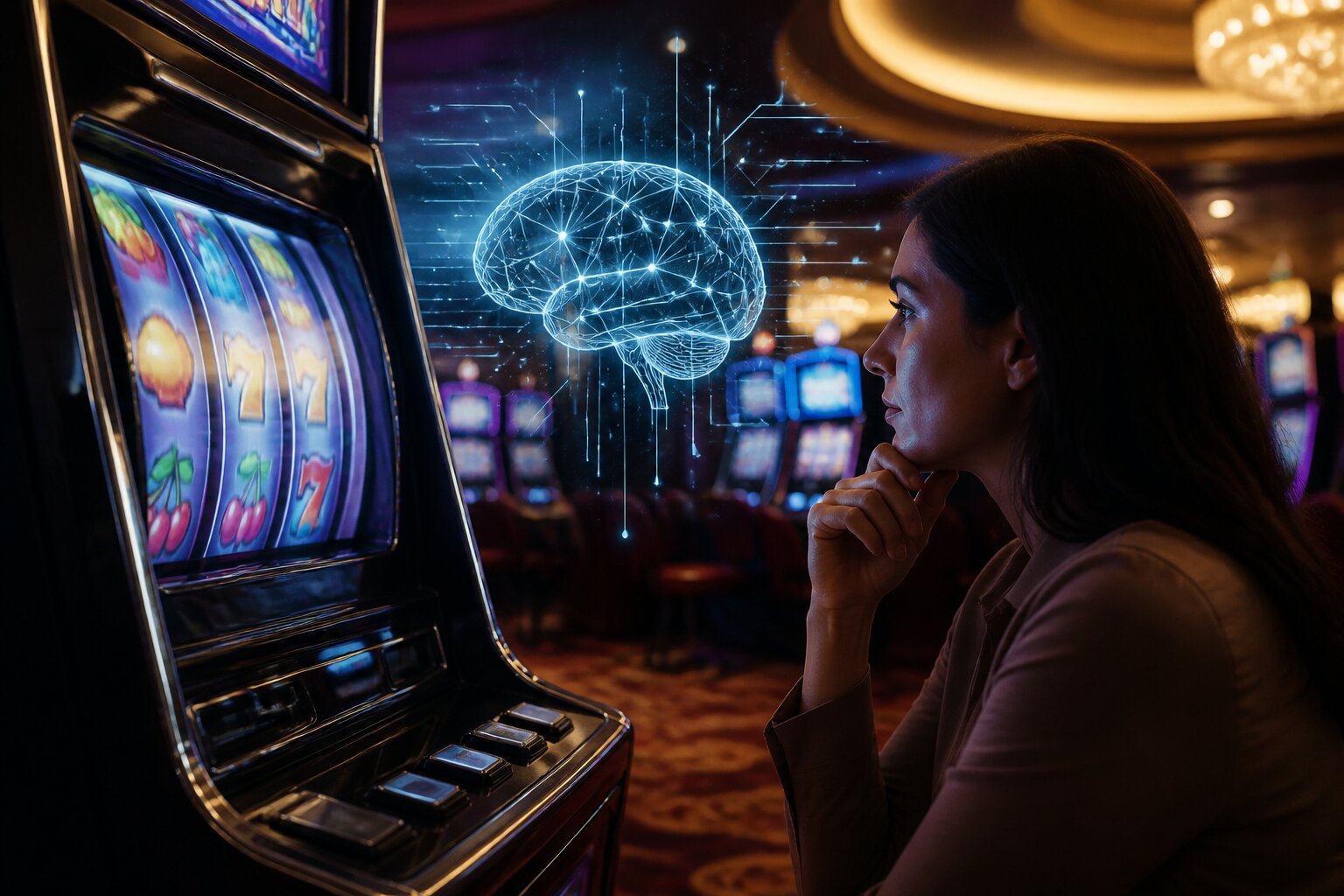
Slot machines have long sparked curiosity and sometimes suspicion. Lately, that curiosity has centred on artificial intelligence and whether it affects the spinning reels in online or land-based games.
You may have heard claims that AI is running the show, learning player habits or changing how often machines pay out. With so much rumour around, it helps to look at how the technology actually works and what regulators require.
This article unpicks the facts, dispels common myths, and explains where AI is — and is not — used in the casino world.
What Is Artificial Intelligence in the Context of Slot Machines?
Artificial intelligence describes computer systems that analyse data and make decisions in ways that mimic some human reasoning. In everyday life, AI helps with things like recommendations, chat assistants and fraud detection.
In the context of slot games, however, AI has a very limited role. The key point is that the result of each spin is determined by a Random Number Generator (RNG): certified software that produces unpredictable outcomes. Licensed operators must use independently tested RNGs so every spin is statistically independent and cannot be altered to favour or disadvantage any player. AI, where present, is used for supporting services — suggesting games, powering chat features, or identifying risky patterns in play — not for changing the odds of a spin. This distinction will shape the rest of the discussion.
How Do Modern Slot Machines Operate?
Modern slots, whether online or in a venue, rely on a programme that continuously generates random values. When a spin is made, the game maps one of those random values to a symbol combination and any resulting pay-out. Because the RNG runs independently of previous spins, no sequence of outcomes can be used to predict the next result.
Games are also subject to pre-release testing and regular audits by independent labs to confirm the RNGs work correctly and the stated RTP figures are accurate. These technical checks ensure the software behaves as designed and that operators cannot manipulate outcomes. Following these controls helps maintain fairness and trust, and sets the scene for tackling the myths many players worry about next.
Common Myths About Slot Machine Intelligence
Misunderstandings about slot technology are common, and a few myths keep resurfacing. Clarifying these helps separate reasonable concerns from misconceptions.
Can Casinos Use AI to Make Slots Unfair?
The idea that casinos can deploy AI to alter win rates or target specific players is not consistent with how regulated games operate. Certified random number generators govern spin results and independent testing laboratories audit games before and after release to ensure the software behaves as submitted. Game code and configuration are subject to version control and change management, so unauthorised alterations would be detectable.
Operators may use AI for non-gameplay functions such as personalising marketing, managing customer service or analysing play patterns for responsible gambling interventions. Any attempt to influence outcomes would breach regulatory rules, void certifications and lead to severe penalties, including fines, licence revocation and legal action. Regulators also require operators to keep logs and records to support investigations and player disputes, which further limits opportunities for hidden manipulation.
Is Slot Machine Behaviour Truly Random?
Some people believe slots can become "due" to pay out or change behaviour after a streak of results. Because each spin is produced by the random number generator and is independent, past outcomes do not affect future ones. The mathematics underpinning RNGs ensure that each event is statistically separate, and modern testing checks for biases or flaws that would undermine randomness.
Ongoing external testing and published return-to-player figures give players transparent measures of how a game behaves over time, offering technical reassurance that randomness is being upheld. Regulators and testing bodies also monitor long-term performance data and require clear information about RTP and volatility, so players and authorities can assess whether a game is performing within expected parameters. With these safeguards in place, claims that machines change behaviour after a run lack technical support and are inconsistent with certified operation.
With those myths cleared, the next section looks at the practical ways AI is actually applied in the industry — away from the reels themselves.
Where Is AI Actually Used in the Casino Industry?
AI is mainly applied to tasks that sit outside the core game engine. Common uses include automated customer support, personalised game recommendations, backend fraud detection and data analysis to improve site performance. These applications can make services quicker and help operators detect suspicious activity more efficiently.
A particularly important role for data-driven systems is spotting patterns that could indicate harmful gambling. When unusual play is detected, operators can offer help, set limits or intervene in line with regulatory expectations. These protective uses of technology support player safety without touching the mechanics that decide spin outcomes. Understanding these practical applications leads naturally into how RNGs and AI differ in purpose and function.
The Role of Random Number Generators Versus AI
Random Number Generators and AI serve clearly different functions. The RNG is the technical foundation that produces unpredictable spin outcomes. It is a deterministic algorithm in the sense that it follows code, but its design and testing make the results effectively random for players and operators alike.
AI, by contrast, analyses behaviour and datasets to make predictions or automate responses. Where AI assists — for instance, by identifying risky patterns or tailoring a site's navigation — it does not alter the RNG or a game's probability structure. This separation between game mechanics and data-driven services is a core safeguard upheld by regulators and testing bodies, which helps ensure the integrity of play.
Regulations Around Slot Machines and AI Technology
UK regulation requires certified RNGs, independent testing of games, and clear disclosure of RTPs and other technical details. Any technology that affected gameplay would face the same scrutiny and approval process. Operators are expected to provide transparent information on how games work and to maintain systems that protect players.
Regulators also expect robust change control and audit trails for any systems that influence game behaviour. That means operators and suppliers must document design decisions, testing outcomes and deployment procedures so that changes can be assessed and traced. Independent testing labs and regulatory auditors regularly examine these records as part of certification and ongoing compliance checks.
When AI is used for player protection or customer support, its design and use must comply with regulatory standards. That includes safeguarding personal data and ensuring interventions are proportionate and effective. Systems must be able to demonstrate why an intervention was made, how thresholds were set, and what human oversight exists to review automated decisions.
These regulatory requirements ensure new tools are introduced responsibly and do not undermine fairness in the games themselves. In practice this means continuous monitoring, incident reporting and cooperation with regulators when anomalies are detected. Suppliers and operators retain responsibility for compliance even when third party AI components are used, so contractual and governance arrangements must reflect those obligations.
Are Smart Slot Machines a Real Possibility in the Future?
Technological advances will continue, and new features that enhance the player experience are likely to appear. However, any move toward so-called "smart" slot machines that change outcomes based on player data would face strict testing and regulatory approval before being permitted. The rules and independent checks in place mean that, while auxiliary services can evolve, the randomness and fairness of spins are preserved by law.
Innovations may include better user interfaces, personalised marketing, or enhanced account features that make play more convenient and engaging. Even where machines or systems use data to tailor non-game elements, regulators insist that the underlying game mechanics remain demonstrably random and auditable.
As developers and regulators consider innovation, the focus remains on balancing improvements in service with the protections that keep play fair and transparent. Any genuine change that could affect outcomes would require clear proof, independent verification and explicit approval from the relevant authorities before it could be introduced.
Summary: Separating Fact from Fiction on Slot Machine AI
In short, AI is not used to decide the outcome of slot spins. Random Number Generators produce independent results and are independently tested and audited to ensure fairness. AI appears in supporting roles such as customer service, recommendations and tools designed to identify potentially harmful play, but it does not alter game mechanics.
Regulatory oversight, technical testing and clear disclosure requirements combine to protect players and keep games fair. With those safeguards in place, players can expect transparency and consistent standards from operators as technology develops.
**The information provided in this blog is intended for educational purposes and should not be construed as betting advice or a guarantee of success. Always gamble responsibly.