
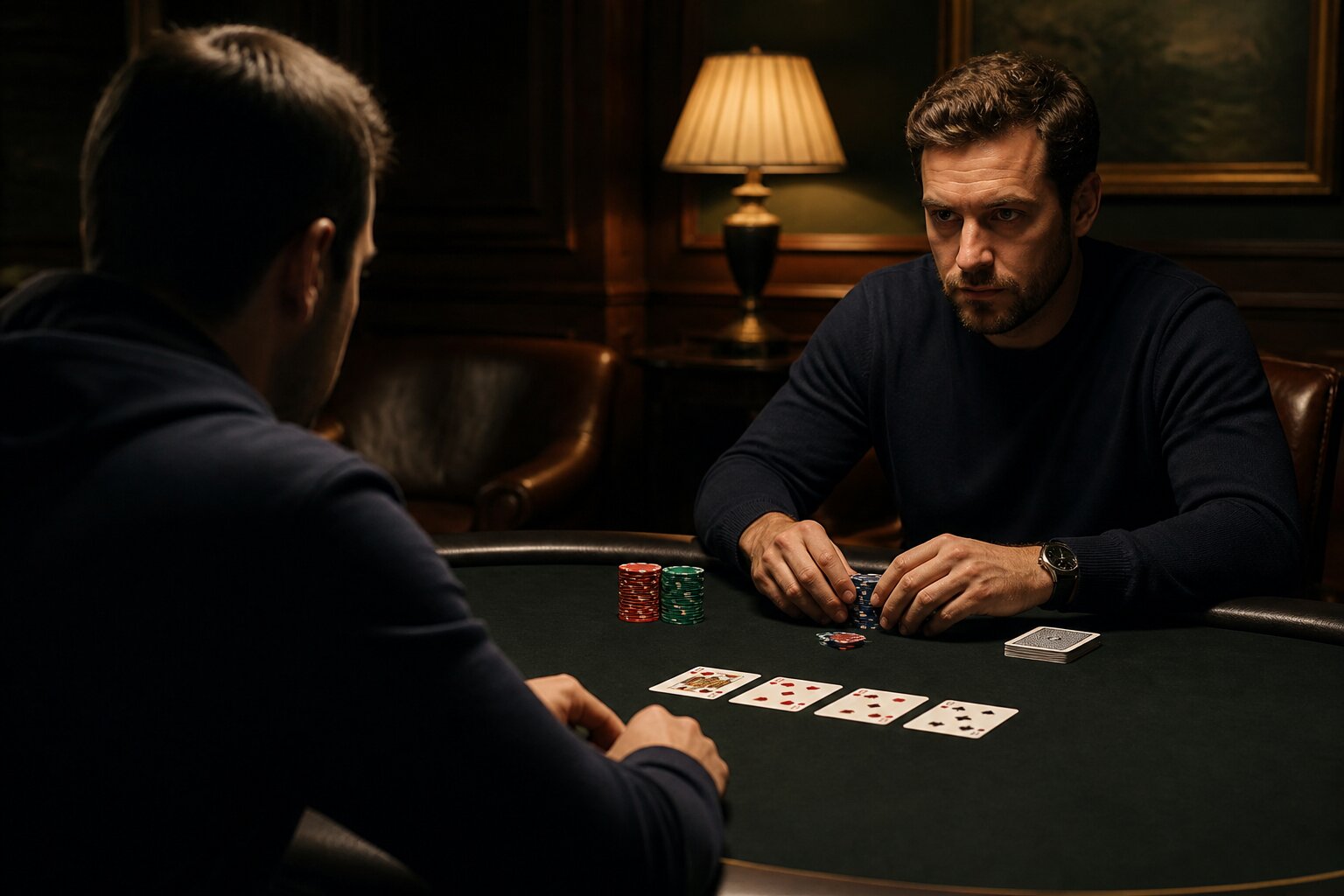
Ever wondered what it takes to outsmart just one opponent at the poker table? Heads up poker is pure, concentrated play—fast-paced, tense and focused on reading a single rival. It’s just you, your cards and the person opposite you; every decision matters.
If you enjoy regular poker but want a more direct challenge, one-on-one games sharpen your instincts and test your ability to adapt. This guide walks you through the rules, common formats and practical ideas to improve your play.
Curious to learn more? Keep reading — the next sections break down how heads up differs from multi-player games, how hands are dealt, and the kinds of matches you might join.
What Is Heads Up Poker?
Heads up poker is simply poker played between two people only. The core hand rankings and betting structure from standard poker carry over, but with only one opponent the dynamics shift: position, timing and aggression become much more prominent.
With just two players, hands are frequent and confrontations are direct. You’ll see a wider range of hands played and more emphasis on how your opponent acts, rather than reacting to a table of several players. That makes observation and adjustment central to success.
This format is for adults only; in the UK you must be at least 18 to take part. That said, it’s a format suited to both newcomers who want to practise and experienced players wanting a sharper contest.
How Do Heads Up Poker Rules Differ From Standard Poker?
Most of the fundamental rules remain the same, but a few practical differences change how the game flows.
Positioning is one example. With two players the dealer posts the small blind and the opponent posts the big blind; the small blind acts first before the flop and last on subsequent betting rounds. The dealer button alternates each hand so both players experience the advantages and disadvantages of each position.
Blinds are posted every hand, which maintains steady action and ensures there is always something at stake. Because only two players are involved, typical multi-player strategies—such as folding widely in early position—don’t apply in the same way. You’ll often call and raise with a broader range of hands, and betting patterns carry more information.
When you move between live and online play the rules stay consistent, but the pace and visible tells differ, which is important to bear in mind as you adapt your approach.
Popular Heads Up Poker Formats Explained
Heads up poker appears in several formats, each with different pacing and objectives. Understanding them helps you choose the right setting for your skills and goals.
In cash games both players use real-money chips at fixed stakes. You can join or leave between hands and the chips you win or lose reflect actual money. These games are flexible: you can play a few hands for practice or longer stretches to work on particular strategies.
Sit & Go tournaments begin when two players are seated. Each receives an equal allocation of tournament chips and play continues until one player holds every chip. Prizes are fixed in advance, and the focus is on accumulating chips rather than on short-term swings.
Multi-table tournaments adapt the head-to-head idea into a bracketed competition. You face one opponent per round and progress by winning each pairing, which brings a different strategic emphasis as you prepare to face varied opponents in successive rounds.
With these formats in mind, consider what you want from your session—practice, steady stakes, or a tournament-style challenge—and choose the format that fits.
How Does Dealing Work in One-on-One Poker?
Dealing in heads up games follows the usual order of community poker but with adjustments for two players. The player with the dealer button posts the small blind; the other posts the big blind. Both blinds are placed before the dealer distributes private cards.
Each player receives two private cards face down. Pre-flop, the small blind acts first; on the flop, turn and river the small blind then acts last. This rotation of action is significant because acting last gives you more information about your opponent’s choices during the betting rounds.
After each hand the dealer button shifts to the other player so neither participant is permanently advantaged. In live games the physical dealer might be a house staff member, while online the software handles the deal, but the positional rules are the same. Observing how your opponent bets at each stage gives you insight you can use in later hands.
Step-by-Step Guide: How to Play Heads Up Poker
This section outlines the flow of a heads up hand in explanatory terms so you can picture how a typical round unfolds without prescriptive steps.
A hand begins with both players posting blinds: the dealer places the smaller blind and the opponent posts the larger one. Two private cards are dealt to each player, and the first betting round starts with the small blind acting before the flop. Players may choose from the usual betting options such as checking, betting, calling, raising or folding according to how the action has unfolded.
Once the pre-flop betting concludes, three community cards are revealed (the flop) and another round of betting follows, with the small blind now acting after their opponent. A fourth card (the turn) and a fifth card (the river) are turned in sequence, each followed by further betting. If both players remain after the final betting round, the hands are compared and the higher-ranking five-card combination takes the pot.
Throughout this sequence, decisions are influenced by the cards, the opponent’s behaviour, and the position you hold. Before you play, set clear limits for time and stakes so the session stays within comfortable bounds.
What Are Common Misconceptions About Heads Up Poker?
Several myths about heads up poker can mislead new players. Clarifying them helps you form more realistic expectations.
Bluffing is often overstated. While well-timed bluffs are part of the game, consistent success depends more on reading opponents, understanding ranges and choosing the right spots to apply pressure. Heads up play amplifies both successful aggression and mistakes, so measured aggression typically outperforms reckless bluffing.
Another misconception is that the faster pace leaves no room for strategy. In truth, the quicker rhythm requires more focused decision-making rather than rushed choices. Small adjustments—altering bet sizes, changing the frequency of raises or folding more selectively—change outcomes over many hands.
Finally, some players assume outcomes are fixed by short-term randomness. Over time, skillful play, position awareness and bankroll management are what produce consistent results. Recognising that variance exists but does not determine everything helps you maintain a constructive approach to improvement.
If you approach the game with clear goals and a willingness to study opponents, you’ll find heads up play is a powerful way to develop broader poker skills.
Heads Up Poker FAQs For Beginners
For newcomers, a few practical questions tend to come up. The answers below aim to remove uncertainty and help you feel ready to try one-on-one play.
Is heads up poker suitable for beginners? Yes. It can be a good learning environment because you only need to focus on one opponent, but it does demand understanding of basic hand rankings and betting. Start with low stakes or play-money tables while you build confidence.
What is the minimum age to play heads up poker in the UK? You must be at least 18 years old to participate in any poker game in the UK.
Can I play heads up poker for free? Many online platforms offer free or play-money tables where you can practise without financial risk. Use these opportunities to learn and test strategies before staking real money.
Is there a difference between online and live heads up poker? The rules are the same, but the experience differs. Live games allow you to observe physical tells and manage pace in person, while online play is faster and may provide tools to review hands and statistics.
Where can I get help if gambling stops being fun? If gambling becomes a concern, organisations such as GamCare and BeGambleAware provide confidential advice and support. Reaching out early can make a real difference.
Head up poker is an engaging way to test your skills against a single opponent. With clear limits, careful observation and steady improvement, you can make the most of the format and enjoy more rewarding sessions.
**The information provided in this blog is intended for educational purposes and should not be construed as betting advice or a guarantee of success. Always gamble responsibly.