
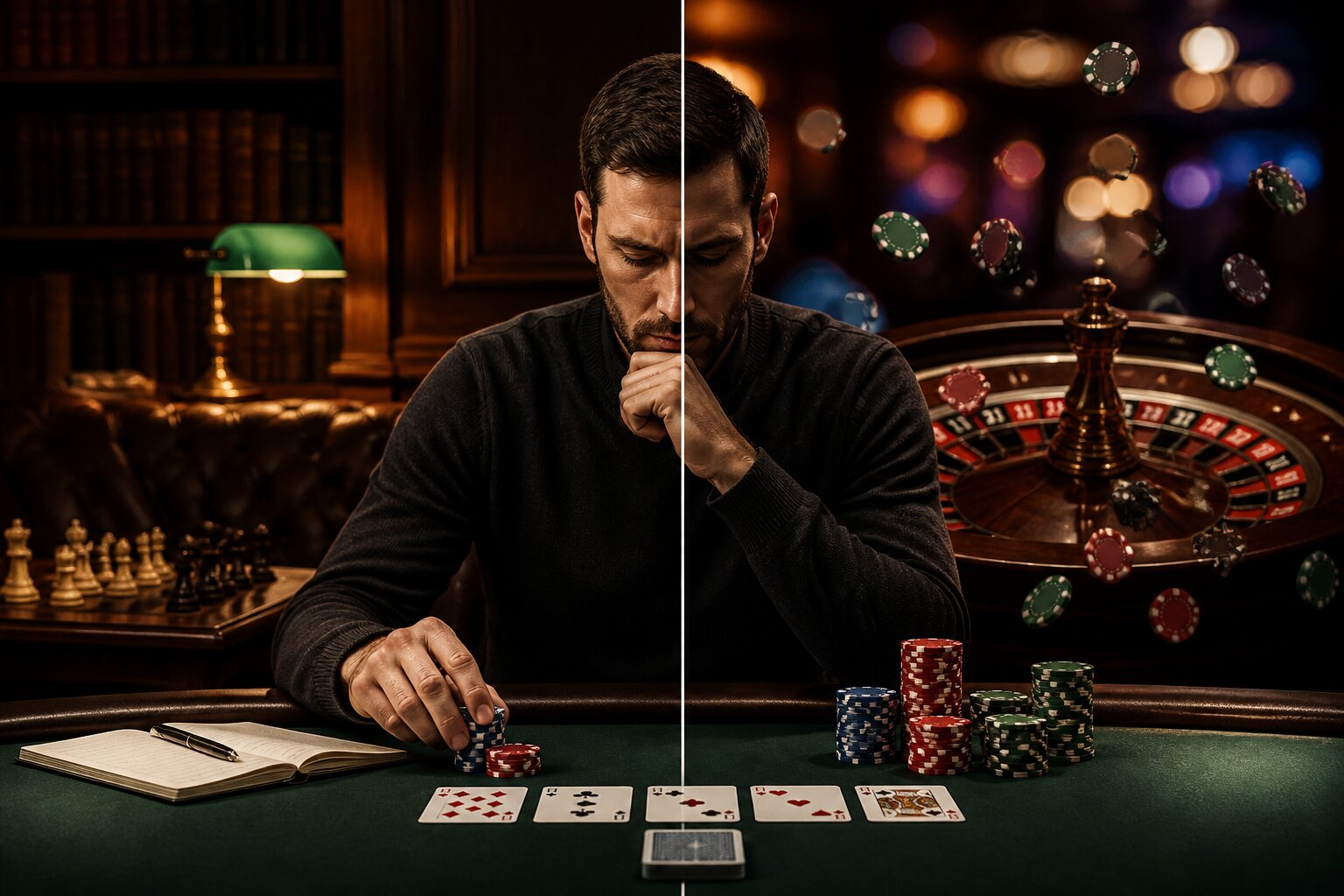
Poker has always sparked debate – is it a test of skill like football or chess, or is it primarily a gambling activity where card distribution and probability shape outcomes? From informal home games to large televised tournaments, poker attracts a wide range of players and viewers.
Some argue it deserves recognition alongside other competitive pursuits because of the intense concentration and strategy involved. Others point to the financial stakes and regulatory treatment that place poker squarely in the gambling category.
Whether you play occasionally or follow big events, the question of where poker belongs raises legal, practical and cultural issues worth exploring.
The Key Elements That Define a Sport
A sport is generally understood as an organised activity involving competition, rules and a requirement for regular practice to improve performance. Many sports pair physical effort with tactical awareness; others, such as chess, depend mainly on mental acuity.
Competition is central: participants test themselves against opponents with the aim of outperforming them under agreed rules. Skill matters because it lets players influence outcomes through training, decision-making and experience.
Physical or mental exertion can both qualify an activity as sporting, depending on the emphasis. Governing bodies, standardised rules and formal competitions also help distinguish recognised sports from casual pastimes.
These criteria form a spectrum rather than a strict checklist. Activities like darts or snooker sit nearer the mental end, while football and athletics require more physicality. That spectrum is where much of the debate about poker’s status takes place.
How Is Poker Classed Under UK Law?
In the UK, poker is legally treated as a form of gambling. The regulatory framework requires operators to hold licences and to meet standards designed to protect players and ensure fair play.
Whether in a physical venue or online, poker involving real money falls under these rules. Operators must carry out identity checks, offer self-exclusion options and provide clear information about terms and conditions. These measures aim to reduce harm and make the market transparent.
Law recognises that while skill affects decisions and can influence results over time, uncertainty in outcomes is inherent. That legal classification shapes taxation, consumer protections and how poker is promoted to the public.
Physical Vs Mental Skill: Where Does Poker Fit?
Sports vary in the balance between physical and mental demands. Poker is firmly on the mental side: success relies on concentration, memory, pattern recognition and psychological insight into opponents’ behaviour.
Players use probability assessment, position, bet sizing and timing to gain an advantage. Endurance also matters in long events where sustained focus and emotional control affect decision quality.
Although bodily fitness is not a central feature, small physical aspects — steady hands, clear vision, managing fatigue — can contribute. Comparing poker with chess or bridge helps explain why some view it as a contest of skill, even if its demands differ from those of physically active sports.
Does Poker Involve Risk Like Traditional Gambling?
Playing poker for money exposes participants to financial risk. Outcomes depend partly on the cards dealt and partly on the strategic choices players make. Over many hands, skillful play can influence long-term results, but individual sessions remain unpredictable.
This mix of decision-making and uncertainty resembles other regulated gambling activities, where stakes are placed on events with variable outcomes. Because financial consequences can be significant, it is important for players to be aware of the risks involved and to manage their exposure.
Support mechanisms and safeguards in the regulated market exist precisely because of this risk: they help people stay within safe limits and address problems if they emerge.
Myths About Poker: Sport or Chance Game?
Common myths simplify poker into extremes: one camp says it is purely chance-driven, the other claims skill guarantees success. The reality lies between. Players who develop strategic thinking, emotional control and analytical skills improve their expected results over time, yet no approach removes the inherent uncertainty of individual hands.
Another misconception is that poker is an easy path to stable earnings. In practice, sustaining profits requires consistent performance, bankroll management and adapting to changing conditions. Regulatory guidance warns against treating gambling as a primary income source.
Recognising the roles of both skill and uncertainty gives a clearer view of what poker demands from serious players and casual participants alike.
The Social & Cultural Perception of Poker in the UK
Public attitudes to poker in the UK are mixed. Many people enjoy it socially at home or in public venues, appreciating the strategic and social aspects. Televised tournaments and online play have broadened its appeal and visibility.
At the same time, poker is widely understood as a form of regulated wagering. That perception informs how it is presented in media and how venues and operators communicate with players. Age restrictions and mandatory identity checks are standard, reflecting the balancing act between access and protection.
Cultural narratives also influence how newcomers approach the game: some are drawn by competitive challenge, others by the social setting. Understanding both the competitive and the regulatory sides helps make sense of poker’s place in contemporary UK culture.
Conclusion: Where Does Poker Truly Belong?
The question of whether poker is a sport or a gambling game will likely remain contested. Legally and practically in the UK, poker is classified as a gambling activity and regulated accordingly. At the same time, its reliance on strategy, psychological skill and prolonged practice aligns it with other competitive mind sports.
Whatever label you prefer, the sensible approach is to understand the game’s demands and the risks involved. Play within clearly defined limits, make informed choices, and use available safeguards if gambling causes concern. With that understanding, poker can be enjoyed for its strategic depth and social aspects while remaining subject to appropriate protections.
**The information provided in this blog is intended for educational purposes and should not be construed as betting advice or a guarantee of success. Always gamble responsibly.