
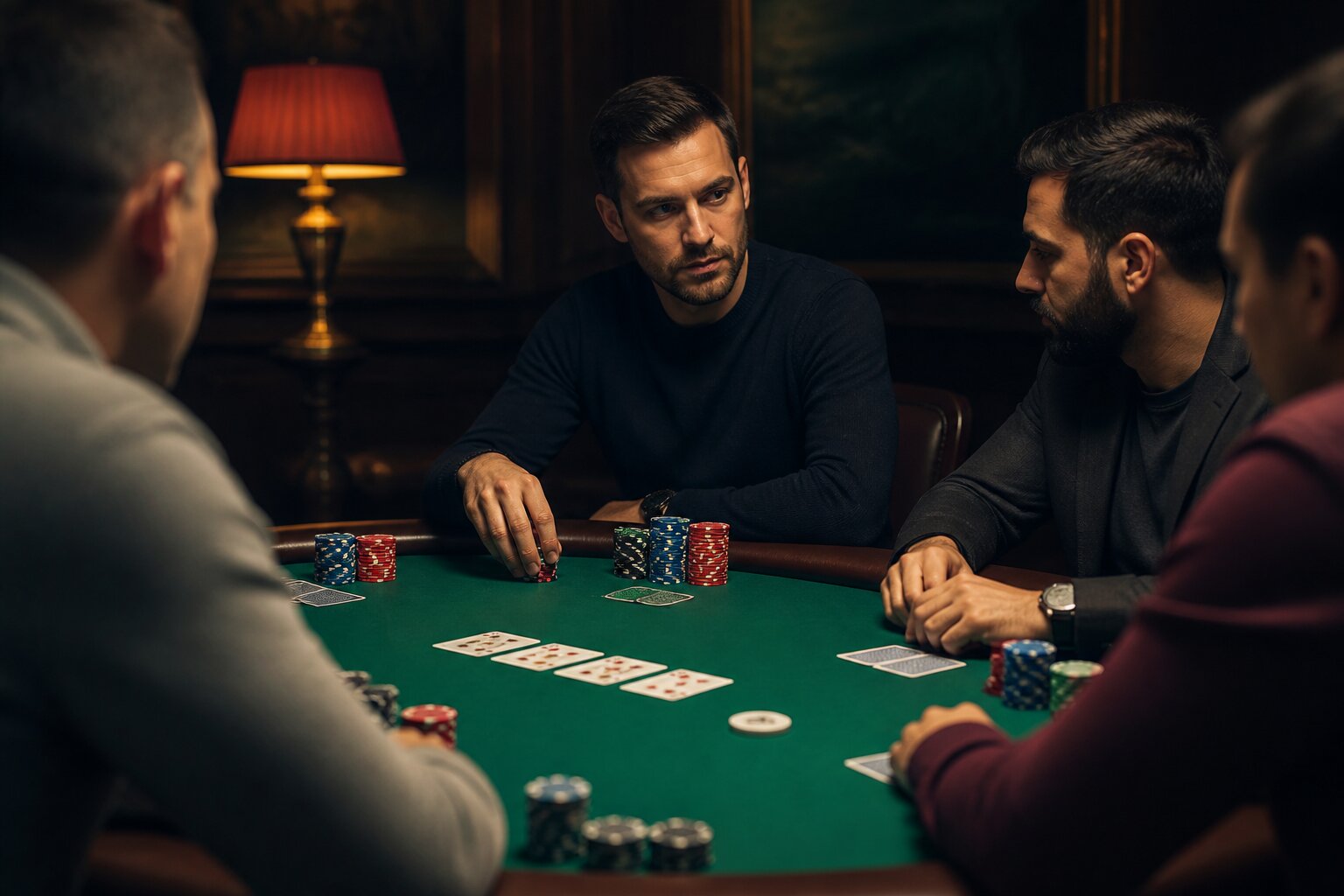
Ever wondered why where you sit at the poker table matters so much? The "Under the Gun" position is a term you’ll hear often—especially if you want to improve your poker decisions.
Whether you’re new to poker or sharpening your game, understanding this position helps you choose better hands and protect your stack. Read on for clear explanations, practical examples and tips you can use straight away.
There’s more to "Under the Gun" than just being first to act. This guide will show why it’s a tricky seat and how a cautious, thoughtful approach can pay off.
What Does Under the Gun Mean in Poker?
In poker, "Under the Gun" (UTG) refers to the player seated immediately to the left of the big blind. When the hand begins, the UTG player acts first in the pre-flop betting round.
Acting first means deciding whether to fold, call or raise before anyone else reveals their intentions. That lack of information is what makes UTG a demanding position. With more players yet to act, the UTG decision often sets the tone for the whole hand.
The seat rotates with the dealer button, so your role as UTG changes each hand. Recognising when you’re in this spot helps you adapt your strategy accordingly.
Where Is the Under the Gun Position at the Table?
The UTG seat sits directly to the left of the blinds. If you picture the dealer button, the big blind is one place to its left and UTG is immediately after that, moving clockwise around the table.
At a full nine or ten-handed table, UTG is considered an early position because many opponents still act after you. That means people to your left will have information on your action before they decide, so you should generally be more selective with the hands you play from UTG.
At a short-handed table the concept is the same, but the relative advantage shifts because fewer players remain to act after you. With fewer opponents the range of hands you can open from UTG widens a little, yet you still need to be mindful that you will act early in subsequent betting rounds.
Knowing exactly where UTG is makes it easier to plan which hands you will play from that seat and how aggressively you should act. It also helps when reading strategy charts and seat labels such as UTG+1 or UTG+2, which indicate players who are one or two seats to the left of UTG and who inherit a similar early position status.
How Do Blinds Affect the Under the Gun Position?
Blinds are forced bets—small blind and big blind—posted before cards are dealt to create an initial pot and stimulate action. Because those bets are already in play, the UTG player must decide whether to match, increase or give up on the hand without seeing anyone else’s reaction.
That pre-existing pot means UTG choices carry extra weight: a raise from UTG can deter many opponents, while a passive call leaves more players in the pot to act afterwards. The interaction between the blinds and UTG is central to early-round dynamics and influences how other players judge your strength.
Understanding this relationship helps you decide whether to enter the pot or conserve chips for a better position later.
How Does Betting Work from the Under the Gun Position?
From UTG you face the first decision after the cards are dealt. You can fold, call or raise. Each option has strategic consequences because subsequent players will react to your move.
A fold preserves chips when your hand is marginal. A call keeps the pot modest but invites action behind you. A raise narrows the field and asserts control, but it commits more of your stack without knowing how others will respond. The balance between risk and reward in UTG betting depends on the strength of your hand, table tendencies and your stack size.
Bear in mind that acting first reduces the information you can use, so betting choices from UTG tend to be more conservative than in later positions.
Why Is Under the Gun Considered a Difficult Position?
UTG is challenging because decisions are made with minimal information and many opponents still to act. Early action increases the chance someone after you has a stronger hand or will apply pressure.
Another factor is hand selection. From UTG you need to prioritise hands that retain value even when called or raised by several players. Small mistakes in judgement can lead to difficult post-flop situations, especially when the pot grows and multiple players remain involved.
For these reasons UTG demands discipline, patience and a clear idea of which hands are constructive to play in early position.
Unlike later seats, where you can react to opponents’ actions, UTG forces you to commit based largely on your own assessment of the hand and table conditions.
Common Mistakes Made from Under the Gun
Playing from UTG exposes a few recurring errors that chip away at profitability. Recognising them helps you make smarter choices and avoid unnecessary losses.
Playing Too Many Hands
One common misstep is entering pots with weak or marginal hands. Because UTG faces many opponents, those hands are less likely to hold up when more players see the flop.
Opening with a wide range also creates tricky post-flop spots where you lack position and must navigate several callers. Tightening your opening range reduces the number of difficult decisions you will face and increases the chance your hand is best when action folds around to you.
Forgetting to Watch Other Players
Some players focus only on their own cards and ignore who remains to act. Paying attention to who is yet to act, and how likely they are to defend, changes the maths of any raise.
Watch for:
- players who defend too wide or will re-raise light, which makes marginal opens riskier
- short stacks whose all-in threat can change how you should size a raise
- aggressive players behind you who often try to exploit UTG opens
Taking these factors into account gives you vital context for any UTG decision.
Overcommitting Chips
Large bets or raises from UTG without a strong hand can commit too much of your stack and leave you vulnerable if someone responds aggressively. Overcommitting increases the chance you must fold after investing heavily, or call off with a second-best hand.
Keeping bet sizes proportionate to the situation limits downside. Use smaller, more controlled opens when you want to see a cheap flop, and choose larger sizing only when you have fold equity or a premium holding that can comfortably withstand resistance.
How you avoid these mistakes depends on a mix of:
- selective hand choice
- attentive table reading
- sensible bet sizing
Those elements together make UTG play much more manageable and reduce costly errors. Remember to play within your limits and make measured decisions rather than chasing action.
Best Practices for Playing Under the Gun in Cash Games and Tournaments
UTG strategy shifts slightly between cash games and tournaments, but some principles apply to both formats. In cash games, deeper stacks make post-flop play richer, so you can sometimes widen your range slightly if you can outplay opponents afterwards. In tournaments, changing stack sizes and tournament life considerations often call for a tighter, more conservative approach.
Across both formats:
- Prefer strong, value-oriented hands that perform well against multiple opponents. High pocket pairs and premium broadway combinations are examples.
- Keep an eye on stack depths: shallow stacks reduce post-flop manoeuvrability, while deeper stacks allow more speculative plays when justified.
- Adjust to table dynamics. If players behind you are tight, a well-timed raise can pick up pots; if they’re aggressive, avoid confrontations with marginal holdings.
Patience and situational awareness are the most valuable assets in UTG. They let you pick moments to seize the initiative without forcing action that’s likely to backfire.
FAQ: What Hands Should You Play from Under the Gun?
From UTG you should prioritise hands with high intrinsic value and good equity against multiple opponents. Strong pocket pairs (aces, kings, queens), ace-king suited and similar premium combinations are solid opens because they can win big pots and often fare well in multi-way situations.
Borderline hands and speculative holdings that depend on favourable flops are generally better played from later positions, where you can see how opponents act first. If table conditions or stack sizes change—for example, very tight play behind you or deep stacks—your range can be adjusted, but the baseline approach from UTG remains conservative.
Avoid viewing any single hand as a guaranteed winner; instead, assess how it performs within the context of position, opponents and stack sizes.
Summary: Key Takeaways for Under the Gun Poker Position
Understanding UTG helps you make sound, controlled decisions when you must act first. Keep these points in mind:
Key Facts About Under the Gun
The UTG seat is directly to the left of the big blind and is the first to act in the betting round.
Acting early gives you less information than the rest of the table, so play selectively and with caution.
Generally, favour stronger starting hands from this position and adjust based on stack sizes and table behaviour.
Responsible Play Is Key
A disciplined approach to hand selection and bet sizing will improve your results and make sessions more enjoyable. Play within your means, track how different approaches work for you, and adjust based on what you observe at the table.
If you want, try applying these ideas in your next session and note how acting from UTG changes the way hands resolve. With practice, this early seat becomes less daunting and more manageable.
**The information provided in this blog is intended for educational purposes and should not be construed as betting advice or a guarantee of success. Always gamble responsibly.