
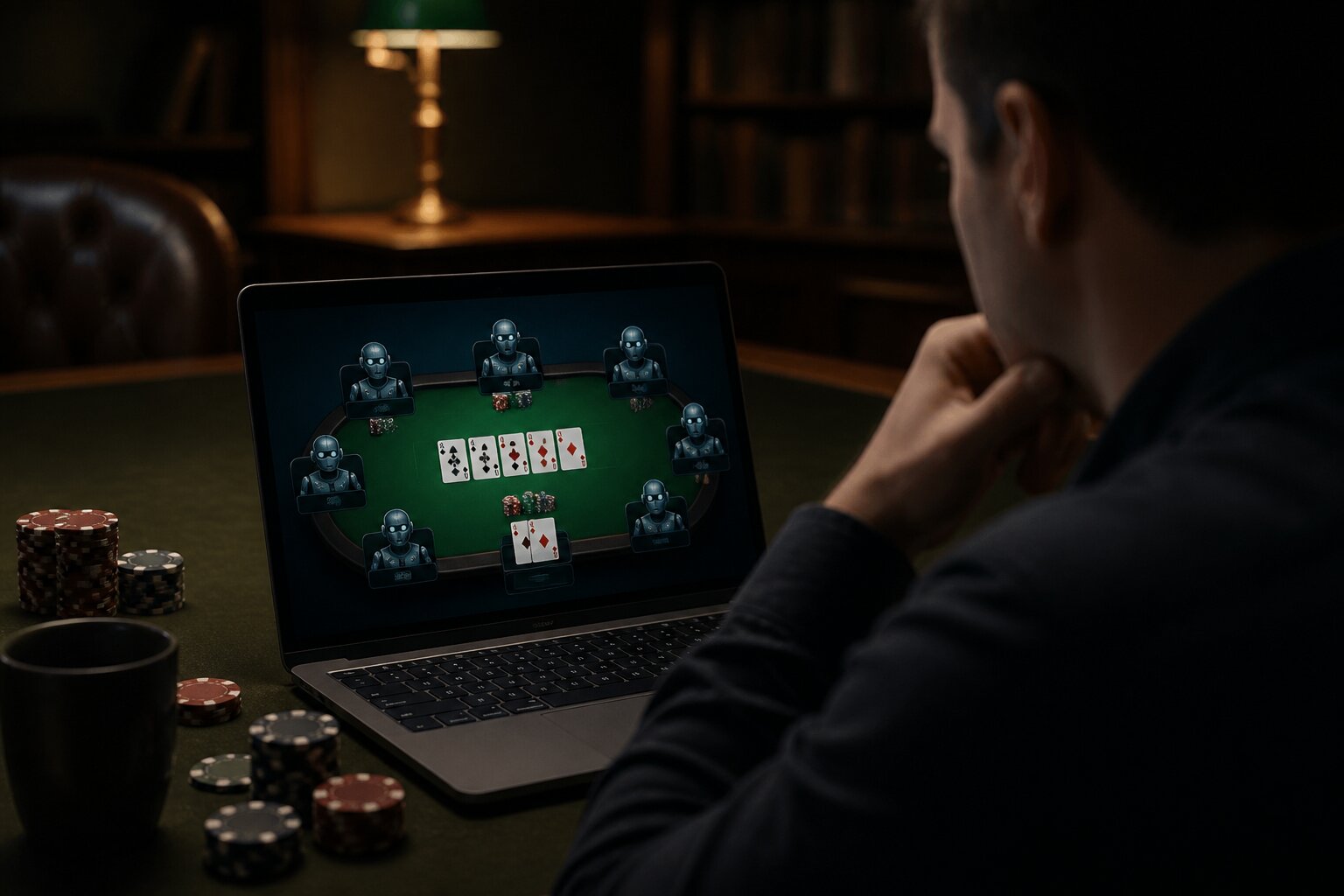
Ever wondered if you're really playing against another person at the online poker table, or whether a computer program might be making the moves for them? The idea of poker bots has worried players for years because a hidden opponent changes how the game feels and can make results hard to trust.
This article explains what poker bots are, how they operate, and how sites and players respond. It will give you clear signs to watch for, outline how platforms detect and deal with bots, and explain what you can do if you suspect automated play.
Curious whether you’ve ever faced a bot and what protections are in place? Keep reading—each section builds on the last so you’ll finish with a practical understanding of the issue.
What Are Poker Bots in Online Games?
A poker bot is a computer programme built to play poker autonomously. It reads information available in the game—such as the cards, bets and timing—and uses programmed rules or statistical models to decide how to act. Bots range from very simple scripts that follow fixed patterns to sophisticated systems that adjust their play according to observed behaviour.
Where a human brings judgment, changing tactics and social cues to the table, a bot relies on computations and set logic. That means bots can make decisions very quickly and remain active for long stretches, but they don’t interpret tone, intention or the social aspects of a table the way a person can.
Because automated play can distort competition, most regulated poker platforms forbid bots and deploy tools to detect them. Where they are used legitimately—such as for research or training—they are kept separate from real-money play to avoid unfairness.
Knowing this distinction helps when you start to evaluate whether a particular opponent might be a bot or simply a very steady human player.
How Can You Tell If You’re Playing Against a Bot?
Spotting a bot requires looking for patterns that don’t fit typical human behaviour. Some useful indicators are:
- Unnaturally consistent decision speeds, such as instant moves every hand.
- 24/7 activity with no obvious breaks.
- Repetitive betting patterns that don’t change with different table dynamics.
- Lack of table chat or any response to conversational cues.
None of these signs alone proves an account is a bot; many experienced players also act quickly and silently. Instead, they form a picture: multiple indicators together make automated play more likely. If you’re unsure, make a note of dates, times and hands, then use the site’s reporting tools so those observations can be analysed properly.
If that sounds like a lot to watch for, don’t worry—platforms run the technical checks behind the scenes, and reporting your concerns simply alerts those systems to investigate.
Why Would Poker Sites Allow or Ban Bots?
Allowing bots would undermine fairness and player trust, so most reputable operators prohibit them in real-money games. Bots can distort outcomes and drive away people who want to compete against other humans, which harms a site’s reputation and long-term viability.
Regulators require operators to maintain fair play and protect customers, so licensed platforms implement rules and monitoring to prevent automated accounts. Some unregulated or poorly run sites might not be as vigilant, but for responsible operators the costs of tolerating bots far outweigh any short-term gain.
Operators may still use automated tools internally—for testing software or simulating traffic—but these activities are separated from live tables to ensure players are not disadvantaged.
Are Poker Bots Legal or Against the Rules?
Using bots on real-money poker sites is against the rules on virtually every regulated platform and breaches typical terms and conditions. Regulators expect operators to prevent cheating and to act if automated or abusive behaviour is found.
Consequences for accounts confirmed to be using bots commonly include permanent suspension and forfeiture of funds, depending on the platform’s policies. These measures exist to protect the broader player community and to keep games honest.
If you are unsure about a rule, check the site’s terms or contact customer support before playing. Clarifying what is permitted helps prevent accidental breaches and keeps the environment fair for everyone involved.
Do Sites Benefit from Bots or Are They a Problem?
Bots are a problem rather than a benefit. They can make the playing field uneven and drive away real players, which harms revenue and reputation over time. For operators whose business depends on repeat customers, maintaining trust and fairness is essential.
That is why most platforms invest in detection systems, staff training and policy enforcement. These efforts protect players and uphold regulatory obligations, which in turn helps sustain a healthy community of genuine competitors.
If a site were to tolerate bots, the long-term damage to credibility and player retention would typically outweigh any short-term gains from increased action at tables.
Common Myths About Poker Bots
Many misconceptions circulate about bots. A few common myths are worth addressing so you can judge claims you might hear at the table.
Myth: Sites secretly allow bots to increase profits.
Reality: Tolerating bots would damage trust and regulatory standing, which is materially worse for a site than losing short-term revenue.
Myth: Playing against bots makes you a better player.
Reality: Bots do not replicate human play dynamics convincingly enough to teach skills that translate to human opponents.
Myth: Bots only affect high-stakes games.
Reality: Automated accounts can appear at any stake level, and detection systems monitor across the board.
Knowing these facts helps you make sensible choices about where and how you play.
How Do Poker Sites Detect and Block Bots?
Detection combines statistical analysis, behavioural monitoring and manual review. Systems look for unusual patterns such as identical timing across many hands, implausible consistency in betting lines, or accounts that never pause. Advanced software can flag activity for human investigators to review further.
When an account is flagged, platforms may place it under observation, request additional verification or suspend it pending investigation. Confirmed cases of automated play typically result in account closure and the removal of associated funds according to the site’s rules.
Operators update their detection methods regularly because bot developers also change tactics. This ongoing cycle of improvement helps keep games fair and reduces opportunities for automated abuse.
What Should Players Do If They Suspect Bots?
If you suspect automated play, the right move is to report your observations using the platform’s official channels rather than confronting other players. Providing clear, factual details—usernames, timestamps and examples of hands—helps security teams analyse the situation efficiently.
Keep a record of anything you find unusual, use the site’s reporting feature or support contact, and allow the professionals to investigate. Avoid public accusations at the table, as these can disrupt the experience for others and complicate the investigation.
Reporting is a simple way to protect yourself and the community, and it enables operators to take action when necessary.
Steps to Take if You Suspect a Bot
Before reporting, collect concise details of what you have observed so the support team can act on concrete information.
- Note specific examples of repetitive behaviour or highly consistent timing.
- Use the site’s report feature or contact support with usernames, dates and hand references.
- Provide objective observations rather than accusations in public chat.
- Allow the security team to investigate and avoid discussing the matter at the table.
These steps help investigations proceed smoothly and maintain a positive environment for all players.
Do Poker Bots Affect Fairness and Game Integrity?
Automated players can upset the balance of competition by exploiting advantages unavailable to humans. That reduces trust among players and can diminish the quality of games overall. Regulators require operators to safeguard the integrity of play, and platforms that take this responsibility seriously use both technical and procedural measures to keep tables honest.
Protecting fairness involves more than just software; it includes clear policies, staff trained to spot abuse and transparent enforcement so players know the rules are upheld consistently.
Taken together, these measures help ensure that poker remains a contest between people, with outcomes decided by decisions made at the table rather than by automation.
Conclusion: The Real Impact of Poker Bots in Online Poker
Poker bots have the potential to undermine online poker, but regulated platforms and vigilant players reduce that risk. By understanding the signs of automated play, reporting concerns, and choosing operators that enforce strong fairness measures, you help keep games honest and enjoyable.
If you have questions or suspect suspicious behaviour, use the site’s support channels so trained teams can review the situation.
**The information provided in this blog is intended for educational purposes and should not be construed as betting advice or a guarantee of success. Always gamble responsibly.