Have you noticed slot games are looking different lately? The simple three-reel machines have given way to colourful grids, new ways to win and mechanics that change how a round plays out.
If you’re curious about what cluster pays means, or why many titles are moving away from classic paylines, this guide will walk you through the essentials in a clear, friendly way. Keep reading and each section will build on the last so you get a full picture of how modern slot design works.
What Are Grid Slots and How Do They Differ from Classic Slots?
Grid slots use a checkerboard-style layout instead of the traditional reels and rows. Typical arrangements are 5x5 or 6x6, and the visual effect looks more like a puzzle board than a fruit machine. Symbols appear across the whole grid rather than rotating around individual reels.
Classic slots use three or five spinning reels and fixed paylines that determine wins. Grid slots remove that rigid line structure: wins form where symbols meet the game’s matching rules rather than along pre-set lines. As a result, the same spin can feel more varied and less predictable in terms of which areas of the screen matter.
Another common feature in grid designs is the way symbols move. Many titles let symbols fall into place from above and then respond dynamically when wins occur, which keeps the action constantly changing. If you enjoy variety in how a round can unfold, grid slots offer a noticeably different experience to the old reel-and-payline format.
How Does the Cluster Pays Mechanic Operate?
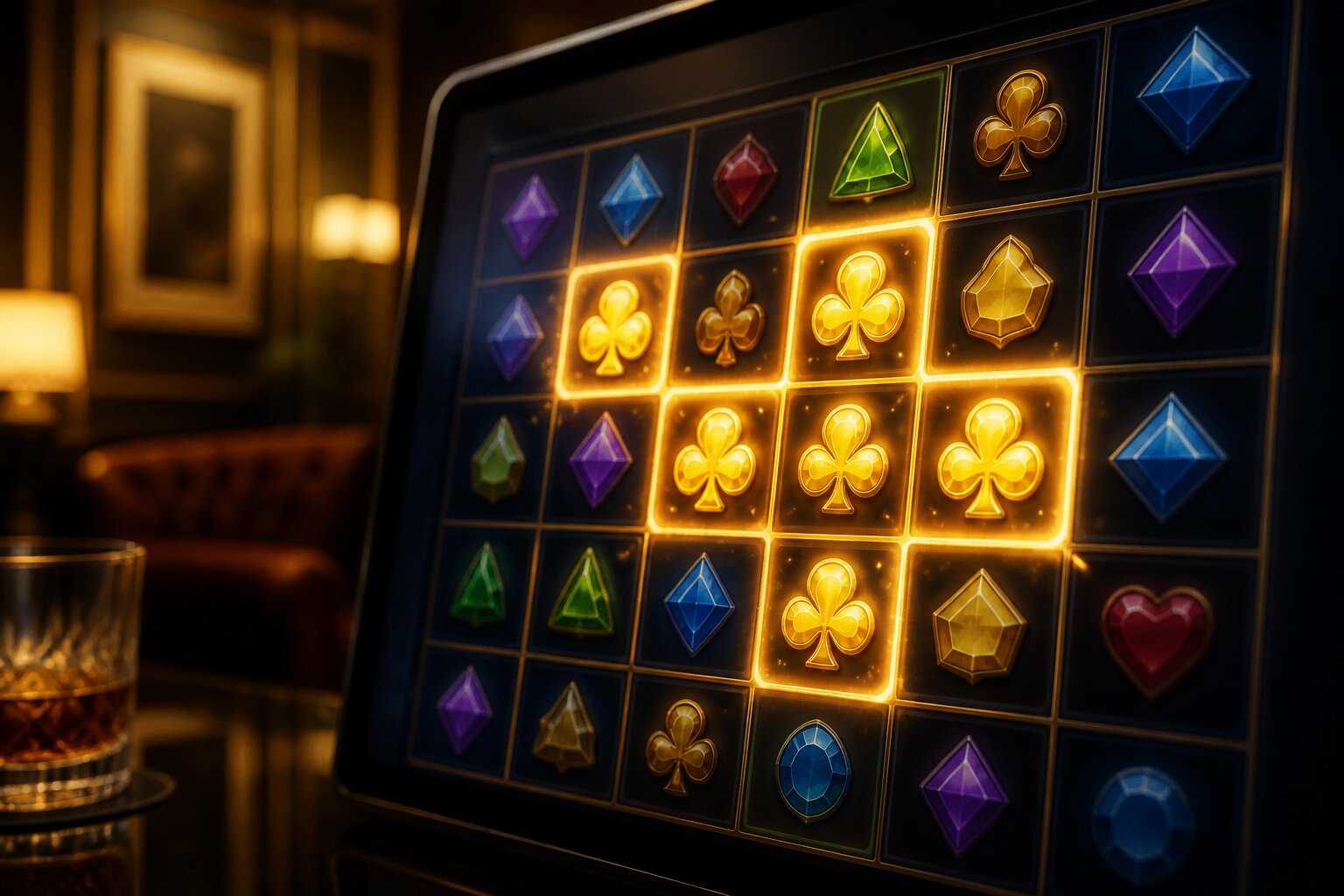
Cluster pays changes the idea of a win from lining up symbols on a payline to gathering groups of identical symbols on the grid. In cluster systems, a win happens when a defined number of the same symbol touch each other horizontally or vertically. Diagonal contact usually does not count.
Symbols are placed across the grid when a spin resolves. If a group of matching symbols reaches the game's required size—often five or more—the cluster clears and is awarded. Those cleared symbols are then removed and new symbols enter the grid, which can trigger further clusters in the same round. This chaining effect is part of what makes cluster pays so engaging: one spin can produce several consecutive wins without any extra input from the player.
Each game explains the exact cluster size and any special rules in its paytable or help section, so it is straightforward to check how wins are formed before you play.
What Makes Cluster Pays Slots Popular Among Players?
Players are drawn to cluster pays slots for a few clear reasons. The cluster system breaks the monotony of fixed paylines, making each spin feel distinct. The visual feedback of symbols grouping and disappearing is satisfying and easy to follow, which helps the game feel active throughout a session.
Designers also use cluster mechanics to layer in features: special symbols that alter clusters, multipliers that grow with consecutive clears, or bonus symbols that change the grid itself. These variations mean games with the same basic mechanic can still feel very different from one another.
Finally, the format supports a wide range of themes and presentation styles, so whether you prefer simple gem-matching or story-driven titles with animated characters, there is likely a cluster pays game that fits your taste.
Symbols and Features Unique to Grid Slot Games
Grid slots often introduce symbols and functions tailored to the layout. Basic symbols carry different payout values, while special symbols perform unique roles. Wild symbols substitute for other icons to help form clusters, and scatter-style symbols can act as triggers for bonus sequences or alternative features.
Developers add interest with mechanics that interact directly with the grid. For example, symbol upgrades might turn low-value icons into higher ones after a win, or specific tiles might hold multipliers that increase as clusters form nearby. These elements are designed to reward particular patterns of play and to keep rounds feeling fresh.
Avalanche and Cascading Reels Explained
A common grid-related feature is the Avalanche, sometimes called Cascading Reels or Tumbling Reels. When a win clears, those symbols vanish and new ones fall into place to fill the gaps. This movement gives the grid a continuous flow during a winning run and can generate additional clusters from a single initial result. Many games will continue the cascade until no further clusters appear, which heightens the sense of momentum in a winning sequence.
How Do Bonus Rounds Work in Grid and Cluster Pays Slots?
Bonus rounds provide a change of pace from the base game and are typically triggered by specific symbols or by meeting in-game conditions. Once activated, a bonus round may introduce altered rules, such as an expanded grid, guaranteed wilds, or separate rounds of cascades with extra multipliers.
Some bonus features present choices that affect the round, like selecting tiles that reveal prizes or choosing between different styles of free spins. Others simply run automatically with enhanced mechanics for a fixed number of rounds. Each game sets out its own triggers and structure in the help pages so players can see what to expect before playing.
These rounds are designed to add variety and excitement, offering concentrated moments where the rules change in ways that reward certain combinations or sustained cascades.
Are Cluster Pays and Grid Slots Fair and Regulated?
Grid and cluster pays games available through regulated operators must meet clear standards for fairness and transparency. Licensed titles use tested random number generation systems to ensure outcomes are produced according to the game’s stated mathematics, and independent testing agencies audit these systems on a regular basis.
Regulation also covers player protection and information disclosure. You can usually find details about a game’s return-to-player percentage, the technical testing it has undergone, and the operator’s licensing on the site offering the game. If questions arise about a title’s behaviour, those resources are the right place to start.
Operators also provide responsible play tools to help people manage their spending and time while playing. These include deposit limits, self-exclusion and time-out options. Using those tools is the simplest way to keep play within comfortable boundaries.
Why Are Modern Slot Games Evolving Towards Grid Designs?
The move to grid formats reflects both technical possibilities and player interest in new experiences. Grid designs allow developers to explore mechanics that do not fit neatly into reel-based systems, such as:
- cluster matching,
- cascading chains,
- variable grid sizes.
Those mechanics broaden the ways a game can surprise and engage a player, offering outcomes and visual feedback that feel different to traditional line wins. Grids also make it simpler to layer additional features, for example multipliers, symbol transforms and expanding play areas, without changing the core presentation.
Grids translate well to mobile screens, where clear blocks and falling animations can be easier to follow than narrow spinning reels. That accessibility helps players understand what is happening at a glance, particularly on smaller displays.
The room grids give for visual and mechanical variety explains why many providers have embraced the layout for recent releases. Grid formats let designers experiment with pacing and volatility, create novel bonus rounds, and offer a distinct look and feel while remaining compatible with standard regulatory and return-to-player frameworks. All of this contributes to ongoing interest in grid-based slots among studios and players alike.
Choosing the Right Grid or Cluster Pays Slot for You
Picking a slot comes down to what you want from the experience. Look for themes and presentations that appeal to you, and check which special features the game offers, such as wilds that expand, multipliers that grow during cascades, or larger grids that increase cluster potential.
It can help to review the paytable and the game’s help section to see the required cluster size, how bonus rounds are triggered and whether there are built-in multipliers. Also consider volatility and the stated return-to-player figure so you have a sense of how the game typically behaves over time.
Set clear limits before you play and use the available safer play tools provided by operators to control spending and session length. Choosing a game that matches your preferences while staying within your personal limits is the best way to enjoy modern slot designs.
**The information provided in this blog is intended for educational purposes and should not be construed as betting advice or a guarantee of success. Always gamble responsibly.