
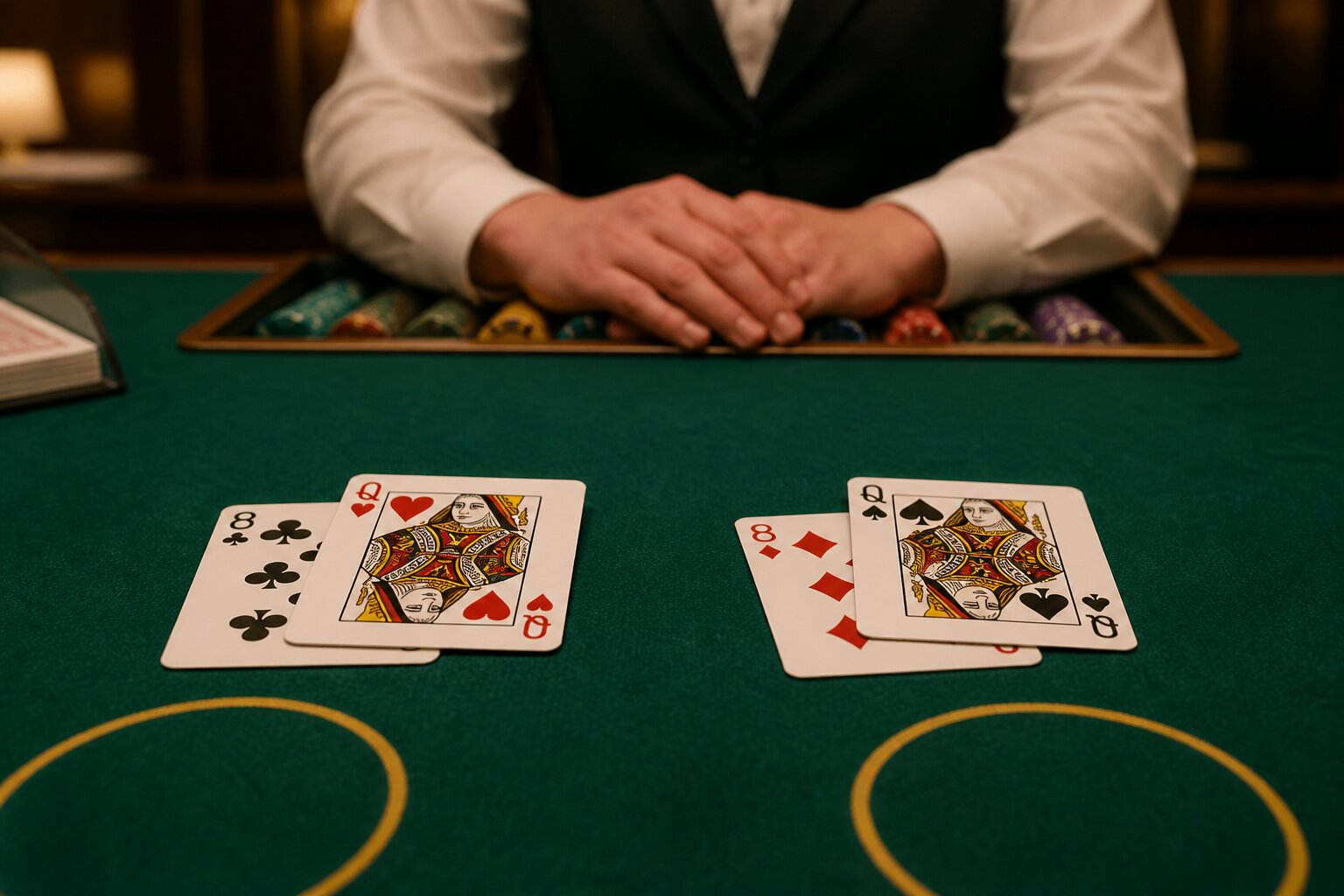
Ever wondered what happens in blackjack when neither you nor the dealer wins? You might have heard people mention a “standoff”, “push”, “draw”, or even a “tie”, but what do these terms actually mean in a real game?
If you’ve found yourself confused at the blackjack table or just want to understand these outcomes better, you’re in the right place.
This post explains what happens when a hand ends in a stalemate, how that affects your bet and balance, and how the terms are used so you feel confident next time you play.
What Does a Standoff Mean in Blackjack?
A standoff in blackjack happens when your hand and the dealer’s hand have the same total at the end of the round. In that case neither side wins, and the hand simply finishes without a change in money.
For example, if a player ends on 19 and the dealer also has 19 after finishing their play, that is a standoff. The player’s original stake is returned and the game moves on to the next deal.
This outcome is straightforward and automatic under normal casino rules; the dealer collects no win from that player and the player keeps their stake. Knowing this helps avoid surprise when chips are pushed back and the next hand begins.
How Do Standoffs Affect the Outcome of a Game?
A standoff is neutral: it does not count as a win or a loss. Because the original bet is returned, a player’s balance remains the same as it was before that hand.
Every hand in blackjack is an independent event, so a standoff in one round has no effect on future rounds. That independence is part of why players often view each deal as a fresh opportunity rather than something influenced by previous results.
It’s sensible to treat standoffs as one of the normal possibilities in blackjack and to keep playing decisions focused on the current situation rather than past outcomes.
The Difference Between Tie, Push, and Draw in Blackjack
Different venues and players may use several words to describe identical outcomes. In blackjack, these terms generally refer to the same result: the player’s and dealer’s totals are equal and the stake is returned. Common labels include:
- tie
- push
- standoff
- draw (used less often)
“Push” is the term most commonly used at tables and in rules, while “standoff” appears in some rulebooks and commentary. “Draw” is more typical of other card games, but you may hear it used informally for the same situation in blackjack.
When a push occurs, the player neither wins nor loses on that hand and the original stake is returned. Any side bets or insurance bets are usually treated separately under the specific house rules, so those outcomes may differ even when the main hand pushes.
Using the most common term at the table helps avoid confusion, but whatever word is used, the practical effect for the player is the same.
Push vs Standoff: Are They the Same?
Yes. Push and standoff describe identical outcomes in play, with the player’s stake returned when totals match. The difference is only in vocabulary, not in procedure or payout.
Both terms are interchangeable in practice, so adopt the wording used locally to keep communication clear and avoid disputes with the dealer or other players.
Draw vs Standoff: Understanding the Terms
“Draw” is less conventional in blackjack but often used casually. If someone refers to a draw at the blackjack table they typically mean the same break-even result as a push or standoff.
Sticking to the term in local use keeps communication clear and helps prevent misunderstandings about results, especially in busy or noisy environments.
What Happens to Your Bet During a Standoff?
When a standoff occurs, the player receives back the original bet. There is no additional payout, and no money is lost.
This process is handled automatically by the casino or the game software. The returned stake restores the player’s balance to its pre-hand level. The game then proceeds to the next hand without any further adjustment.
In most properly run games the treatment of standoffs is standardised, so players can expect consistent handling. Typical effects are:
- The original stake is returned to the player.
- No additional winnings are paid.
- The player’s balance is restored to its prior amount.
- Play moves on to the next hand without alteration to other bets.
Note that house rules or specific game variants can vary, and some side bets or promotions may be treated differently. Always check the game rules or casino terms for any exceptions.
Is a Standoff Good or Bad for Players?
A standoff is neither good nor bad in monetary terms; it leaves a player where they started for that hand. Some players may view it as a missed chance to win, others as a small relief from losing, but financially it is neutral. Over many hands, standoffs simply form part of the natural variance of the game and do not alter a player’s expected returns.
How a standoff feels depends on the wider session. If a player has had a run of losses, a returned stake can be a welcome pause and help preserve their bankroll for further play. After a winning streak it can seem like a stoppage of momentum and may cause frustration, particularly for players who read patterns into short-term results.
The strategic implications are limited. A standoff does not change the odds or the maths behind a decision, nor does it provide a profit or a loss; it merely restores the prior situation and allows play to continue from the same starting point. For bankroll and session planning, treating standoffs as neutral outcomes helps maintain clearer expectations and more disciplined play.
Emotionally, different players respond in different ways: some appreciate the brief reset, others dislike the perceived missed opportunity. Staying mindful of these reactions can help players keep decisions based on long-term strategy rather than short-term feelings.
Common Myths About Standoffs in Blackjack
There are a few persistent myths about standoffs worth addressing. One is that a standoff can somehow change the game’s odds or create a future advantage; it does not. Each round is independent and past outcomes do not alter the probabilities in subsequent hands.
Another misconception is that players lose their bet during a standoff. In reality the stake is returned. A further myth suggests special strategy is needed to handle standoffs; that is unnecessary because the rules already dictate the result.
Understanding these points removes much of the mystery and helps players focus on the mechanics of the current hand rather than on incorrect beliefs.
Standoff Rules in UK Casinos
In UK casinos the treatment of a standoff is clear: when player and dealer totals match, the hand is a push and the player’s stake is returned. This standardisation supports fairness and predictability for players and helps ensure outcomes are handled consistently across different venues.
Tables and online games follow published rules so players know what to expect. Those rules are usually displayed at the table or accessible in the game information online, making it straightforward to confirm how a standoff will be treated. Because the outcome is strictly defined, disputes about standoffs are uncommon when games operate transparently.
A standoff means the player neither wins nor loses the main bet; the original bet is returned and no additional payout is made. It does not affect most side bets or progressive features, which may have separate terms and conditions that determine their outcomes independently of the main hand.
Remember that every hand is handled according to those written rules, and the standoff outcome is simply one of several possible, rule-based results in the game. If you are unsure about any rule, ask the dealer or check the published rules before playing so you understand how standoffs and related situations are resolved.
Where to Learn More About Blackjack Terminology
If you want to deepen your understanding of blackjack terms and rules, consult official guidance from recognised gaming authorities, casino help pages, and reputable educational resources. These sources give clear definitions and explain how terms apply in practice.
When researching, favour factual, balanced material that focuses on game mechanics and player protection. That will give you the clearest picture of how standoffs and other outcomes are handled, and help you feel confident at the table.
**The information provided in this blog is intended for educational purposes and should not be construed as betting advice or a guarantee of success. Always gamble responsibly.