
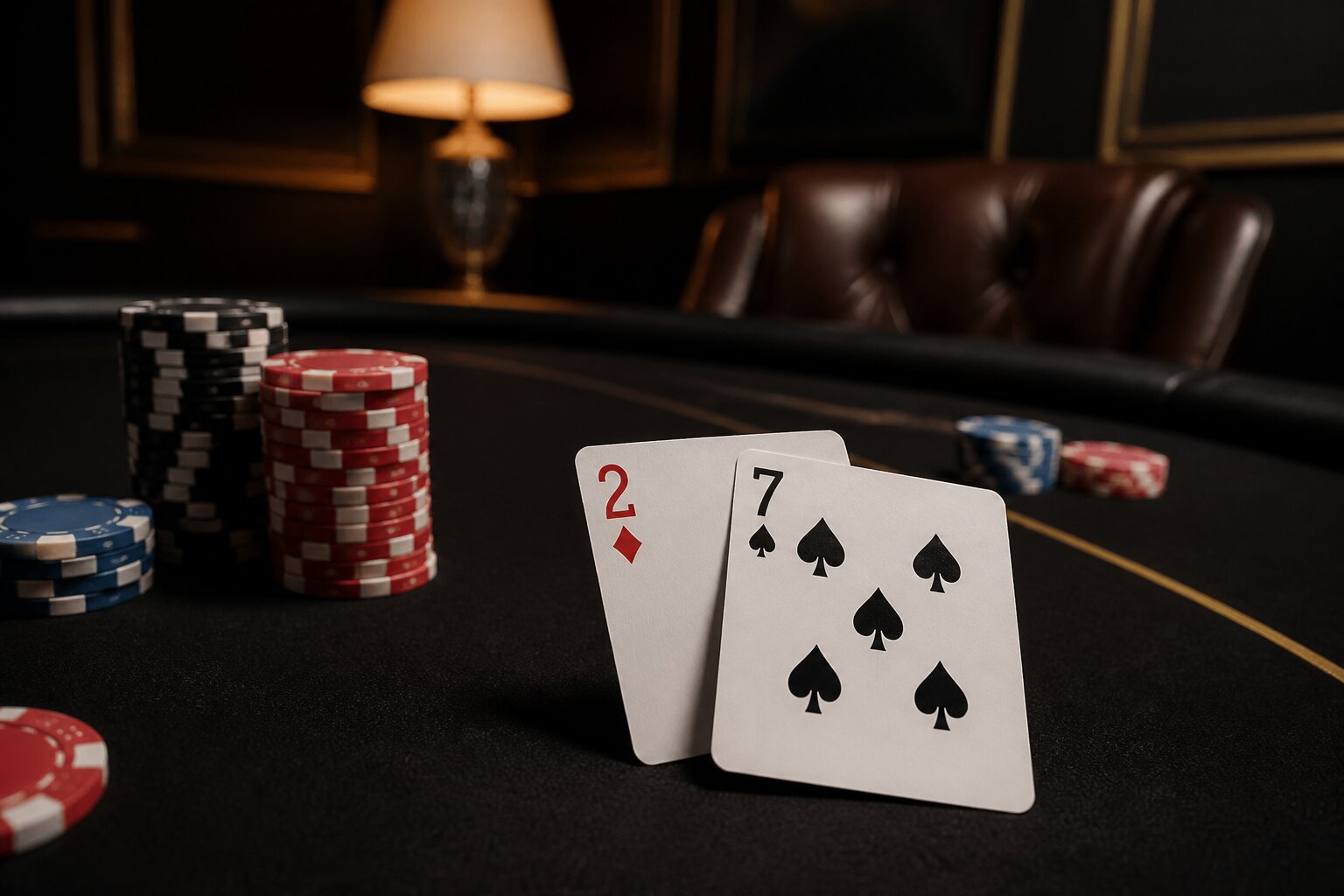
If you’ve ever played poker and wondered why some hands just never seem to win, you’re not alone. Even experienced players know certain starting cards give a much smaller chance of building a strong hand as the round unfolds.
Choosing which hands to play is one of the most important skills in poker. Making better starting decisions preserves your chips and puts you in a position to make stronger choices later in the hand.
Curious which starting hands are most likely to cause trouble and why they are so weak? Read on to learn which hands are best to fold and how to spot them quickly at the table.
What Makes a Bad Poker Hand?
A starting hand is weak when the two hole cards have low potential to combine into pairs, straights, flushes or high-value pairs relative to typical opponent holdings. Key factors that reduce a hand’s potential include low ranks, lack of suit matching and poor connectivity in rank.
Low card values such as 2, 3, 4 or 5 are unlikely to form high pairs and are less likely to win showdowns against exposed high cards. Cards that are off-suit remove the possibility of a flush, while cards that are far apart in rank make straights difficult to achieve. A hand that combines all three of these negatives is usually a candidate for folding pre-flop in most circumstances.
Context matters too. Your table position, the betting pattern and the number of opponents still in the pot affect whether a marginal hand is worth playing. Later sections explain common weak combinations and the reasons they are problematic so you can judge each situation with more confidence.
Ranking the Worst Starting Poker Hands
Some hole-card combinations are consistently poor because they rarely improve and often lose to common ranges opponents play. Below are examples of hands widely regarded as the weakest in Texas Hold’em, with brief explanations for each.
- 2-7 Off-Suit: Two low, unconnected ranks with different suits. These cards do not work well together and offer minimal routes to a competitive five-card hand.
- 2-8, 3-8, and 3-7 Off-Suit: Slightly different ranks but the same structural weaknesses as 2-7. They rarely make useful pairs or drawing hands.
- 2-6, 2-9, 3-6, and 4-7 Off-Suit: Low, unconnected off-suit cards that are seldom part of winning boards and are easily dominated.
- Low Face Card with a Low Off-Suit: Combinations like King-2 or Queen-3 off-suit are prone to being out-kicked when an opponent pairs the higher card, leaving you behind in showdowns.
- Low, Unconnected Cards: Hands such as 4-9 or 5-8 off-suit lack both connectivity and suitedness, reducing chances for straights or flushes and creating awkward decisions after the flop.
These hands are weak for structural reasons rather than because of any single unlucky moment. Later we cover how these weaknesses play out once community cards appear.
How Can Poor Starting Hands Affect Your Game?
Weak starting hands influence the later stages of a hand in predictable ways. If the flop does not significantly improve such a hand, the player will often face difficult choices: call into uncertainty, attempt a bluff against likely stronger ranges, or fold and preserve chips. Playing such hands frequently increases the number of tricky post-flop situations you encounter.
Beyond individual hands, habitual play of weak starters can reveal patterns to observant opponents. If you regularly limp or call with poor cards, others can exploit that tendency by applying pressure with stronger ranges. Conversely, folding the weakest hands consistently tightens your overall range and tends to reduce the number of marginal spots where you must make high-risk calls.
Understanding how weak hands typically develop after the flop helps you make better pre-flop judgements and reduces expensive second-guessing during later streets.
Common Misconceptions About Bad Poker Hands
There are a few persistent myths about weak starting hands that can mislead players. One is the idea that a weak hand is always hopeless. While some poor combinations are rarely viable, there are scenarios where position, opponent tendencies and pot dynamics make a marginal hand playable for a short-term strategic purpose.
Another misconception is that strong players never touch marginal hands. In truth, experienced players sometimes use weak holdings as part of a broader plan, for example to balance ranges or to exploit opponents who fold too often. That said, these plays rely on information and timing rather than being a general endorsement of playing poor starters.
Knowing the difference between an exceptional, situational play and a routine mistake is part of developing sound table judgement.
Are Any Traditionally Weak Hands Ever Playable?
Yes, under very specific conditions. A weak starting hand can become playable when you are in a late position with all players folded to you and there is a good chance of taking the pot with a single bet, or when an opponent shows predictable weakness. Skilled players also use occasional raises or calls with marginal cards to disguise their overall strategy.
These moves are tactical and rely on observation and timing. They are not a reason to widen your default starting range unless you understand the consequences for later streets.
Hands to Always Avoid in Poker
While context can sometimes override general rules, there are several hole-card combinations that should be treated with caution in almost every setting. These hands provide few routes to a winning five-card combination and often leave you dominated by the sorts of hands opponents typically play.
Common examples include 2-7 off-suit, 2-8 off-suit and 3-8 off-suit, as already noted. Also beware low, unconnected off-suit cards like 4-9 or 5-8. Low-high off-suit combos such as King-2 or Queen-3 are risky because even when they pair the high card they may be out-kickers by superior kickers.
If you find yourself tempted to play these hands frequently, it is worth reviewing the situations where you do so and whether those choices are producing positive results over time.
How to Identify Weak Hands at a Glance
A quick assessment routine helps you decide in seconds whether a starting hand is worth playing. First, check both ranks: two low ranks suggest limited showdown value. Next, note suitedness: off-suit cards remove the flush possibility. Then consider connectivity: cards separated by several ranks rarely make straights.
Combine these observations with your table position and the current betting action. A weak, unconnected off-suit hand in early position facing aggression from several players is usually a fold. The same hand in late position with everyone folded in front of you might be a candidate for a cautious, tactical play.
Practising this quick evaluation will speed up your decision-making and reduce time spent in marginal, costly spots.
Frequently Asked Questions About Bad Poker Hands
Below are concise answers to questions players commonly ask about weak starting holdings and how they affect play.
Can a bad starting hand ever win?
A weak starting hand can sometimes produce a winning final hand, depending on how the community cards and opponent actions unfold. However, the structural weaknesses described earlier mean such outcomes occur less often than with stronger starters.
Should I always fold weak starting hands?
Not always, but usually. Most weak hands should be folded pre-flop, especially from early position or when facing significant betting. Occasional exceptions are tactical and depend on position and opponent behaviour.
Are there tips to help avoid playing bad hands?
Learn and memorise the most vulnerable combinations, practise a quick pre-flop checklist and pay attention to position and table action. Over time this will reduce the number of marginal calls you make.
Is it safe to chase wins with bad hands?
Pursuing wins by repeatedly playing weak starters is a high-risk approach that tends to reduce long-term results. Set limits for losses, monitor your play, and avoid trying to recover chips by widening your starting range.
If you ever need assistance or guidance on managing play, help is available from customer support teams and specialist services. We prioritise player welfare and encourage sensible choices while enjoying the game.
Final thought: recognising and folding the weakest starting hands is a straightforward change that improves decision-making and keeps more chips in play for moments where you have a genuine edge.
**The information provided in this blog is intended for educational purposes and should not be construed as betting advice or a guarantee of success. Always gamble responsibly.