
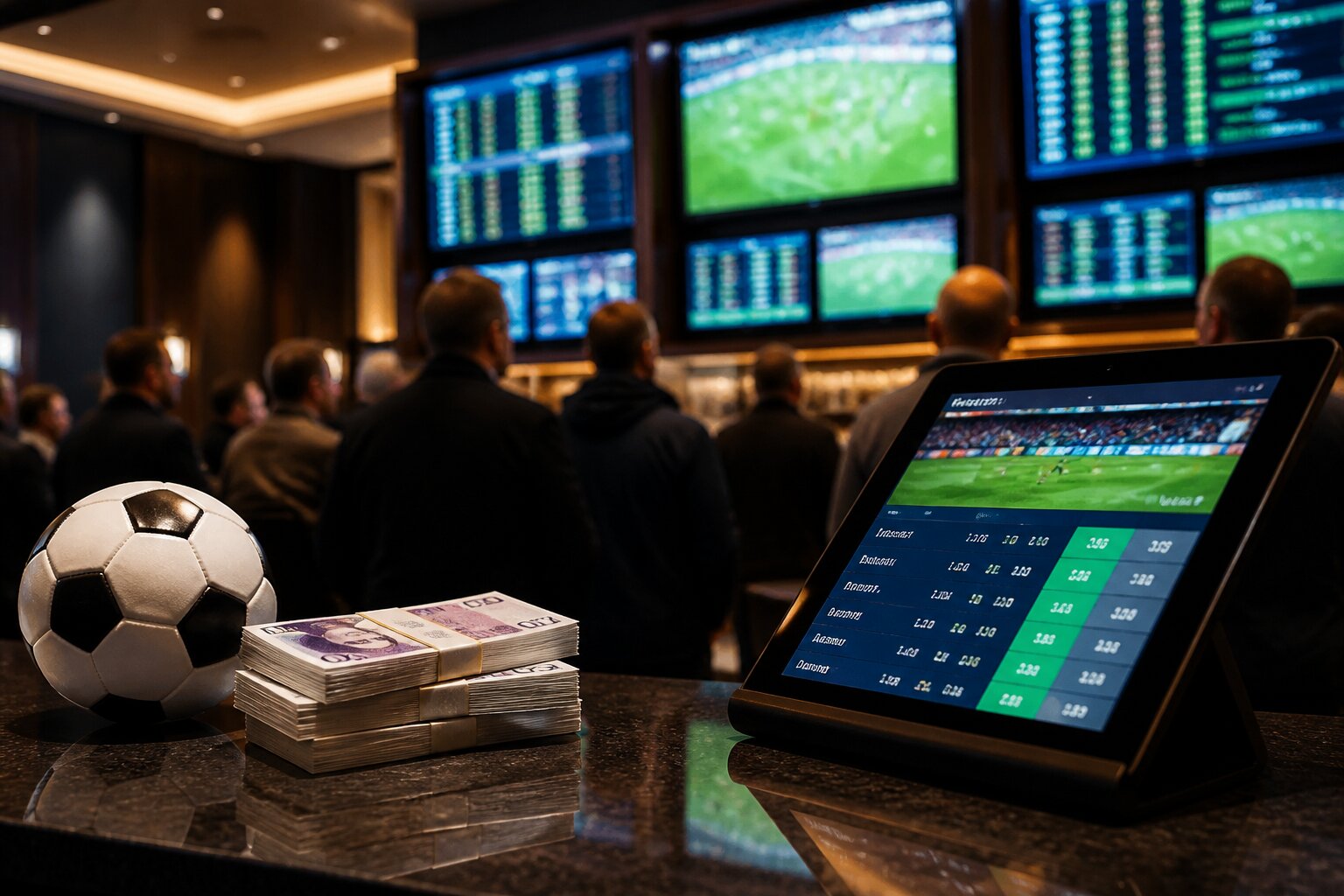
Ever wondered why the house seems to retain an edge on sports betting? The industry is built on careful pricing, risk control, and a range of operational tools that together produce steady returns over time. Whether you place single bets or more complex accumulators, the numbers behind the markets determine how profits and losses balance out.
This article explains how sportsbooks set odds, manage risk and use margins to remain viable, while also describing common questions and misconceptions from punters. Read on and you’ll get a clear picture of what the bookmaker does behind the scenes and what it means for anyone placing bets.
What Is a Sportsbook & How Does It Work?
A sportsbook is the platform—online or in person—where bets are taken on sporting events. It offers markets for many sports and formats, from pre-match wagers to in-play betting and more specialised markets such as totals or handicaps.
Odds shown on the site reflect an assessment of outcome probabilities plus a built-in margin. When you place a bet, your stake and the odds determine any potential payout; once an event finishes the market is settled and winnings are credited to accounts. Alongside pricing, the sportsbook provides account services, payments, and support to make betting straightforward and secure.
We operate under comprehensive regulation and maintain clear information about odds, limits and account controls so customers can see how markets are priced and how their bets will be settled.
Understanding the Concept of Betting Margins
A betting margin is the small edge built into the odds that yields profit for the bookmaker over many bets. You’ll sometimes see this referred to as the overround or vig.
In practice, if two outcomes are equally likely their fair odds would be evens (2.00). With a margin applied those odds might be shortened to something like 1.91. That reduction means the total implied probability across all outcomes exceeds 100 per cent, which is the overround. It’s this excess that, on balance across many bets, funds the bookmaking operation.
Margins are not a sign of unfairness but of how the business covers costs—technology, staff, fraud prevention and regulatory compliance—while maintaining continuous service. They are set to be sustainable for the operator while remaining transparent for customers.
Why Do Odds Favour the Bookmaker?
Odds include a margin so that, in aggregate, the sportsbook has a reasonable expectation of earning a return. That margin is a built-in part of how prices are set and helps cover operating costs, taxes and occasional losses. Over many events, the margin contributes to a predictable outcome for the business rather than relying on individual results.
Pricing takes account of a range of measurable and market factors before the margin is applied. These include:
- recent form and injuries affecting the competitors
- historical statistics and head-to-head records
- wider market conditions such as where money is being staked
Once those factors are considered, a margin is inserted to ensure the business model works over time. This does not mean the operator manipulates outcomes. The margin is a predictable mathematical adjustment applied to all sides of a market, not a change to the underlying event.
By balancing action across outcomes and markets, bookmakers keep exposure manageable and the enterprise viable. That balance is central to providing consistent, regulated betting services and helps ensure the operator can meet customer payouts and follow regulatory requirements.
How Do Overrounds Secure Casino Profits?
An overround is the total of implied probabilities for all outcomes in a market once margins are included. Because the sum exceeds 100 per cent, the bookmaker creates a buffer that helps absorb variance from individual events.
For example, in a three-way football market fair probabilities might total 100 per cent; with overround they might add up to 105 per cent. That extra 5 per cent represents the bookmaker’s cushion—recovered across many bets rather than guaranteed on each one.
Overrounds are a routine part of market pricing and are applied across bookmakers. They help the operator maintain liquidity and cover operational costs, while ensuring markets remain competitive and transparent for customers.
What Is Vigorish & How Is It Applied?
Vigorish, commonly called vig or commission, is the portion of the price that acts like a fee. It’s embedded in the odds and shows up as the difference between fair odds and quoted odds.
This commission supports the infrastructure of betting: payment processing, security, customer service and regulatory compliance. It also allows the operator to absorb occasional heavy payouts without jeopardising service for other customers.
Vig levels vary by sport and market. High turnover, low-margin markets such as top-level football often have slimmer vigs, while niche or low-liquidity markets may carry higher ones to reflect greater risk and lower betting volumes.
How Do Casinos Manage Risk in Sports Betting?
Risk management in a sportsbook blends expert judgement, automated systems and financial safeguards. The aim is to balance liabilities so the operator can pay winners promptly while avoiding outsized exposure from concentrated action on any single outcome.
Traders and risk teams monitor markets and positions continuously. When too much money accumulates on one side, prices may be moved to encourage bets elsewhere, limits can be adjusted, or liability can be hedged with other markets or exchanges. Everything is recorded and audited to meet regulatory standards and to ensure markets operate within acceptable risk tolerances.
This continual monitoring means the operator can respond quickly to sharp changes—injuries, late team news, or major market moves—so the book remains sustainable and customers get accurate pricing.
The Role of Bookmakers’ Analytics & Technology
Modern sportsbooks rely on real-time analytics and software to detect unusual patterns and update prices. Machine learning models and data feeds provide timely insights on form, injuries and in-play developments, helping systems and traders react swiftly.
These tools also automate checks for suspicious activity and ensure markets are balanced. When an anomaly is detected, the software can flag it for human review or automatically adjust odds to mitigate risk. The combination of human oversight and robust technology keeps markets liquid, compliant and fair.
Are There Myths About Sportsbook Fairness?
Misunderstandings about fairness often stem from a lack of transparency around pricing and margins. Some think odds are manipulated to favour the bookmaker in individual cases; in reality, odds are published openly and reflect both probability and margin.
Regulation and auditing require operators to treat customers fairly, apply consistent rules and publish clear terms. Discrepancies typically arise from market forces—large bets, tempo of money moving, or new information—not from deliberate unfairness. Systems for appeals and complaints exist so customers can raise issues if they believe a market was mishandled.
Trust in a sportsbook comes from consistent behaviour, accessible records of bets, and adherence to regulatory requirements that protect both the operator and the customer.
How Do Online Sportsbooks Differ From Traditional Ones?
Online sportsbooks can offer a much broader range of markets and faster pricing updates than retail shops, because software can display many events simultaneously and adjust odds in real time. This enables features such as in-play betting, cash-out options and personalised account tools.
The convenience of online platforms goes hand in hand with enhanced account controls. Customers can set deposit and loss limits, self-exclude or access account history easily, which supports safer play and clearer financial management.
Retail betting shops still provide face-to-face service and a physical presence, but they typically offer a narrower selection of markets and slower price updates. Both formats operate to the same regulatory standards and both aim to provide accurate pricing and reliable settlement.
How Do Casinos Use Promotions Without Losing Money?
Promotions such as free bets or enhanced odds are structured to attract new customers and reward existing ones while being financially sustainable. Terms and conditions—minimum odds, eligible markets and expiry dates—are used to prevent misuse and to ensure offers are compatible with the overall pricing model.
Promotions can also encourage play on particular markets or during quieter periods, helping to redistribute liquidity. When designed carefully, these incentives bring in customers who remain active beyond the promotion itself, helping to offset the short-term cost of the offer.
Clear communication about the limits and rules of promotions helps customers understand what to expect and preserves the integrity of the offer.
What Happens to Unclaimed or Suspended Bets?
Bets can be suspended bets for reasons such as event cancellation or significant rule disputes. When that happens, operators follow regulated procedures: events may be voided and stakes refunded, or markets settled according to published rules if an official result is declared later.
Unclaimed winnings remain in the customer’s account until they choose to withdraw or use them, subject to the operator’s account inactivity policies. Throughout, customers are notified about suspensions or refunds and can access transaction records to see how any adjustment was handled.
Transparency around these processes ensures that money is managed correctly and customers are kept informed about the status of their funds.
Do Sportsbooks Ever Lose Money?
Yes. Individual events or even whole weekends can produce losses if a large number of winning bets fall on one outcome. Extreme examples include a series of correlated results or a market where stakes are heavily skewed and the operator has insufficient cover.
Margins and risk controls are designed to smooth out those losses across time. While a sportsbook may lose on specific events, the combination of prudent pricing, active risk management and diversified markets aims to ensure long-term viability.
Our approach is to operate within regulatory frameworks and to keep betting an entertainment activity rather than a means to rely on for income. That means maintaining transparency, protecting customer funds and ensuring markets are managed responsibly so the service remains available and reliable.
Final note: if you want to see how our markets are priced or explore current promotions, you’ll find clear terms and market information on the site—everything is set out so you can make informed choices.
**The information provided in this blog is intended for educational purposes and should not be construed as betting advice or a guarantee of success. Always gamble responsibly.